


ISRO’s New Space Strategy: Private Industry Set to Take a Bigger Role
The CSR Journal Magazine

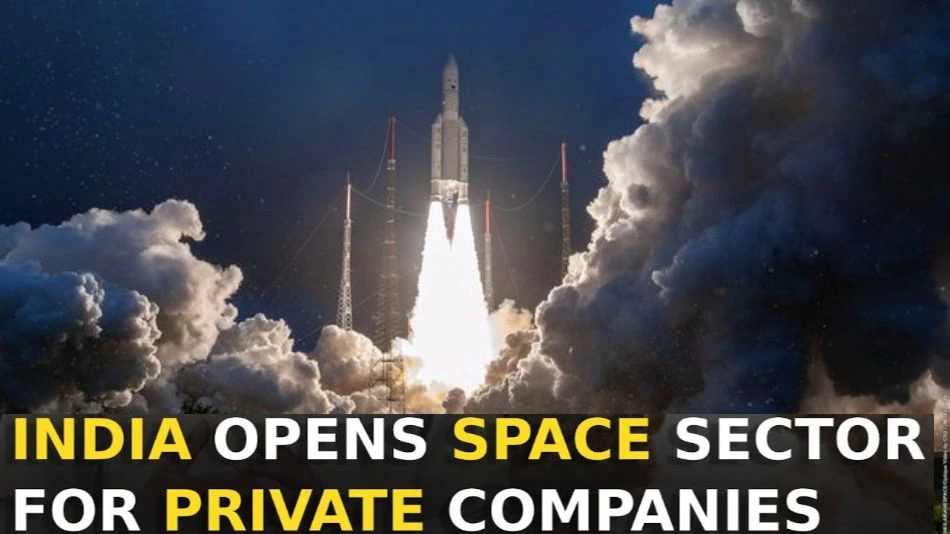
India’s space sector is entering a major phase of transformation as the government seeks to expand the participation of private companies and public-sector enterprises in the design, manufacturing and commercialisation of space systems. The change does not mean that the Indian Space Research Organisation (ISRO) will stop making rockets or satellites altogether. Instead, the organisation is increasingly moving towards a model in which industry takes greater responsibility for the production of operational systems, while ISRO focuses on research, advanced technologies and ambitious missions.

From Government-Led Production to an Industry-Led Ecosystem

For decades, ISRO has played a central role in developing and manufacturing India’s launch vehicles, satellites and spacecraft. However, the growing demands of the domestic and international space market have made large-scale industrial participation increasingly important.

India’s space-sector reforms envisage ISRO concentrating on developing new technologies and capabilities, while organisations such as NewSpace India Limited (NSIL) and IN-SPACe facilitate commercialisation, technology transfer and private-sector participation. ISRO itself says the objective is to maximise the benefits of space technology by transferring suitable technologies to Indian industry. (ISRO)

NSIL, the commercial arm of ISRO, is specifically tasked with enabling Indian industry to undertake high-technology space activities. Its responsibilities include facilitating industrial production of PSLV and SSLV, building satellites, commercialising space-based services and transferring technologies developed by ISRO and the Department of Space. (ISRO)

Technology Transfer at the Centre of the Shift

Technology transfer is likely to be one of the most important elements of India’s new space strategy. Rather than keeping every technology within government facilities, ISRO and NSIL can provide qualified companies with access to technologies that are ready for industrialisation.

The process is already underway. In August 2023, ISRO transferred the IMS-1 satellite bus technology to Alpha Design Technologies, marking an important step in bringing satellite manufacturing capabilities to private industry. (ISRO)

A larger milestone came in September 2025, when ISRO, NSIL, IN-SPACe and Hindustan Aeronautics Limited signed an agreement for the transfer of Small Satellite Launch Vehicle (SSLV) technology to HAL. The SSLV was specifically designed to be suitable for industrial production and quick-turnaround commercial launches. (ISRO)

By January 31, 2026, NSIL had signed 118 technology-transfer agreements covering 83 technologies developed by ISRO and the Department of Space. IN-SPACe had also facilitated 71 technology transfers to industry and startups. (Press Information Bureau)

“Now, ISRO will not manufacture any launch vehivles or routine satellites. That will be done by the private sector.” – Pawan Goenka, IN-SPACe Chairman

What Will ISRO Focus On?

The transformation is better understood as a division of responsibilities, rather than the privatisation of ISRO.

The organisation is expected to devote greater attention to cutting-edge research, next-generation launch vehicles, scientific missions, human spaceflight, planetary exploration and strategic space capabilities. Industry, meanwhile, can increasingly take responsibility for producing proven systems at commercial scale.

This could allow ISRO scientists and engineers to spend more time developing technologies that have not yet reached the production stage. Once those technologies mature, suitable companies can potentially commercialise and manufacture them.

Such a model could also shorten production cycles and enable India to respond more effectively to growing demand for satellites and launch services.

Private Companies Become Increasingly Important

India’s private space industry has expanded considerably since regulatory reforms opened the sector to non-government entities. Startups and established companies are now working across areas including launch vehicles, satellite manufacturing, propulsion, Earth observation and space-based applications.

IN-SPACe acts as a single-window mechanism for authorising private space activities and facilitating access to government facilities, technologies and technical expertise. Government data shows that reforms are creating opportunities for companies and startups to participate across the space value chain. (Press Information Bureau)

This growing ecosystem could eventually reduce the burden on government institutions while creating a competitive commercial market around space technology.

Where Does the Adani Group Fit In?

The Adani Group is also expanding its presence across India’s broader defence and aerospace ecosystem. However, it is important to distinguish between its established aerospace and defence activities and the dedicated commercial space sector.

Adani Defence & Aerospace currently highlights capabilities involving unmanned systems, missiles, ammunition, small arms, aircraft services and other advanced technologies. The group has also developed R&D capabilities in Delhi and Hyderabad focused on areas including unmanned platforms and missile technologies. (Adani Enterprises)

In January 2026, Adani Defence & Aerospace and Embraer announced a strategic partnership to develop an integrated regional transport aircraft ecosystem in India, including manufacturing, supply-chain development and related services. (Adani)

These developments demonstrate the group’s growing ambitions in high-technology manufacturing. Nevertheless, claims that Adani is already a major space-technology manufacturer should be treated carefully. Its strongest publicly documented presence is currently in defence and aerospace, rather than in the production of orbital rockets and satellites.

Public-Sector Enterprises Could Become Key Partners

The transformation will not be limited to private companies. Public-sector enterprises with established engineering, manufacturing and testing capabilities can also play an important role.

HAL’s acquisition of SSLV technology is one example of how a government-owned enterprise can take over the industrial production of a system developed by ISRO. Such arrangements could create a broader manufacturing network involving large public-sector companies, private firms, startups and smaller suppliers.

This approach could also strengthen domestic supply chains for specialised components and systems.

A Boost for India’s Space Economy

Greater industrial participation is ultimately aimed at expanding India’s space economy. Commercial demand for satellite communications, Earth observation, navigation, weather monitoring and space-based services is increasing worldwide.

India hopes to move beyond being primarily a space-faring nation with government-led missions and become a major manufacturer and exporter of space technology.

The government has already introduced measures to support this ambition, including liberalised foreign direct investment rules, funding mechanisms for startups and technology-adoption programmes. (Press Information Bureau)

A stronger industrial base could generate skilled employment, encourage research and development and create opportunities for Indian companies in international markets.

Challenges and Safeguards

The transition will also require careful management. Space technologies can involve national-security considerations, sensitive intellectual property and demanding reliability standards. Technology transfers therefore need to be accompanied by strict regulatory, quality-control and security frameworks.

ISRO must also retain sufficient expertise and infrastructure to independently develop critical technologies and conduct strategic missions. A larger private role should complement the organisation rather than weaken its scientific and technological capabilities.

The Road Ahead

India’s space programme is therefore moving towards a shared ecosystem rather than an ISRO-only model. ISRO will remain the country’s principal institution for advanced space research, scientific exploration and technology development, while NSIL, IN-SPACe, public-sector enterprises, established private companies and startups increasingly participate in commercialisation and manufacturing.

The emerging model could allow ISRO to focus on the technologies and missions of tomorrow while industry takes greater responsibility for producing proven systems at scale.

If implemented effectively, this transition could strengthen India’s technological self-reliance, expand its space economy and position Indian companies as significant players in the global space market. The transformation is not about ISRO abandoning rockets and satellites—it is about building an industrial ecosystem capable of producing them alongside ISRO, while allowing the organisation to concentrate on pushing the boundaries of what India can achieve in space.

Long or Short, get news the way you like. No ads. No redirections. Download Newspin and Stay Alert, The CSR Journal Mobile app, for fast, crisp, clean updates!

App Store –  https://apps.apple.com/in/app/newspin/id6746449540 

Google Play Store – https://play.google.com/store/apps/details?id=com.inventifweb.newspin&pcampaignid=web_share

Latest News

Popular Videos
