


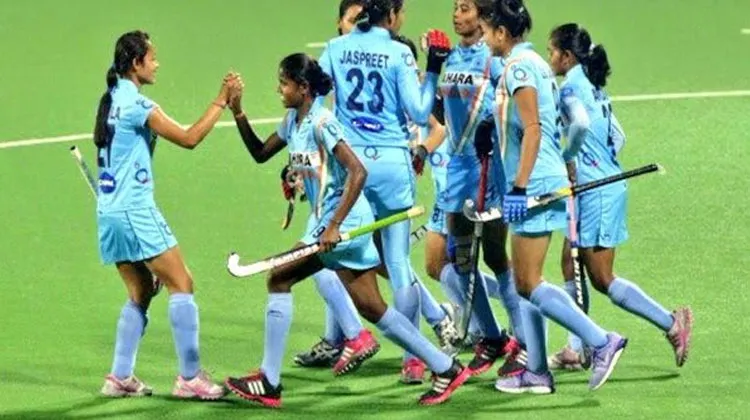

The Indian women’s hockey team secured a place in the gold medal match by defeating South Korea 2-0 in the semifinals of the Asian Games 2026 on September 30 in Aichi-Nagoya, Japan. Despite a goal-less first half, India established dominance in the second half of the game.
In the 43rd minute, Ishika converted a penalty corner, breaking the deadlock and giving India a significant lead. Her precision in executing the set piece proved crucial for the Indian side as they aimed for a spot in the final.
India’s success continued shortly after, as Salima Tete sent a cross into the circle in the 47th minute. The ball deflected off a defender’s stick, ultimately finding the back of the net, doubling India’s advantage. This two-goal lead allowed India to maintain control for the remainder of the match.
Upcoming Final Against China
The victory against South Korea sets up an anticipated gold medal clash between India and China. With this win, India aims to reclaim the title and secure their position at the top of Asian women’s hockey. The final match is expected to be a competitive encounter, reflecting the longstanding rivalry between the two teams.
Both teams have a rich history in the sport, and the upcoming final could be pivotal in determining the dynamics of women’s hockey in Asia. India’s previous performances have built considerable momentum, and the team will look to leverage this towards a successful outcome in the final.
Despite the challenges faced during earlier rounds, the team’s resilience and strategic gameplay have been evident throughout the tournament. The final match is scheduled for a date yet to be announced, and fans are eagerly anticipating the showdown.
Men’s Doubles Campaign Concludes
In contrast to the women’s success, the Indian men’s doubles campaign at the Asian Games has concluded without a medal for the first time since 1998. Both Indian pairs faced elimination in the quarterfinals, marking a disappointing turn of events for the men’s team.
Anirudh Chandrasekar and N Balaji faced a challenging match against Chinese competitors Jiang Fumin and Zhang Tianhui. The encounter was closely contested, ending with scores of 7-6(4), 6-7(7), and 8-10, illustrating the competitive nature of the match. Despite their effort, they were unable to clinch a victory.
Another Indian duo, Yuki Bhambri and Dhakshineswar Suresh, also exited the competition after a defeat. They were beaten by the pair from Chinese Taipei, Ho Chen-jui and Hsu Yu-hsiou, with scores of 6-7(5) and 3-6. The early exits have highlighted the challenges faced by the Indian men’s doubles teams this year.
The absence of medals in men’s doubles extends India’s wait since 1998, raising questions about the future prospects for the men’s doubles teams in upcoming tournaments. The focus will now turn to improving performance in future events and building on the experiences gathered during this year’s Asian Games.