


IMF Reports Potential Economic Impact of Middle East Energy Crisis on Asia
The CSR Journal Magazine

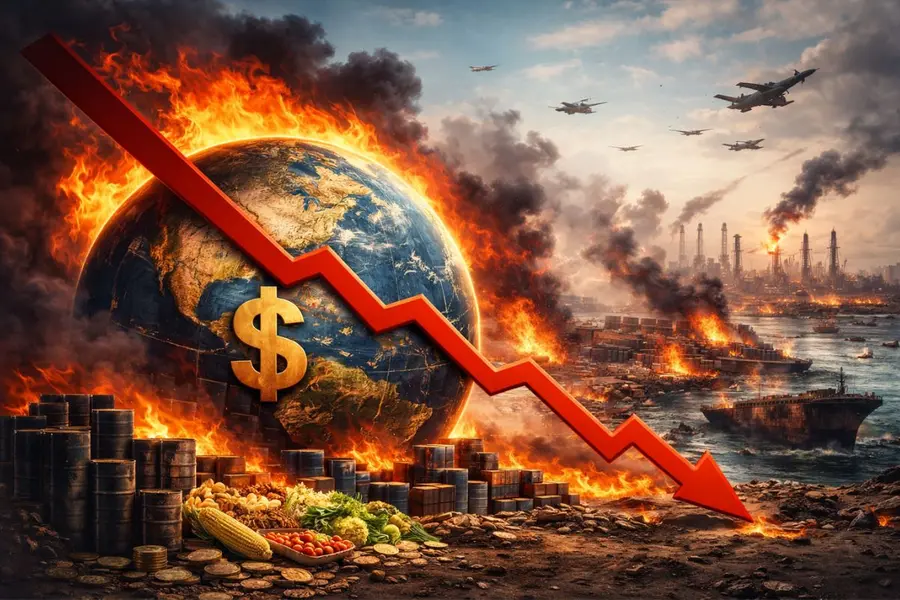
The International Monetary Fund (IMF) has issued a warning regarding the possible economic repercussions for Asia stemming from the current conflict in the Middle East. The IMF indicated that the region might experience a more severe impact due to its significant reliance on energy imports from this area. This caution was reported by Reuters, highlighting the precarious position of Asian economies amidst escalating tensions.

An official from the IMF noted that if the conflict persists, it could impede growth, elevate inflation rates, and stress external financial balances across various Asian nations. The ongoing disruptions in energy supplies could directly affect local economies, especially those with limited resources to mitigate such shocks.

Factors Contributing to Asia’s Economic Exposure

Asia’s economic structure reveals a significant dependence on imported oil and gas, particularly from the Middle East. This reliance renders the region especially vulnerable during periods of disrupted supply or spiking prices. Krishna Srinivasan, who directs the IMF’s Asia-Pacific division, stated that the shock from the conflict is likely to affect Asia more intensely than other geographical areas.

Recent statistics from the IMF estimate that oil and gas consumption accounts for approximately four per cent of the region’s Gross Domestic Product (GDP), a figure that is nearly double that of Europe. Additionally, net imports of these energy commodities constitute roughly 2.5 per cent of GDP, underlining Asia’s limited domestic production capabilities in this sector.

Despite the looming risks posed by rising energy costs, recent data suggests that Asia commenced 2026 on a relatively stable note. Contributing factors such as lower-than-anticipated tariffs from the United States and a robust technology sector have provided a cushion against the forthcoming energy challenges. These elements have played a role in maintaining economic growth, as indicated in the IMF’s assessment.

IMF’s Growth Projections for Asia

In its latest forecasts, the IMF has decided to keep its growth outlook for Asia largely in line with prior projections, even amidst concerns regarding rising energy risks. Under the IMF’s baseline scenario, it anticipates a slight decline in growth rates, predicting a reduction from five per cent in 2025 to 4.4 per cent in 2026, followed by a further decrease to 4.2 per cent in 2027.

This anticipated deceleration in growth reflects the broader economic environment impacted by the ongoing conflict. The IMF’s focus remains on closely monitoring the developments in the Middle East, as any significant escalation could have pronounced implications for Asian markets and their recovery trajectories.

Overall, while Asia’s economic foundation appears relatively sound for the time being, the potential for external shocks such as those arising from the Middle East conflict continues to be a notable concern for policymakers and economic analysts alike.

Long or Short, get news the way you like. No ads. No redirections. Download Newspin and Stay Alert, The CSR Journal Mobile app, for fast, crisp, clean updates!

App Store –  https://apps.apple.com/in/app/newspin/id6746449540 

Google Play Store – https://play.google.com/store/apps/details?id=com.inventifweb.newspin&pcampaignid=web_share

Latest News

Popular Videos
