


Chidambaram Criticises One Nation One Election Proposal Before Parliamentary Committee
The CSR Journal Magazine

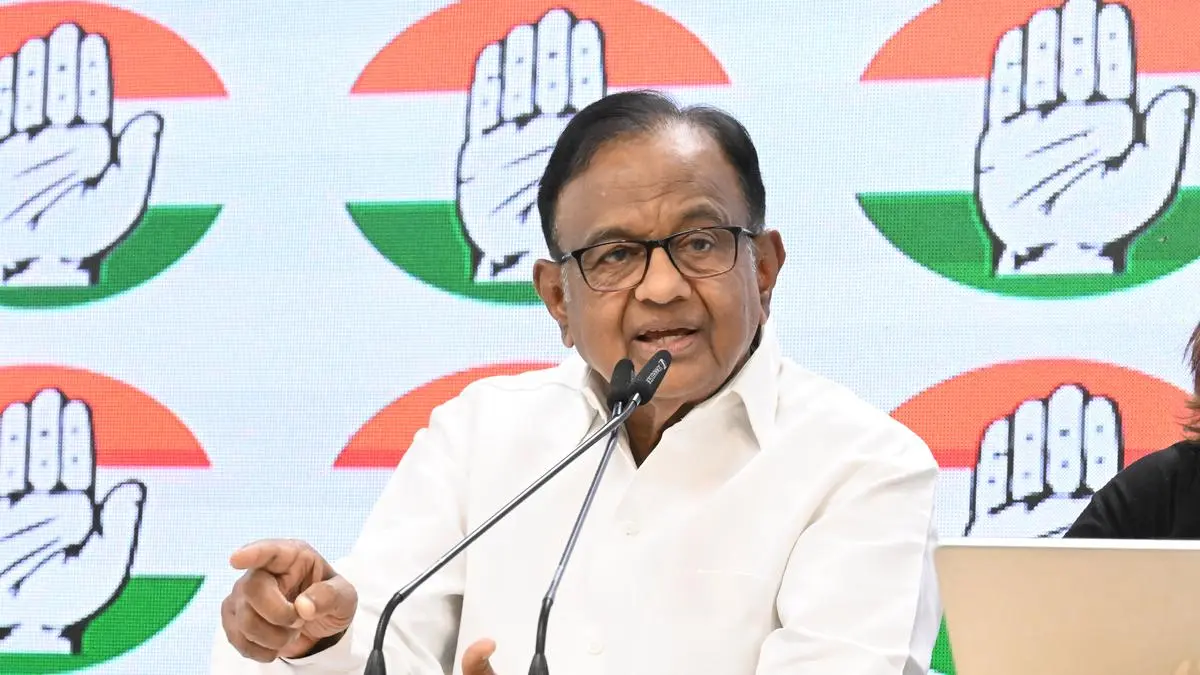
P. Chidambaram, a former Union Minister, articulated his strong opposition to the proposal for simultaneous elections to the Lok Sabha and state assemblies during his appearance before a joint committee of Parliament. He labelled the initiative as “monstrous” and “unconstitutional,” emphasising the serious implications he believes it poses to the democratic framework.

The seasoned politician conveyed these views while discussing the Constitution (129th Amendment) Bill, 2024, and the Union Territories Laws (Amendment) Bill, 2024. These bills aim to align the timing of Lok Sabha and state assembly elections, creating a unified electoral process across India.

Chidambaram argued that the concept of “One Nation, One Election” undermines the integrity of individual state legislatures, each of which is elected for a five-year term. He contended that shortening this duration directly infringes upon the basic structure of the Constitution, thereby raising legal and ethical concerns regarding its implementation.

Concerns Raised by Other Committee Members

In addition to Chidambaram’s critique, Sagarika Ghosh from the Trinamool Congress also expressed reservations about the bill. Ghosh warned that implementing simultaneous elections could grant excessive power to the Election Commission, which might lead to unintended consequences in the electoral process.

Approximately ten recipients of the Padma awards, such as Tarlochan Singh, Navin Khanna, Meenakshi Jain, and Niru Kumar, appeared separately before the parliamentary committee chaired by BJP member P.P. Chaudhary. The opinions among the awardees were mixed; while some endorsed the idea of synchronised elections, others articulated fears that it could result in chaos within the country.

The legislative proposals had been presented in the Lok Sabha in December 2024 and subsequently referred to the joint committee for her examination. This step reflects an ongoing dialogue concerning the feasibility and implications of executing nationwide polls simultaneously.

Historical Context of Simultaneous Elections in India

Historically, India conducted elections for the Lok Sabha and all State Legislative Assemblies concurrently from 1951 until 1967. The initial combined elections took place during the 1951-52 general elections, continuing similarly in 1957, 1962, and 1967.

This cycle of simultaneous elections was disrupted in 1968 and 1969 due to the premature dissolution of various state legislative assemblies. Furthermore, the Fourth Lok Sabha was dissolved early in 1970, leading to subsequent elections in 1971. Unlike the First, Second, and Third Lok Sabha, which fulfilled their full five-year terms, the Fifth Lok Sabha’s tenure was extended until 1977 under Article 352 due to a declared Emergency.

Since that time, only a few Lok Sabha terms, including the Eighth, Tenth, Fourteenth, and Fifteenth, have been completed in their entirety. Other terms such as the Sixth, Seventh, Ninth, Eleventh, Twelfth, and Thirteenth faced early dissolution, highlighting persistent challenges within the electoral timetable.

State Assemblies have similarly exhibited instances of premature dissolutions and term extensions, further complicating the prospects of conducting simultaneous elections as originally intended. These historical disruptions have established a pattern of staggered electoral schedules across the nation, ultimately affecting the current electoral landscape.

Long or Short, get news the way you like. No ads. No redirections. Download Newspin and Stay Alert, The CSR Journal Mobile app, for fast, crisp, clean updates!

App Store –  https://apps.apple.com/in/app/newspin/id6746449540 

Google Play Store – https://play.google.com/store/apps/details?id=com.inventifweb.newspin&pcampaignid=web_share

Latest News

Popular Videos
