


AI Agents Could Soon Handle UPI Payments Autonomously! Details Here
The CSR Journal Magazine

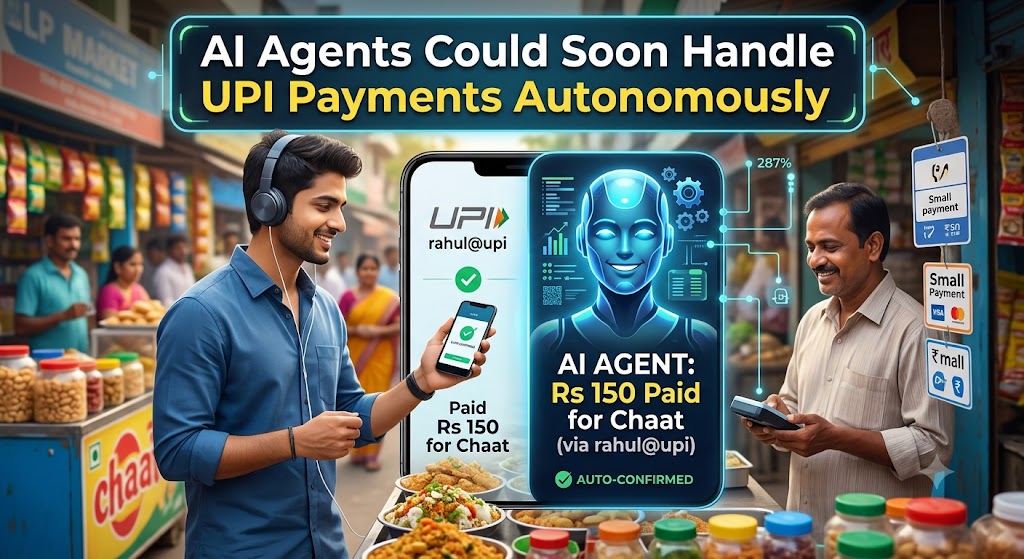
The upcoming framework aims to enable AI agents to carry out Unified Payments Interface (UPI) transactions autonomously. This development, reported by news agency Reuters, is being designed by the National Payments Corporation of India (NPCI) and represents a significant advancement in transaction technology, allowing AI to handle payments on behalf of users. Sources familiar with the matter indicate that users would not need to approve each transaction, as the system would operate under predefined spending limits and regulations.

The unveiling of the proposed Unified Agent Protocol is anticipated next week during the Global Fintech Fest in Mumbai. With this initiative, UPI is set to expand into the growing domain of agentic AI, where software solutions perform tasks without the continuous intervention of users. Such an evolution could change the dynamics of digital payments significantly.

Functionality of AI Payments

The proposed system will allow users to delegate limited payment capabilities to their AI agents. This means that instead of manually authorising each transaction, users could establish specific rules that dictate when and how much their AI agent can spend. For instance, an AI agent could be programmed to purchase groceries within a predetermined budget, executing the payment autonomously once it meets the set criteria.

This framework is expected to incorporate essential components such as spending caps, identity verification measures, and audit trails to ensure secure transactions. NPCI is also likely to develop infrastructure that merchants can seamlessly integrate into their systems, facilitating smooth transactions for customers.

Low-value purchases, particularly grocery items, are expected to be the first applications of this new payment capability. E-commerce platforms may also play a crucial role in adopting AI agents in their online shopping processes, consequently widening the scope of potential transactions. Beyond everyday purchases, AI agents could be programmed to identify discounts, place orders, and manage investments based on user-defined criteria, enhancing the utility of digital transactions.

Significance of UPI in AI Transactions

The introduction of AI agents into UPI payments bears significant implications due to the extensive reach of the UPI system. In August alone, UPI processed approximately 24.51 billion transactions amounting to Rs 29.82 trillion. Key players like Google Pay and PhonePe account for a substantial portion, approximately three-fourths, of this transaction volume. By permitting AI agents to execute UPI transactions, access to one of the world’s largest digital payment networks would be effectively granted to these technologies.

For users, this development could mean an increased ability to delegate routine financial tasks to AI systems, reducing the need for repetitive manual transactions. This initiative aligns with a broader initiative among global payment providers to adapt to the demands of AI-driven commerce. Notably, Mastercard and Visa are also working on developing similar agentic-payment capabilities within Indian markets.

Mastercard successfully accomplished its first authenticated agentic transaction in New Delhi for a similar purpose earlier this year. Additionally, the fintech company Pine Labs has introduced its own agentic protocol, allowing AI agents to conduct UPI payments after a single upfront approval. The proposed NPCI framework aims to elevate this concept to a national standard within the payments infrastructure.

Safeguards for Transaction Security

The delegation of financial responsibilities to AI agents raises important considerations regarding security and accountability in digital payments. The proposed framework includes built-in safeguards such as spending limits, identification checks, and audit trails to prevent misuse. NPCI is also looking into creating a liability framework to clarify the accountability of financial transactions executed by AI agents. However, details concerning the specifics of this liability assignment have not been disclosed.

This is particularly pertinent in cases where an AI agent might make incorrect payments, exceed its authorised limits, or be exploited for unauthorised transactions. For now, the framework remains under development, with further information expected to emerge during the Global Fintech Fest. The evolution from a user-initiated payment system to one enabling AI to handle transactions could represent a remarkable shift in how financial activities are managed.

Long or Short, get news the way you like. No ads. No redirections. Download Newspin and Stay Alert, The CSR Journal Mobile app, for fast, crisp, clean updates!

App Store –  https://apps.apple.com/in/app/newspin/id6746449540 

Google Play Store – https://play.google.com/store/apps/details?id=com.inventifweb.newspin&pcampaignid=web_share

Latest News

Popular Videos
