


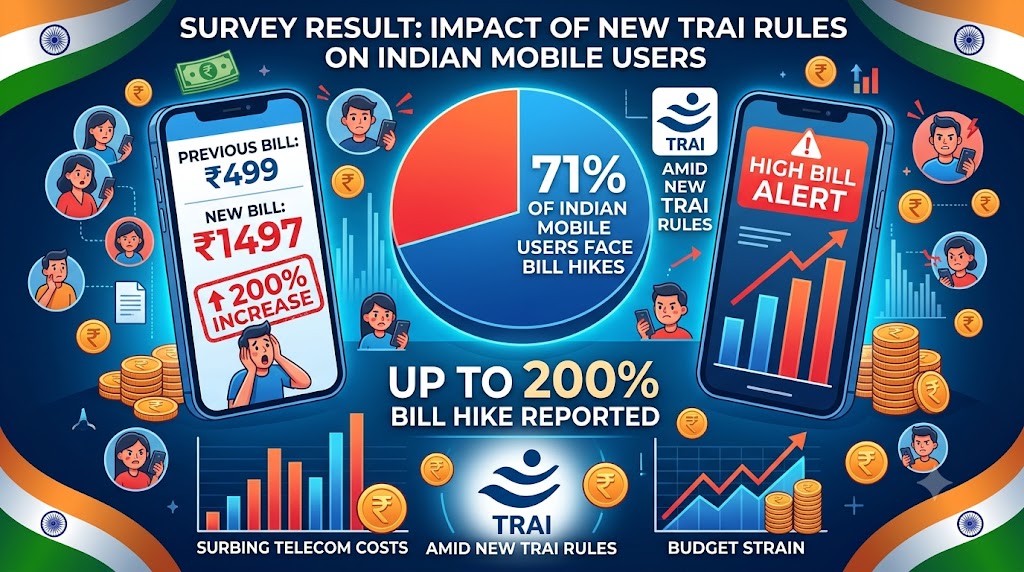
71% of Indian Mobile Users Face Up to 200% Bill Hike Amid New TRAI Rules: Survey
The CSR Journal Magazine

Recent developments indicate that mobile phone expenses may be rising for many users. The Telecom Regulatory Authority of India (TRAI) introduced the Telecom Consumer Protection (Thirteenth Amendment) Regulations, 2026, on September 21, 2026. These regulations are set to take effect 30 days after their official publication.

The new rules mandate that telecom operators must provide a voice-and-SMS-only Special Tariff Voucher (STV) at a comparatively lower price whenever they offer bundled plans that include voice, SMS, and data. The intention is to cater to users who predominantly require call and SMS facilities without having to pay for unused data services.

This amendment is expected to assist those users who do not require mobile data. However, it does not directly tackle the issue of rising tariffs for consumers using bundled plans, leaving this concern unresolved.

Significant Rise in Mobile Tariffs Reported

A recent survey conducted by LocalCircles revealed alarming findings regarding mobile tariff increases. Among the 17,417 respondents, a notable 71 per cent reported that their monthly mobile tariffs had surged by between 50 per cent and 200 per cent over the past three years. Eleven per cent of respondents experienced increases of 200 per cent or more, while thirteen per cent noted rises between 150 per cent and 200 per cent. Additionally, twenty-six per cent reported increases of 100 to 150 per cent.

Moreover, twenty-one per cent acknowledged a 50 to 100 per cent increase, while eleven per cent experienced a relatively lower increase of 25 to 50 per cent. Six per cent of participants indicated that their bills had only increased by up to 25 per cent, and another six per cent observed no escalation in their tariffs over this period. These statistics reveal that a significant majority of consumers are facing considerable hikes in their mobile service expenses.

Furthermore, concerning communication from telecom operators, the survey showed that 67 per cent of users believed they were inadequately informed about tariff increases. Specifically, 45 per cent indicated that operators generally do not notify them before raising charges, while 22 per cent said they never receive any notification and only discover increased charges on their bills. Proper notification practices remain a pressing issue for consumers.

Changing Mobile Landscape and Consumer Concerns

The current landscape in the telecom industry reflects multiple rounds of tariff changes, affecting the affordability of mobile services. The survey indicated that entry-level recharge plans have risen from the Rs 209-Rs 249 range to approximately Rs 299 and, in some instances, even Rs 349.

As telecom operators aim for improved profit margins, there has been a rise in the average revenue per user (ARPU). However, amidst these changes, a significant concern among consumers has emerged regarding whether the increased prices coincide with enhanced network quality and service. The survey included responses from over 43,000 users across 341 districts to understand the impacts of these tariff changes.

Demographically, the respondents comprised 63 per cent men and 37 per cent women, with 40 per cent residing in Tier 1 cities, 28 per cent in Tier 2, and 32 per cent living in Tier 3, 4, 5, and rural districts. This demographic diversity highlights the widespread implications of rising mobile bills across various segments of the population, underscoring the ongoing challenges faced by consumers in managing their telecommunications expenses.

Long or Short, get news the way you like. No ads. No redirections. Download Newspin and Stay Alert, The CSR Journal Mobile app, for fast, crisp, clean updates!

App Store –  https://apps.apple.com/in/app/newspin/id6746449540 

Google Play Store – https://play.google.com/store/apps/details?id=com.inventifweb.newspin&pcampaignid=web_share

Latest News

Popular Videos
