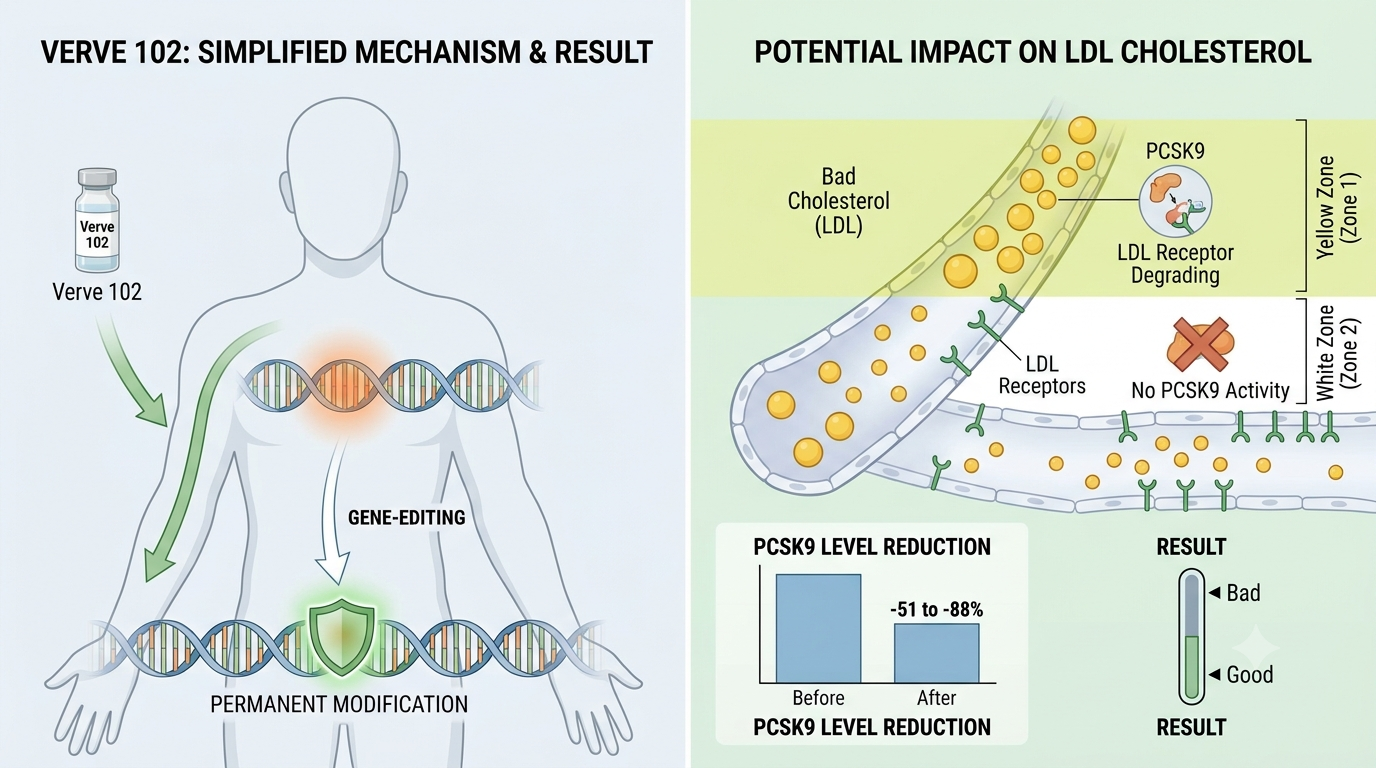
Verve 102 is an experimental treatment designed to lower levels of low-density lipoprotein (LDL) cholesterol by targeting the PCSK9 gene in liver cells. This approach departs from traditional long-term medication regimens, as it aims to offer a single intravenous infusion to patients with significantly elevated LDL cholesterol levels. Researchers are particularly assessing its potential in individuals with conditions such as heterozygous familial hypercholesterolaemia and premature coronary artery disease, who may require additional LDL lowering.
This investigational therapy has not received approval for widespread use and cannot be seen as a substitute for established cholesterol medications, including statins. Its use is still limited to ongoing clinical trials.
Mechanism of Action for Verve 102
Understanding how Verve 102 functions necessitates a focus on the role of PCSK9. The liver produces LDL receptors responsible for extracting LDL cholesterol, commonly referred to as “bad cholesterol,” from the bloodstream. The PCSK9 protein facilitates the degradation of some of these cholesterol receptors. By reducing the activity of PCSK9, Verve 102 increases the number of available LDL receptors in the liver, thereby enhancing the liver’s capacity to lower cholesterol levels.
This treatment is distinct from conventional pharmaceuticals that merely inhibit the protein’s function temporarily. Gene editing through Verve 102 aims to create a lasting alteration in the genetic code, potentially resulting in a sustained reduction in cholesterol.
Recent findings from the Phase 1b Heart 2 trial have sparked considerable interest due to the significant reductions in both PCSK9 and LDL cholesterol observed after a single infusion. Reported changes across various dosage levels showed PCSK9 levels decreasing by 51% to 88%, and LDL cholesterol reductions ranging from 9% to 62%.
Understanding the Longevity of Effects
While preliminary data from the trial indicate that Verve 102 may produce durable effects in lowering cholesterol, these findings warrant careful interpretation. The treatment aims to induce a genetic change intended to provide lasting reductions in LDL levels. However, clinical evidence so far extends only up to 18 months post-treatment, leading to uncertainty regarding its long-term efficacy and how it may function over many years.
As such, Verve 102 might be more accurately classified as a potential long-lasting gene editing treatment, rather than a definitive solution for permanent cholesterol reduction. Ongoing research is necessary to validate the durability of the effects observed in initial trials.
Comparative Analysis with Existing Treatments
Currently, statins serve as a foundational therapy for effectively lowering LDL cholesterol and mitigating cardiovascular risks. Options like ezetimibe and PCSK9 inhibitors are also available for patients requiring further reduction in cholesterol levels. As of now, Verve 102 remains experimental and has not been established as a replacement for these treatments.
Researchers must further examine its long-term safety, efficacy, and capability to lower cardiovascular incidents before it can be integrated into standard cholesterol management protocols. If future studies confirm its safety and long-lasting effects, Verve 102 could fundamentally alter the approach for patients with genetically inherited high cholesterol or those who are difficult to treat.
In summary, Verve 102 represents a novel, one-time gene-editing treatment aiming to regulate cholesterol levels effectively. While early outcomes are encouraging, extensive research is imperative before it can attain status as an approved treatment for individuals managing elevated LDL cholesterol.
Long or Short, get news the way you like. No ads. No redirections. Download Newspin and Stay Alert, The CSR Journal Mobile app, for fast, crisp, clean updates!
The good news of treatment of severe haemophilia A, a rare hereditary health condition, was out on 12 December 2024. Indian scientists have successfully...