


Scientists Discover Evidence of Red Blood Cells and Collagen in Dinosaur Fossils
The CSR Journal Magazine

Recent findings indicate that palaeontologists have uncovered traces of red blood cells and collagen in dinosaur fossils, challenging previous notions about fossil preservation. This remarkable discovery was made by a team of researchers from Curtin University, who examined a dinosaur fossil estimated to be 115 million years old. Their study, published in the journal Proceedings of the National Academy of Sciences, highlights the potential for biological material to survive in fossils long after an organism’s death.

Details of the Discovery

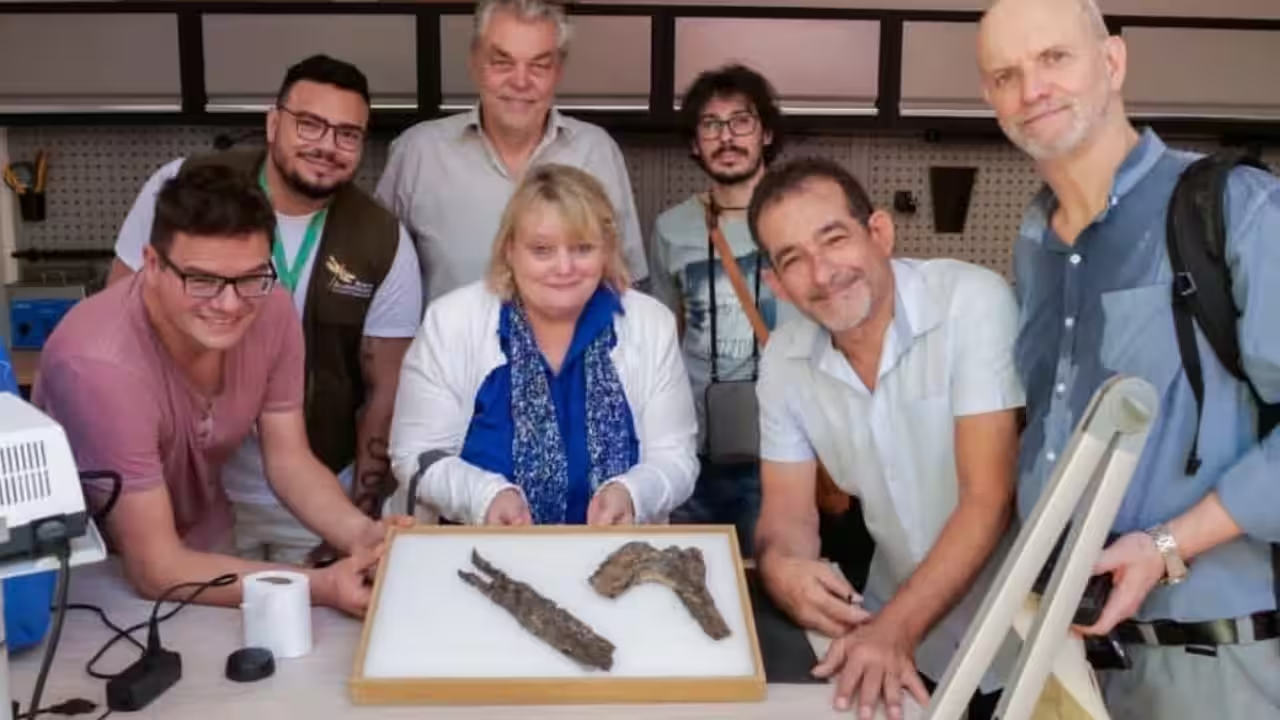
The research was spearheaded by Kliti Grice and an international team, focusing on the limb bones of Aratasaurus museunacionali, a theropod dinosaur that roamed what is now northeastern Brazil. The fossilised bones, unearthed from a Brazilian mine in 2008, contained unexpected structures within their vascular canals. These canals, which once housed blood vessels, revealed tiny, oval-shaped formations that resembled red blood cells.

To confirm their findings, the researchers employed advanced techniques including high-performance liquid chromatography-mass spectrometry. This analysis led to the identification of heme B and its altered forms within the bone extracts. Heme is an iron-containing molecule integral to haemoglobin, the protein responsible for oxygen transport in red blood cells. Further investigations using Raman spectroscopy and transmission electron microscopy uncovered chemical signatures linked to heme, along with elements such as iron, nitrogen, and carbon.

The team also discovered traces of collagen, a vital structural protein. These findings suggest that biological materials derived from blood and collagen have survived in the fossil for approximately 115 million years, raising questions about the mechanisms behind such preservation.

Factors Contributing to Preservation

Typically, blood cells and soft tissues begin to decompose shortly after an organism dies, due to the action of microorganisms, oxygen, and natural chemical processes. This makes the preservation of such delicate structures over millions of years exceedingly rare. Researchers propose that the conditions surrounding the dinosaur’s burial played a crucial role in the preservation of these biological materials.

The study suggests that the dinosaur may have been rapidly buried in a low-oxygen environment enriched with microbial mats, which are thin layers of microorganisms that thrive in shallow-water settings. These conditions could have slowed the decomposition process, creating an environment conducive to the preservation of fragile biological structures.

Additionally, the researchers found that the cell-like structures were mineralised with hausmannite, a manganese oxide mineral. This mineral may have acted as a protective barrier, stabilising the microscopic structures and their chemical components before they could fully decompose. The combination of favourable burial conditions and early mineralisation appears to have been key to the survival of these biological traces.

Implications for Palaeontology

This discovery not only sheds light on the preservation of biological materials but also transforms our understanding of dinosaur biology. Traditionally, knowledge about these ancient creatures has been derived primarily from bones, teeth, and fossilised footprints. The identification of blood-derived molecules and collagen-related materials offers a new perspective, potentially revealing details that skeletal remains alone cannot provide.

Moreover, this finding raises the possibility that fossils may contain more biological information than previously thought. As researchers continue to explore these discoveries, they may uncover further insights into the lives and environments of dinosaurs, enriching our understanding of these ancient beings.

Long or Short, get news the way you like. No ads. No redirections. Download Newspin and Stay Alert, The CSR Journal Mobile app, for fast, crisp, clean updates!

App Store – https://apps.apple.com/in/app/newspin/id6746449540

Google Play Store – https://play.google.com/store/apps/details?id=com.inventifweb.newspin&pcampaignid=web_share

Latest News

Popular Videos
