


India-Sri Lanka Ports Can Become Engines Of Economic Growth
The CSR Journal Magazine

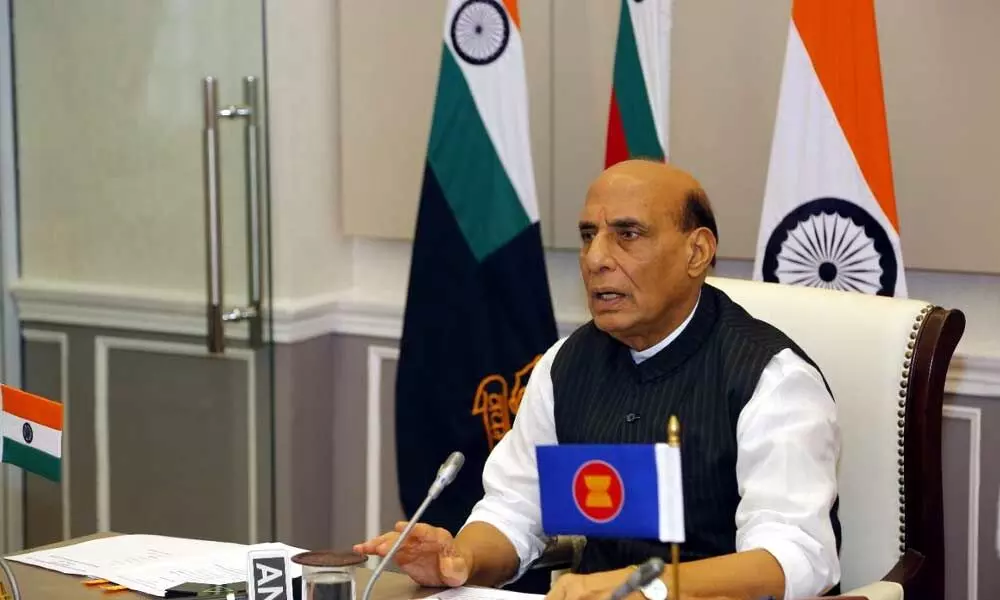
Defence Minister Rajnath Singh stated that the ports of India and Sri Lanka have the potential to act as engines for shared economic growth during his address in Colombo on September 9. Speaking to the military leadership at the Ministry of Defence, he highlighted the significance of maritime industries as a backbone for future prosperity for both nations and the wider Indian Ocean region.

This discussion is part of his three-day visit to Sri Lanka. Singh’s remarks emphasises the concept that proximity fosters interdependence, which in turn creates ample opportunities for the evolution of bilateral relations between India and Sri Lanka. He addressed a variety of aspects related to maritime cooperation, stressing the importance of collaborative strategies for mutual benefit.

Fishermen Dispute Requires Careful Handling

In his address, Singh acknowledged the ongoing fishermen dispute between the two nations, noting the difficulties encountered by fishermen from both sides. He called upon the respective governments to collaboratively seek resolution to fisheries disputes while adhering to pertinent laws and geographic considerations.

Singh emphasised that this issue fundamentally revolves around the livelihood of many individuals. Therefore, both governments should approach it with sensitivity and care. He reiterated the importance of maintaining maritime law enforcement while ensuring that fishing rights and territorial waters are respected.

The Defence Minister’s comments serve as a recognition of the complexities surrounding the dispute and a call for dialogue and understanding. In his address, Singh also alluded to Prime Minister Narendra Modi’s MAHASAGAR vision for the Indian Ocean Region, urging both nations to transcend traditional forms of cooperation. He advocated for the establishment of new, innovative frameworks rooted in mutual interests and holistic principles, thereby enhancing bilateral partnerships.

Strategic Importance Of The Indian Ocean Region

Rajnath Singh invoked the ideas of naval strategist Alfred Thayer Mahan, indicating that dominance over maritime routes equates to power on a global scale. He remarked that the Indian Ocean has transformed from merely being a waterway into a platform where it will determine the economic and strategic future of the region.

He cited previous collaborative successes, such as coordination during the maritime emergencies involving the MT New Diamond and MV X-Press Pearl, to illustrate the deepening trust between the two nations. Singh proposed the development of a joint maritime domain awareness system designed to facilitate real-time monitoring between the navies and coast guards of both countries.

This initiative aims to counter illegal activities such as fishing violations, drug trafficking, and smuggling. He also suggested an institutionalised economic framework covering various sectors, including fisheries, marine biotechnology, ocean sciences, and maritime tourism, along with a joint mechanism for disaster response.

Describing India as Sri Lanka’s “Vishwa-Mitra,” Singh expressed confidence that both countries are strategically positioned to become close partners in promoting peace, security, and stability across the Indian Ocean Region. His comments reflect a commitment to fostering deeper ties during his visit, with defence and maritime cooperation being prominent focal points for future collaboration.

Long or Short, get news the way you like. No ads. No redirections. Download Newspin and Stay Alert, The CSR Journal Mobile app, for fast, crisp, clean updates!

App Store –  https://apps.apple.com/in/app/newspin/id6746449540 

Google Play Store – https://play.google.com/store/apps/details?id=com.inventifweb.newspin&pcampaignid=web_share

Latest News

Popular Videos
