


IIT Madras Professor Innovates Through 3D Printing of Musical Instruments
The CSR Journal Magazine

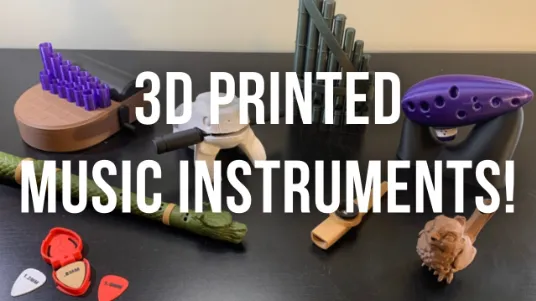
The laboratory at IIT Madras is a hub of creativity and innovation, where machines operate continuously and the scent of warm plastic fills the air. Among the long work-tables lie several musical instruments, including a violin and a ukulele. These instruments are not crafted from traditional materials like wood; instead, they are created utilising a 3D printer, developing each piece layer by layer in plastic. Initially, they may appear to be merely models, yet when someone strums the strings, they produce genuine music.

This significant achievement is attributed to Professor Ramanathan Muthuganapathy and his students, who are not just creating instruments but also addressing a deeper societal issue within Indian music: access. The lab’s mission transcends the mere fabrication of instruments; it aims to democratise music-making and challenge the barriers that prevent many individuals from engaging with this art form.

Professor Muthuganapathy’s approach to musical instruments is deeply rooted in his belief that everyone deserves the opportunity to create music. His soft-spoken manner belies the passion and professionalism guiding his work. He often credits his students for their contributions, showcasing a collaborative spirit that defines the laboratory environment.

The Integration of Mathematics and Music

In his role within the Department of Engineering Design, Professor Muthuganapathy focuses on geometric modelling, specifically the mathematical principles governing shapes. This discipline allows for the precise description of objects, enabling complex designs to be rendered digitally before physical production begins.

Despite his scientific focus, the influence of music remains a constant factor in his life. As an accomplished mridangam player, he merges the logical and creative aspects of his dual interests. This intersection fuels the exploration within his lab, where algorithms are devised to interpret musical patterns, bridging the gap between scientific inquiry and artistic expression.

The professor and his students continuously explore various questions, such as whether it is possible to 3D print a functioning instrument and how to teach machines to grasp the nuances of ragas in Indian music. Each step forward has been framed by the contributions of his students, who play a vital role in problem-solving and refinement of techniques.

The Promise of 3D-Printed Music

Utilising standard plastic and advanced 3D printing techniques, the lab has successfully created instruments like violins and ukuleles. The potential of additive manufacturing for musical instruments has gained global attention, yet at IIT Madras, the approach is tailored to serve Indian musical traditions specifically.

While initial expectations of the printed instruments were uncertain, the outcomes were pleasantly surprising; the instruments produced recognisable and authentic musical tones. This development has opened new avenues for accessibility in music, particularly for aspiring musicians who may previously have been priced out of traditional instruments, which can cost upwards of Rs 30,000.

The team continues to strive for perfection in their creations, particularly with the veena, an instrument central to Carnatic music. Professor Muthuganapathy acknowledges that although advancements have been made, the warmth of expertly crafted wooden instruments still remains unmatched. Their focus is on refining prototypes to ensure they reach their goal of producing high-quality instruments at an affordable cost.

A Collaborative Effort in Innovation

The journey towards creating these instruments is not solely a reflection of Professor Muthuganapathy’s vision. His students, who work diligently to troubleshoot issues during the printing process, tune the instruments, and refine algorithms, are equally instrumental in the lab’s successes. Each component produced is a collective achievement, illustrating a merging of scientific inquiry and artistic pursuit.

Among their projects is the ambitious task of teaching a machine to identify and understand ragas, the intricate musical frameworks that define Indian classical music. This involves not only recognising notes but also the subtle variations in transitions between notes—a complex challenge that the lab has begun to address with promising results.

The integration of virtual reality technology also plays a crucial role in their initiatives, providing immersive experiences that allow learners to interact with the nuances of instruments without physical limitations. This approach aims to widen the reach of music education to those who may lack access to traditional learning environments, fostering a more inclusive musical community.

Long or Short, get news the way you like. No ads. No redirections. Download Newspin and Stay Alert, The CSR Journal Mobile app, for fast, crisp, clean updates!

App Store –  https://apps.apple.com/in/app/newspin/id6746449540 

Google Play Store – https://play.google.com/store/apps/details?id=com.inventifweb.newspin&pcampaignid=web_share

Latest News

Popular Videos
