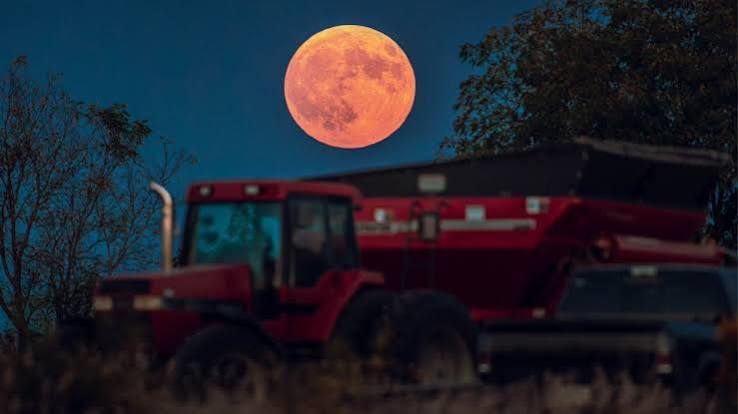
September presents a remarkable array of celestial events for sky enthusiasts. From the shining Venus to the illuminated Harvest Moon alongside Saturn, this month features numerous sights that can be observed without the need for specialised equipment. As the days progress, notable astronomical phenomena will unfold, offering an opportunity for stargazers to immerse themselves in the wonders of the universe.
Moon’s Guiding Role from September 14 to 20
Between September 14 and 20, the Moon will serve as an orientation tool for identifying prominent features in the evening sky. Approximately one hour post-sunset, observers should look southward to spot the Moon. Over these nights, the Moon will make close passes to significant celestial markers, including Antares, a vivid red star that indicates the heart of the Scorpius constellation. This celestial alignment provides a fantastic opportunity to spot Antares against the Moon’s glow.
As the Moon continues its journey across the sky, it will direct attention to the Teapot, a renowned collection of stars in Sagittarius that resembles its earthly counterpart. For those situated in darker areas, a subtle, nebulous band may be visible extending from the Teapot’s spout. This glow is an indication of the central region of the Milky Way galaxy, often obscured by urban lighting, making September’s conditions particularly ideal for viewing this magnificent part of the cosmos.
September 22, marking the September equinox, will also emphasise the transition into autumn in the Northern Hemisphere. This celestial marker serves as an invitation for enthusiasts in India to locate darker skies and explore the night, guided by the Moon, stars, and planets.
Venus Shines Brightly on September 18
On September 18, Venus will become a prominent feature shortly after sunset, showcasing peak brightness during its current appearance in the evening sky. Skywatchers should direct their gaze westward to locate it, as it will emerge low on the horizon as an exceptionally bright point of light. Observers will need a clear view of the horizon for the best chance to see this brilliant planet before it descends into the twilight.
The following day, September 19, is designated as International Observe the Moon Night, further encouraging enthusiasts to step outside and appreciate the spectacle of the night sky. This annual event promotes lunar observation, inviting individuals to look closely at the Moon and its features, fostering a deeper appreciation for our natural satellite.
A Unique Conjunction of the Harvest Moon and Saturn
The month ends on a high note with the Harvest Moon rising in the east shortly after sunset on September 26. This full Moon, which occurs closest to the September equinox, is traditionally associated with the agricultural practices that depend on lunar light for harvesting crops. On this night, Saturn will be positioned nearby, creating a beautiful visual contrast against the bright Moon.
Additionally, Neptune will form a broader triangular arrangement with the Moon and Saturn, though its faintness makes it more challenging to discern without the aid of binoculars or a telescope. At around magnitude 8, Neptune is not visible to the naked eye, but it remains an intriguing goal for dedicated skywatchers equipped with appropriate tools.
In summary, September offers a wealth of opportunities for those who wish to engage with the cosmos. The combination of the Moon, Venus, and prominent stars presents a captivating experience for Indian observers eager to explore the beauty of the night sky throughout the month.
Long or Short, get news the way you like. No ads. No redirections. Download Newspin and Stay Alert, The CSR Journal Mobile app, for fast, crisp, clean updates!