


Military Chief Asim Munir’s Proposal to Redraw Pakistan’s Political Landscape
The CSR Journal Magazine

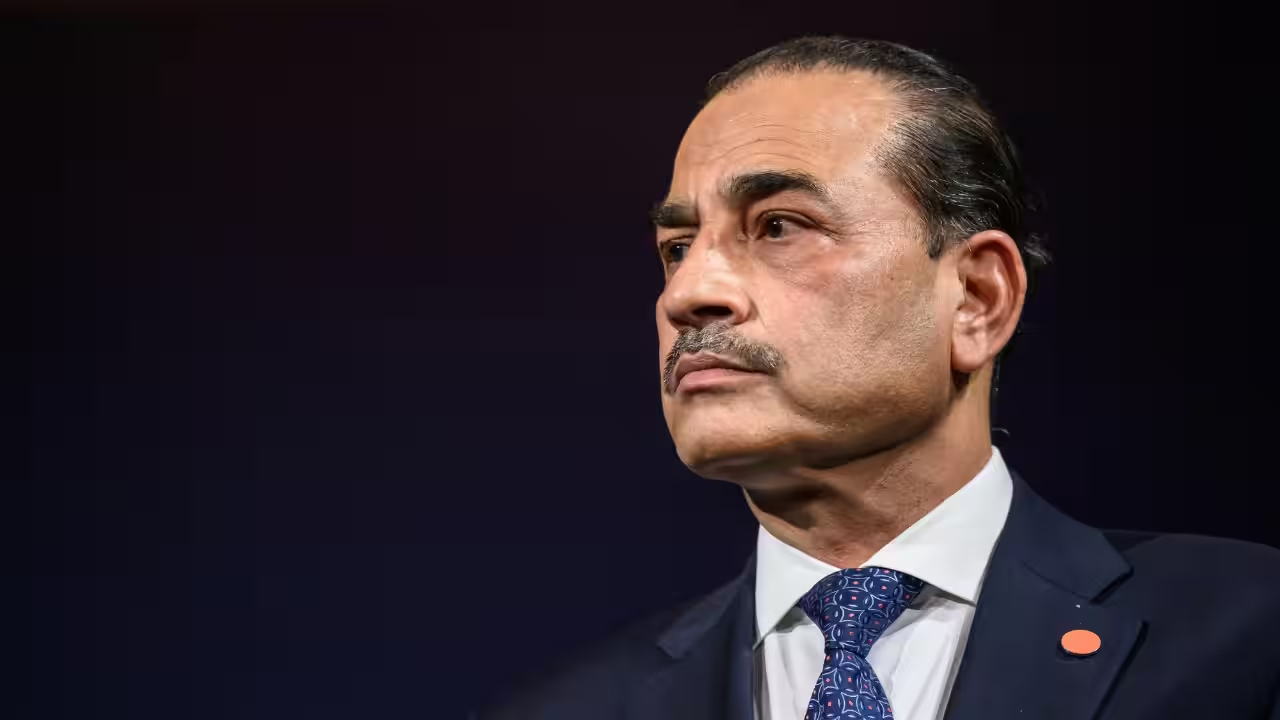
In Pakistan, the military chief, Field Marshal Asim Munir, is reportedly contemplating a significant alteration to the country’s political framework. This proposal involves potentially breaking up the existing four provinces into 12 to 15 smaller provinces, or even reorganising them into as many as 160 administrative units. The rationale behind this restructuring is that smaller provinces may be easier to govern, allowing for more efficient administration.

However, questions arise regarding whether such a division would lead to better governance or merely facilitate greater military control over civilian authorities. The military has historically held substantial influence over Pakistan’s political landscape, and there are concerns that this plan could further diminish the power of provincial governments, shifting authority towards the military establishment based in Rawalpindi.

While the specifics of Munir’s proposal remain unclear, the implications of dividing provinces like Punjab and Sindh, which are dominated by influential political families, could significantly alter the existing political dynamics. The restructuring could also affect control over the country’s natural resources, raising concerns about who would benefit from these changes.

Political Implications of Provincial Division

Pakistan’s four provinces—Punjab, Sindh, Khyber Pakhtunkhwa (KP), and Balochistan—each have their own elected assemblies and governments, allowing regional parties to challenge federal decisions. The populations of these provinces vary considerably; for instance, Punjab has approximately 128 million residents, accounting for over half of the national population, while Balochistan has around 15 million.

This demographic disparity complicates governance, particularly in remote areas where residents often face challenges in accessing government services. Dividing larger provinces could fragment political power, making it easier for the military to manage a greater number of provincial leaders, each with less political clout. However, this shift may also empower local communities that feel marginalised, giving them a stronger voice in governance.

The effectiveness of this restructuring would largely depend on the autonomy and resources allocated to the new provinces. The debate surrounding this proposal raises critical questions about whether the move is intended to enhance governance or to manage powerful political entities that have emerged in the current provincial structure. The potential division of Punjab and Sindh, both of which are significant political strongholds, could reshape the balance of power within Pakistan.

Resource Management and Governance Challenges

The discussion around restructuring also touches on the management of Pakistan’s natural resources. Balochistan is rich in minerals such as copper and gold, while Sindh has significant coal deposits. The proposed changes could impact how these resources are managed and who ultimately benefits from their extraction.

Concerns have been raised that weakening provincial governments might enable the military-backed federal government to pursue resource extraction without adequate local oversight. In recent developments, the situation in Khyber Pakhtunkhwa has raised alarms regarding the military’s influence over provincial governance.

On October 11, President Asif Ali Zardari declared a state of emergency in the province, suspending the elected government led by the Pakistan Tehreek-e-Insaf (PTI) party. This move has been interpreted as an attempt to consolidate control amid rising security concerns, further complicating the relationship between provincial and federal authorities.

The potential for restructuring Pakistan’s provinces poses significant challenges. While smaller provinces could theoretically improve governance by bringing officials closer to citizens, they would require adequate funding and institutional support to be effective. If not, the changes could lead to increased dependence on the federal government, undermining the very goals of improved local governance.

Long or Short, get news the way you like. No ads. No redirections. Download Newspin and Stay Alert, The CSR Journal Mobile app, for fast, crisp, clean updates!

App Store – https://apps.apple.com/in/app/newspin/id6746449540

Google Play Store – https://play.google.com/store/apps/details?id=com.inventifweb.newspin&pcampaignid=web_share

Latest News

Popular Videos
