


Italy Caps Foreign Students at 30% in Classrooms, Bans Burqa and Niqab in Schools
The CSR Journal Magazine

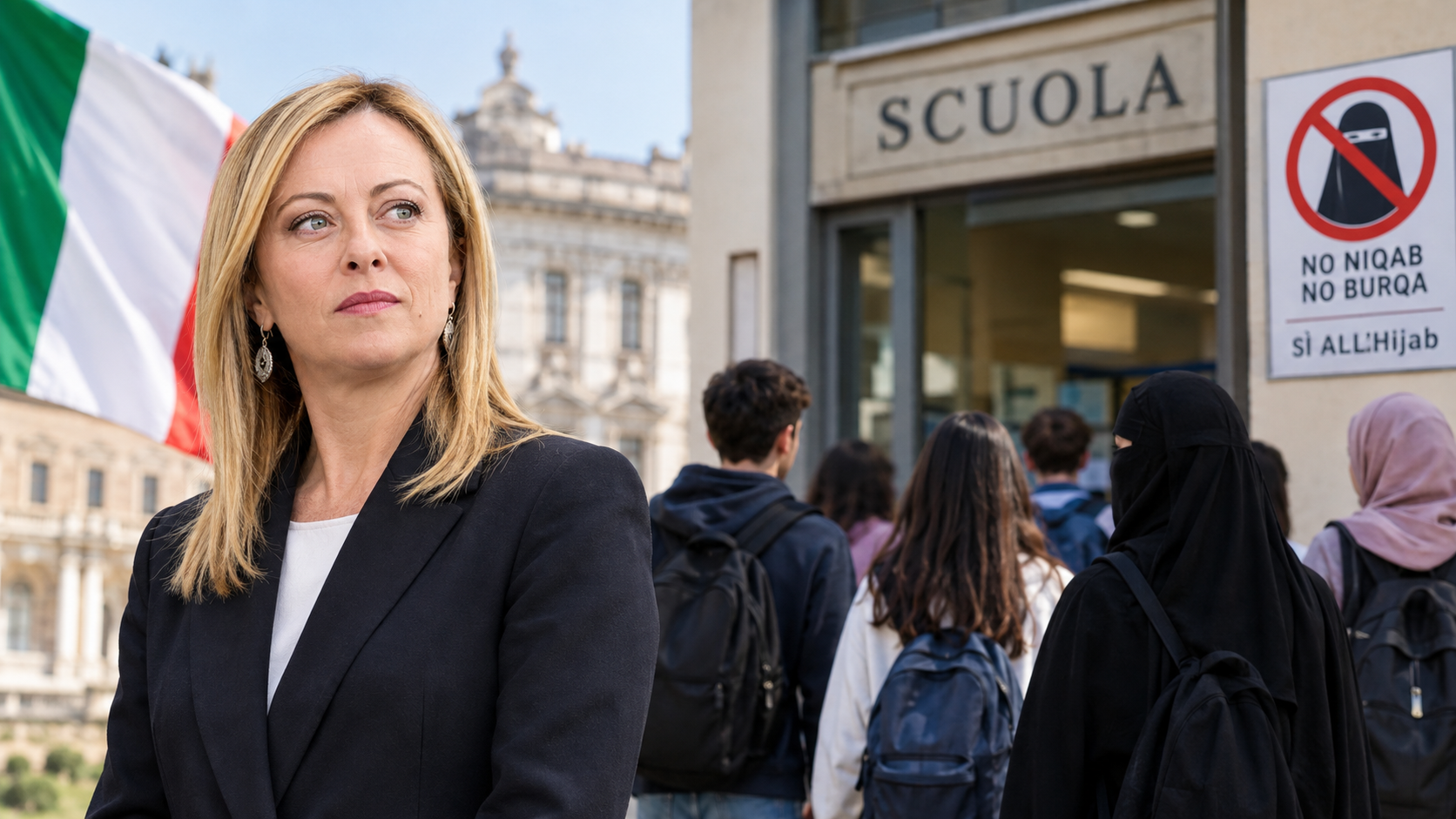
Italy’s government has enacted a decree aimed at establishing a limit on the number of students with insufficient Italian language skills in classrooms and prohibiting face-covering Islamic veils in educational institutions. This decision was made by Prime Minister Giorgia Meloni’s conservative administration, intending to promote better integration through language acquisition. However, critics argue this policy may force children to attend schools farther from their homes and politicise issues related to immigration.

The decree specifically restricts the proportion of foreign students lacking adequate Italian proficiency to 30 per cent in any classroom. Additionally, it forbids the wearing of burqas and niqabs in schools while permitting hijabs. The regulation is effective immediately but awaits approval from parliament within a two-month timeframe, where Meloni’s coalition holds a majority position.

Political analysts suggest that, with potential elections looming in spring, this measure could serve to solidify Meloni’s support within her conservative base. The practical effects of the policy may be minimal, with questions surrounding its implementation left unanswered.

Implementation Strategy and Educational Concerns

According to Education Minister Giuseppe Valditara, local school authorities will oversee student placements to avoid the concentration of non-Italian-speaking pupils in particular classes. Schools that struggle to comply with this new policy may seek exemptions and additional funding for language support initiatives. Valditara estimated that the new measures would impact approximately 1,000 classrooms, which accounts for roughly 0.3 per cent of all classrooms nationally, particularly affecting schools with a substantial number of recent migrants.

School administrators have voiced concerns regarding the feasibility of this directive in areas populated primarily by migrants. Antonello Giannelli, the president of the National Association of Principals, highlighted the challenge in practical application, stressing that in many districts with a significant immigrant presence, students may only have access to one school, making relocation unviable.

Teachers’ unions have criticised the government for a perceived lack of consultation and adequate resources. They assert that the allocated €14 million funding is insufficient to recruit the specialised teachers and cultural mediators needed for proper student support. Giovanni Castagno, a primary school teacher in central Rome, noted that differences amongst students can enrich the educational experience, arguing that foreign students bring valuable perspectives to the classroom.

Legislative Context and Criticism

Statistics from the Education Ministry indicate that non-Italian citizens constituted 11.2 per cent of Italy’s student population during the 2022-23 academic year. Furthermore, classes with more than 30 per cent foreign students made up 7.6 per cent of the total. Notably, foreign students born in Italy will be excluded from this cap, alongside those who have previously attended Italian preschools.

The decree’s provisions regarding facial coverings have also drawn criticism, as many educators have characterised this policy as targeting a practice that is infrequently observed in the classroom setting. Critics argue that while headscarves are generally accepted among Muslim students, full-face veils are rarely seen, suggesting the measure may serve more as a political statement than a solution to educational challenges.

Opposition parties have pointed out that the 30 per cent cap mirrors a guideline introduced in 2010 by the Education Ministry, alleging the current government is merely repackaging existing policies rather than making substantial investments in underperforming schools. Centre-left party leader Elly Schlein accused the government of using educational institutions as a platform for a political stance on immigration. Valditara maintained that the aim of this legislation focuses on enhancing integration by providing linguistic educational support.

Long or Short, get news the way you like. No ads. No redirections. Download Newspin and Stay Alert, The CSR Journal Mobile app, for fast, crisp, clean updates!

App Store –  https://apps.apple.com/in/app/newspin/id6746449540 

Google Play Store – https://play.google.com/store/apps/details?id=com.inventifweb.newspin&pcampaignid=web_share

Latest News

Popular Videos
