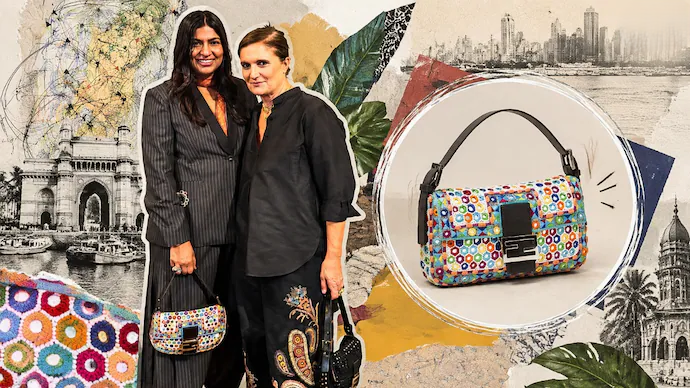
Recently, there has been considerable discussion regarding the recognition of Indian cultural elements by international fashion brands. The introduction of the Fendi “Navratri” Baguette, featuring colourful embroidery and mirror work, has reignited this conversation. Priced at Rs 9.5 lakh (US$10,000), this bag draws a direct connection to traditional Indian aesthetics, particularly associated with vibrant Navratri celebrations in Gujarat. However, the product listing does not credit India or refer to its design inspiration.
This lack of acknowledgment has sparked criticism on social media, where users express frustration over perceived cultural appropriation. A Reel shared by a lifestyle influencer gained significant attention, where she humorously questioned if Fendi was aligning with Indian festivities. The post featured comments highlighting the absence of homage to Indian roots, intensifying the backlash against the luxury brand.
Background and Design Connections
The Baguette is part of Fendi’s Fall/Winter 2026–27 collection, under the direction of Maria Grazia Chiuri, who returned to Fendi as creative director in October 2025. Interestingly, the term “Navratri edition” was never officially used by Fendi, suggesting that the brand might not fully embrace the cultural implications of its design choices.
A complex narrative unfolds with ties to Chanakya, a renowned embroidery workshop in Mumbai. The atelier has a long-standing relationship with Fendi and has been instrumental in crafting intricate textile designs for the brand. Diet Paratha, a notable figure in fashion commentary, pointed out that the new bag is effectively a remake of a vintage design from 1995, originally developed by artisans at Chanakya.
Moreover, Maria Grazia Chiuri has notably advocated for Indian craftsmanship, having staged Dior’s first-ever runway show in India and consistently highlighting the artisans’ significant contributions to the luxury fashion landscape. Recently, Chiuri and Karishma Swali of Chanakya were seen together at the 40th-anniversary celebration of the atelier, further demonstrating their collaborative efforts.
Exhibition of Craftsmanship and Artistic Collaboration
Fendi’s commitment to highlighting craftsmanship is currently evident as the brand showcases its partnership with Chanakya at Harrods in London. Live demonstrations feature artisans from Mumbai, illustrating the needlework techniques employed in creating their Baguette and Peekaboo bags. This effort not only emphasises the brand’s dedication to craftsmanship but also offers visibility to the artisans behind the work.
While the artisans involved in the creation of this bag are acknowledged to have received fair compensation, and the brand has featured Chanakya’s work in a tweet, many argue that a formal acknowledgment within the product description would enhance the narrative. This discussion provides a nuanced perspective on luxury fashion’s engagement with global artistic traditions and the importance of transparent recognition in collaborative projects.
As the dialogue surrounding cultural appropriation continues, the case of Fendi’s Baguette illustrates the intricate relationship between international brands and traditional craftsmanship. The presence of Indian artisans in high-fashion production not only reflects a positive partnership but also calls for a more comprehensive representation of the cultures from which these design inspirations are drawn.
Long or Short, get news the way you like. No ads. No redirections. Download Newspin and Stay Alert, The CSR Journal Mobile app, for fast, crisp, clean updates!