


Archaeologists Discover 5,000-Year-Old Human Bone Cups and Masks in China’s Yangtze River Delta
The CSR Journal Magazine

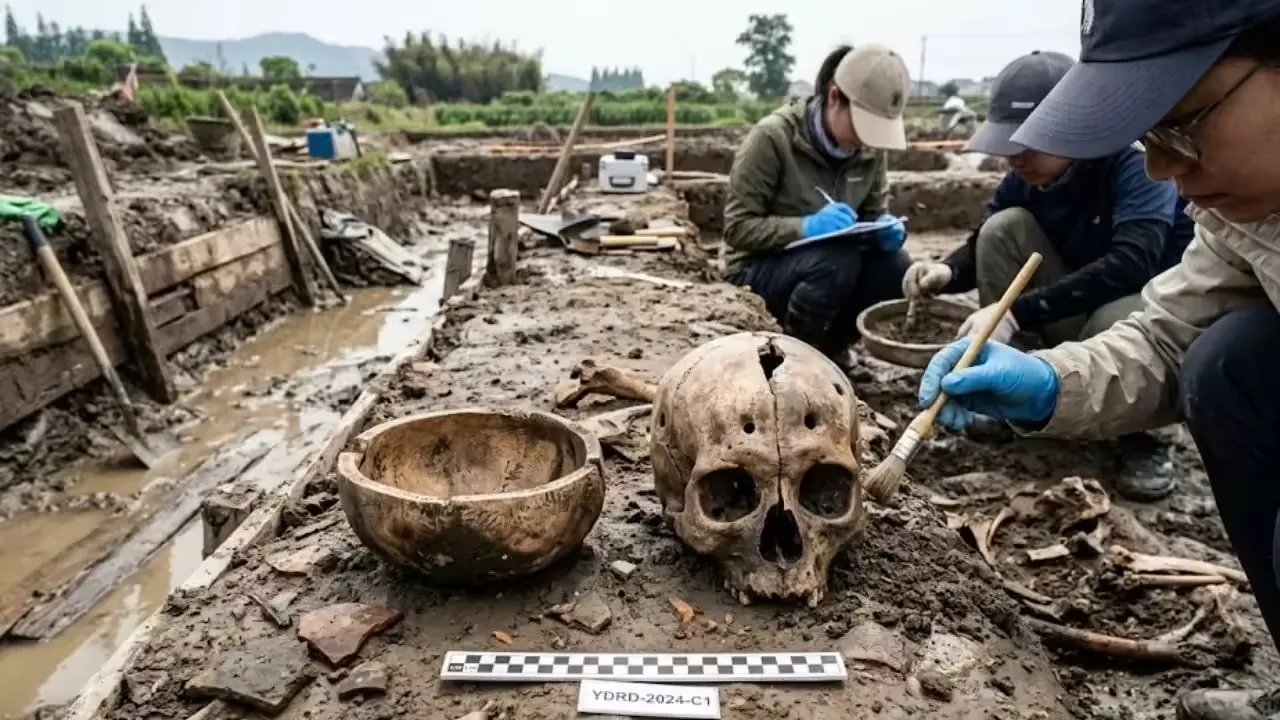
Recent archaeological excavations in the Yangtze River Delta have led to the discovery of human bone cups and masks that date back approximately 5,000 years. The findings, characterised by their intricate craftsmanship, provide new insights into ancient funeral practices and rituals. These artefacts were uncovered during systematic archaeological surveys and excavations, highlighting the region’s rich cultural heritage.

The discovery of such ancient items has sparked significant interest among archaeologists and historians alike. Experts believe that the bone cups and masks may indicate complex burial rituals prevalent among the communities that lived in the delta during the early stages of Chinese civilisation. The examination of these objects will likely yield valuable data regarding the social and religious practices of the time.

Impact on Understanding Ancient Cultures

The artefacts appear to reflect a blend of artistic expression and ritualistic significance. Researchers are currently analysing the design and materials used in the bone cups and masks to understand better the cultural aspects of the society that produced them. Initial assessments suggest that these items may have been used in ceremonial contexts, possibly related to ancestor worship.

This discovery is likely to contribute to a growing body of knowledge regarding prehistoric ritual practices across different regions of China. By investigating such findings, scholars hope to draw connections between ancient cultures and their evolving belief systems over time. The insights gained could also lead to a deeper understanding of the regional variations in burial customs within China.

As excavations continue, archaeologists are optimistic about uncovering further artefacts that could help in reconstructing the historical narrative of the Yangtze River Delta. The multidisciplinary approach utilised in these excavations aims to integrate archaeological findings with environmental data to paint a fuller picture of life in ancient China.

Future Research Directions

With these finds, researchers plan to conduct further studies, including radiocarbon dating and isotopic analysis, to determine the age and provenance of the bone artefacts. Such scientific analyses will provide additional context regarding the people’s living conditions, dietary habits, and potential migration patterns throughout the region. This project’s success underscores the importance of preserving historical sites for ongoing research and understanding.

The findings from the Yangtze River Delta illustrate the potential buried beneath the region and the need for proactive conservation efforts. The collaboration among archaeological teams, local authorities, and cultural heritage organisations is essential for protecting these significant sites. As archaeologists in the region continue their work, the anticipation for new discoveries remains high.

Overall, the recent uncovering of these 5,000-year-old bone cups and masks marks a noteworthy moment in the field of archaeology, enhancing the historical narrative of early Chinese societies. It reiterates the importance of continued exploration and research into ancient cultures, which can provide profound insights into human history and the evolution of civilisations.

Long or Short, get news the way you like. No ads. No redirections. Download Newspin and Stay Alert, The CSR Journal Mobile app, for fast, crisp, clean updates!

App Store –  https://apps.apple.com/in/app/newspin/id6746449540 

Google Play Store – https://play.google.com/store/apps/details?id=com.inventifweb.newspin&pcampaignid=web_share

Latest News

Popular Videos
