


G4 Nations Advocate for United Nations Security Council Reform
The CSR Journal Magazine

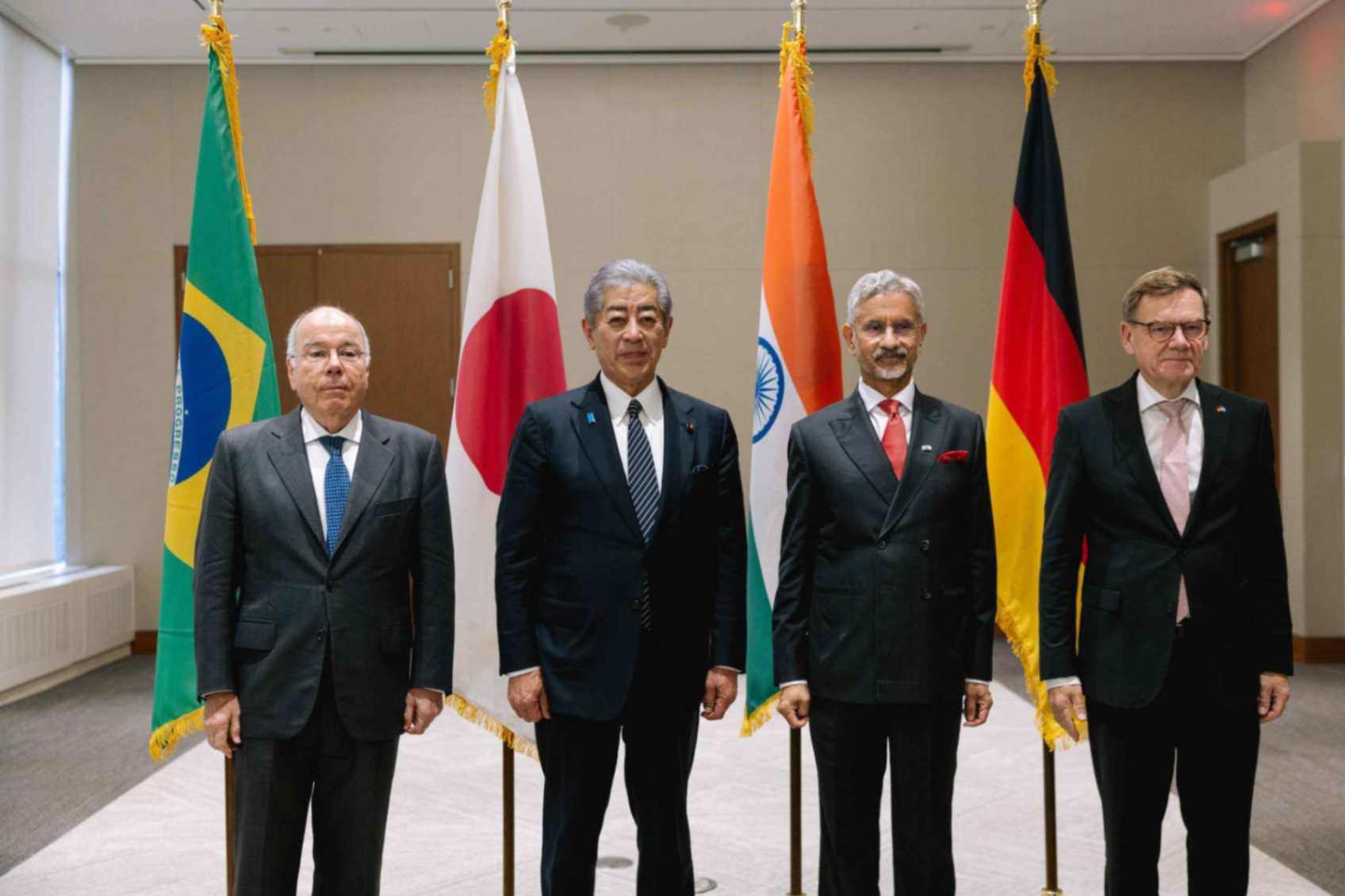
The G4 nations, comprising Brazil, Germany, India, and Japan, have raised significant issues regarding the reform of the UN Security Council. They contend that the current structure, which has existed for 80 years, fails to mirror contemporary geopolitical dynamics. A joint statement was released following their ministerial meeting on September 20, 2026, during the 81st session of the UN General Assembly.

Attendees of the meeting included Brazil’s Foreign Minister Mauro Vieira, Germany’s Federal Minister for Foreign Affairs Johann David Wadephul, India’s External Affairs Minister S. Jaishankar, and Japan’s Minister for Foreign Affairs Motegi Toshimitsu. The G4 underscored that the existing Council is inadequately equipped to fulfil its primary role of maintaining international peace and security due to its outdated framework.

Ineffectiveness of Current Framework

The ministers expressed their discontent with the Inter-Governmental Negotiations (IGN) process, which they described as largely ineffective in advancing security council reform after 18 years of discussions. They articulated strong concerns regarding the stagnation experienced during previous negotiating sessions, indicating that the process fails to yield actionable outcomes.

Specific apprehensions were raised about a proposal labelled as a ‘bridging proposal,’ which the G4 believed was introduced prematurely, prior to the initiation of text-based negotiations. The G4 asserted that this proposal lacks the support of a substantial majority of member states advocating for expansion in both permanent and non-permanent categories of council membership.

The statement reaffirmed that consensus is not a prerequisite for advancing decisions related to security council reform, as established under the UN Charter and documented in the IGN mandate. This raises questions about the efficacy and relevance of the current diplomatic approach in ensuring diverse representation.

Push For a Consolidated Model

The G4 members resolved to collaborate more closely with other factions advocating for reform to create a unified model that reflects the perspectives of a greater portion of member states. They stated that commencing text-based negotiations should be prioritised, emphasizing the necessity of restoring the Council’s representativeness, legitimacy, credibility, and efficacy while reinforcing a multilateral system centred on the UN.

In their discussion, the ministers reiterated that reform discussions should extend beyond the confines of the IGN, indicating their willingness to engage with a broader UN community across various platforms, including the General Assembly. This expanded dialogue aims to ensure the inclusion of wider perspectives on the reform of the Security Council.

With a backdrop of escalating geopolitical challenges, the G4 stressed that urgent reform of the Security Council is paramount. They asserted that the Council must evolve to better reflect contemporary international realities and be adequately equipped to address current and future challenges to global peace and security.

The ministers firmly highlighted that reforms must involve an expansion in both permanent and non-permanent seats within the council. They reiterated the importance of better representation for underrepresented regions and groups, such as Africa, the Asia-Pacific, and Latin America and the Caribbean, alongside their commitment to supporting Africa’s demand for elevated representation in the Security Council.

Long or Short, get news the way you like. No ads. No redirections. Download Newspin and Stay Alert, The CSR Journal Mobile app, for fast, crisp, clean updates!

App Store –  https://apps.apple.com/in/app/newspin/id6746449540 

Google Play Store – https://play.google.com/store/apps/details?id=com.inventifweb.newspin&pcampaignid=web_share

Latest News

Popular Videos
