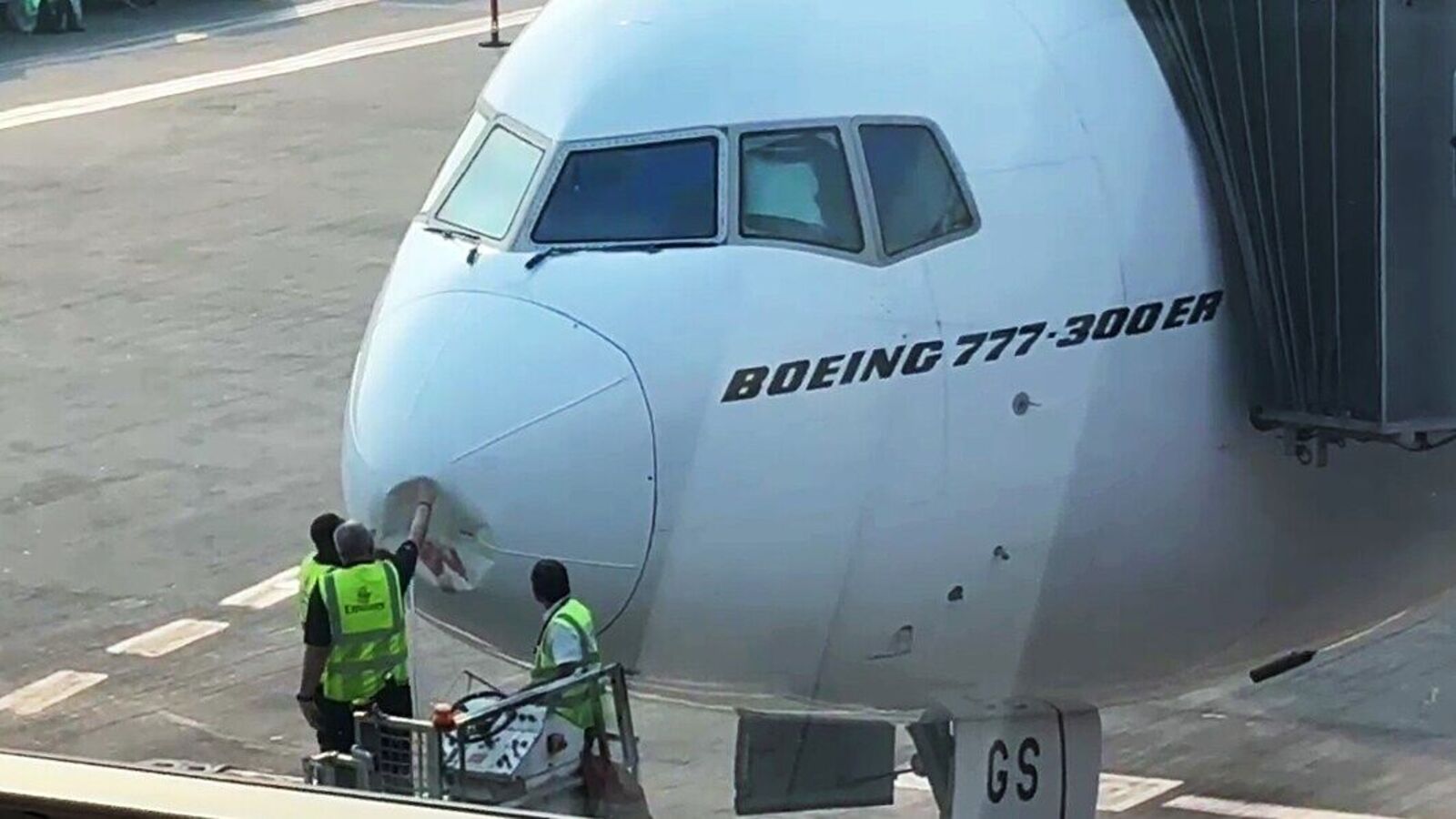
An Emirates flight (EK 517) scheduled to depart from Delhi to Dubai at 4:25 pm on Friday experienced a delay due to a bird strike. This incident reportedly affected the flight’s departure schedule, leading to a thorough inspection by ground staff at the airport. The bird strike occurred as the aircraft was preparing for takeoff, prompting immediate attention from the maintenance team.
Video footage from the scene shows airport personnel examining the nose cone of the aircraft, which is a critical area that can be impacted during such incidents. Bird strikes are defined as occurrences where birds collide with an aircraft, which can happen during takeoff, landing, or while the plane is in flight. The potential risks associated with bird strikes include damage to the aircraft’s engines and windshields, which can compromise safety.
The inspection process is vital to ensure that the aircraft remains airworthy before it can take off. Ground staff are trained to handle such situations meticulously, assessing any damage and determining the necessary repairs. The safety of passengers and crew is the top priority, and delays are often a precautionary measure to ensure that all safety protocols are followed.
Understanding Bird Strikes
Bird strikes are a known hazard in aviation, with the likelihood of such incidents increasing when birds are flying in flocks. In these cases, multiple birds may collide with the aircraft simultaneously, raising the risk of significant damage. Airports implement various measures to mitigate these risks, including habitat management around the airfield and employing bird-detection technologies.
According to aviation experts, bird strikes can lead to serious consequences, including engine failure in severe cases. Aircraft are designed to withstand certain levels of impact, but the effects can vary depending on the size and number of birds involved. The aviation industry continually works to improve safety standards and reduce the incidence of bird strikes through research and development.
In addition to the immediate safety concerns, bird strikes can also lead to financial implications for airlines. Delays and repairs resulting from such incidents can incur additional costs, impacting operational efficiency. Airlines often have to reschedule flights and manage passenger expectations during these unforeseen circumstances.
Current Status and Future Precautions
As of now, the Emirates flight EK 517 remains delayed while inspections are completed. Passengers have been advised to stay updated on the flight status through the airline’s official channels. The situation is being monitored closely, and further information will be provided as it becomes available.
This incident highlights the importance of ongoing vigilance in aviation safety. Airports and airlines are continually adapting their strategies to address the challenges posed by wildlife encounters. Enhanced training for ground staff and improved technology for bird detection are among the measures being implemented to minimise risks.
In conclusion, while bird strikes are an inherent risk in aviation, the industry remains committed to ensuring the highest safety standards. Continuous improvements in procedures and technology are essential to mitigate the impact of such incidents on flight operations and passenger safety.
Long or Short, get news the way you like. No ads. No redirections. Download Newspin and Stay Alert, The CSR Journal Mobile app, for fast, crisp, clean updates!