


Delhi’s Barapullah Phase III Flyover Opens, Resulting in Heavy Traffic Jam
The CSR Journal Magazine

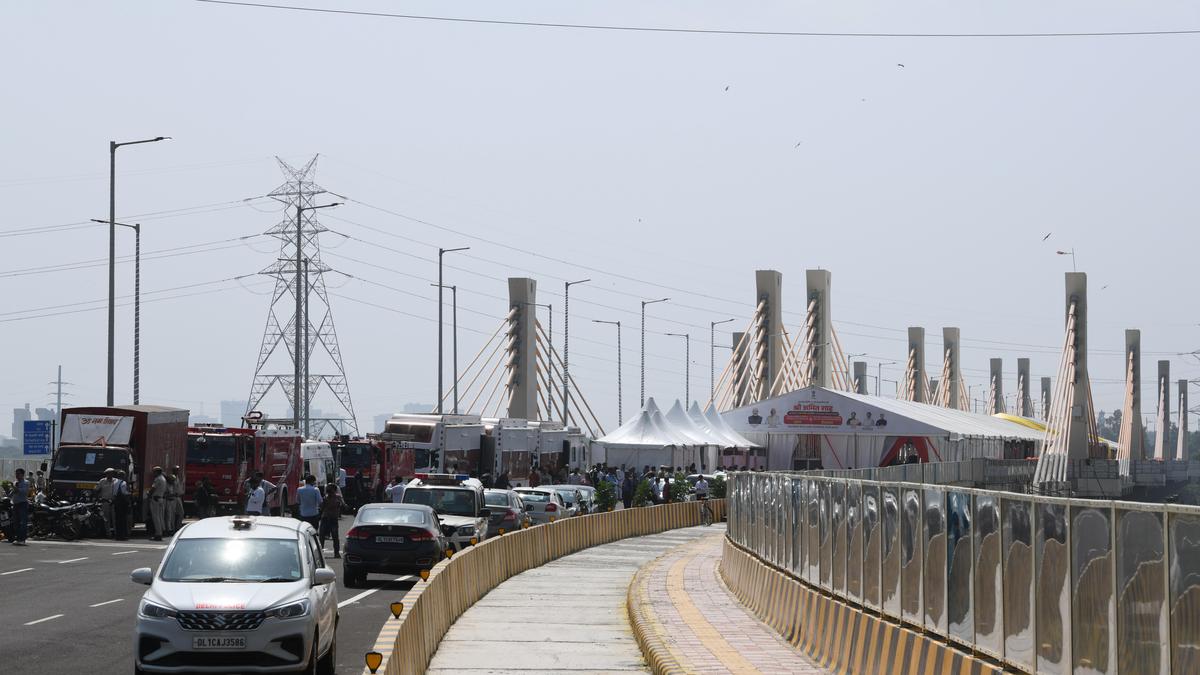
The recent opening of the Barapullah Phase-III flyover in Delhi led to significant traffic congestion on the very first day of its operation. This occurred on Wednesday, September 30, following the project’s inauguration by Union Home Minister Amit Shah the previous day, on September 29. Motorists frequently encountered extensive delays as traffic police set up barricades at various entry points to manage the flow of vehicles.

Commuters reported that the worst of the congestion was observed between Mayur Vihar Phase-I and Sarai Kale Khan. On the inaugural day, many individuals experienced prolonged travel times. Witnesses indicated that traffic conditions deteriorated rapidly, with some vehicles taking approximately 40 minutes to travel from Mayur Vihar Phase-I to central Delhi.

By the evening of Thursday, October 1, authorities claimed that traffic flow had returned to normal. A senior officer from the traffic police stated that the initial congestion was temporary and that alternative routes, such as the DND and Akshardham, were recommended to mitigate the delays. After removing the barricades, traffic reportedly improved, allowing smoother passage for commuters.

Roads and Traffic Management Challenges

The newly inaugurated corridor was designed to facilitate better connectivity between Mayur Vihar Phase-I and Sarai Kale Khan on the Ring Road, integrating with the existing Barapullah network to create a seamless 9-km stretch up to the AIIMS roundabout. Despite the project’s intentions, some commuters noted that the anticipated reduction in travel time was not evident in the immediate aftermath of the opening.

An additional segment of the corridor, linking AIIMS to Mayur Vihar, was opened on Thursday afternoon, further contributing to enhanced traffic movement. Public Works Department (PWD) officials confirmed the development, stating that the expansion aimed to alleviate the burden on existing routes that were often congested.

Concerns had been raised by traffic experts prior to the inauguration, warning that the new flyover, meant to alleviate congestion near the Delhi-Noida Direct (DND) flyway, might inadvertently lead to increased traffic bottlenecks around Sarai Kale Khan. The unpredictable traffic patterns seen after the flyover’s opening seemed to corroborate these concerns.

Overview and Development of the Barapullah Phase III Project

The Barapullah Phase-III project, which carries an estimated cost of Rs 1,635 crore, received approval in 2014, with construction commencing in 2015. The original completion date was set for 2017; however, multiple delays extended the timeline for its opening. Following its inauguration, the project has been closely scrutinised as it aims to enhance traffic flow in the area, which has long been identified as a major congestion zone.

Linking key areas such as Mayur Vihar Phase-I to Sarai Kale Khan, the newly constructed corridor holds promise for improved travel times across Delhi. In an effort to relieve pressure on existing thoroughfares, it was designed to create a continuous, signal-free route aimed at easing overall traffic conditions in the region.

Despite the initial challenges, officials remain optimistic about the long-term impact of the new flyover. They emphasised the necessity of ongoing monitoring and adjustments to traffic management tactics to fully realise the benefits of the infrastructure development. The project offers a crucial improvement in urban mobility, although its immediate results raised questions regarding its operational effectiveness in the short term.

Long or Short, get news the way you like. No ads. No redirections. Download Newspin and Stay Alert, The CSR Journal Mobile app, for fast, crisp, clean updates!

App Store –  https://apps.apple.com/in/app/newspin/id6746449540 

Google Play Store – https://play.google.com/store/apps/details?id=com.inventifweb.newspin&pcampaignid=web_share

Latest News

Popular Videos
