


Scientists Discover ‘Yellow Brick Road’ Formation Beneath Pacific Ocean
The CSR Journal Magazine

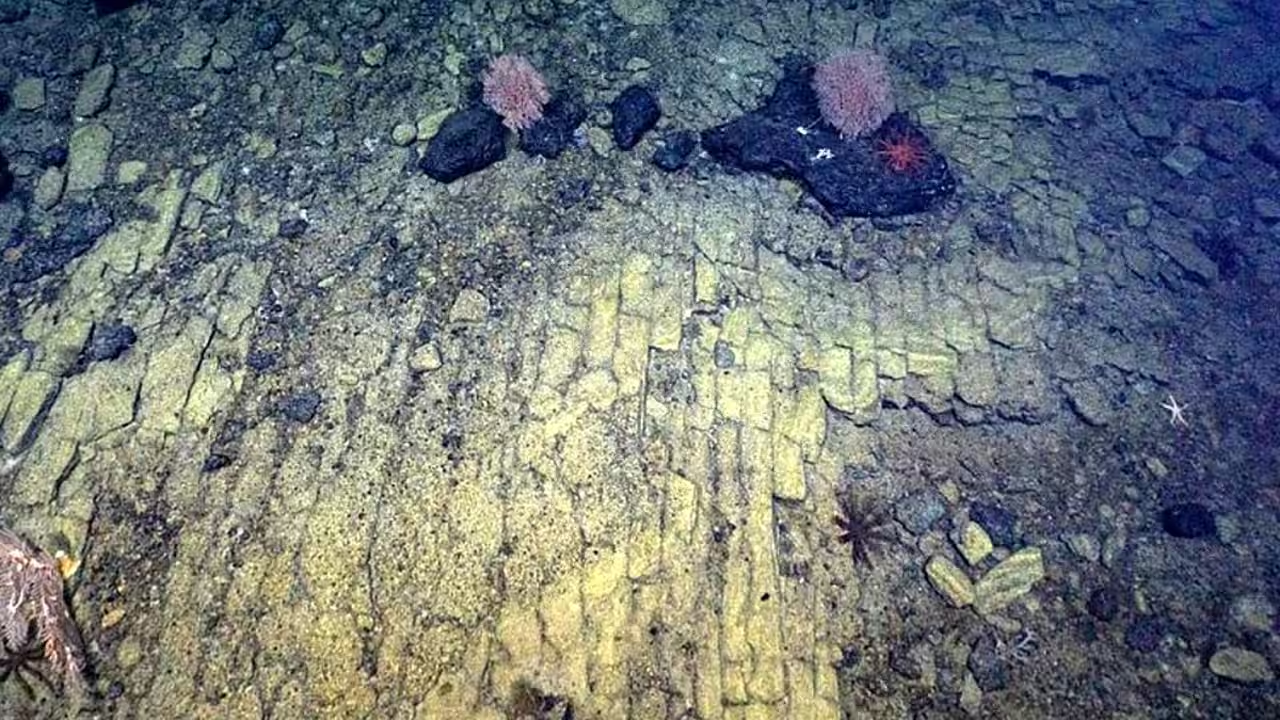
A remarkable structure resembling a yellow brick road has been discovered on the ocean floor of the Pacific during an expedition conducted by the Ocean Exploration Trust aboard the research vessel E/V Nautilus. This formation was located at a depth of 1,029 metres near Nootka Seamount, within the boundaries of the Papahānaumokuākea Marine National Monument. Scientists have clarified that the structure is a natural geological phenomenon rather than a man-made creation.

The formation’s distinct pattern, which has been likened to a brick sidewalk, is attributed to the natural fracturing of hyaloclastite, a volcanic rock. This type of rock forms when hot magma interacts with cold water, resulting in the fragmentation of volcanic material. The scientists involved in the study have stated that the yellow hue of the formation is likely due to low-temperature hydrothermal alteration of volcanic glass.

During the expedition, researchers observed that the fractures in the formation intersect at right angles, contributing to its road-like appearance. However, they emphasised that this resemblance does not imply any human activity in the area. Instead, it reflects the natural geological processes that have shaped the seafloor.

Insights into the Formation’s Composition

The report published by The Oceanography Society details the geological characteristics of the yellow brick road formation. It suggests that the surface is primarily composed of fractured hyaloclastite, which is a result of volcanic activity on the ocean floor. The right-angled cracks that characterise the formation are a natural aspect of the rock’s structure, rather than evidence of any deliberate arrangement.

Furthermore, the report explains how the yellowish appearance of the volcanic glass is a product of hydrothermal alteration. This process occurs when heated fluids interact with the rock, leading to the formation of iron oxyhydroxide, which imparts the distinctive yellow colour to the surface. The combination of the fractured rock and altered volcanic glass contributes to the striking visual similarity to a road.

Researchers have confirmed that the formation is entirely natural and not the result of human construction. This clarification is crucial in understanding the geological processes that govern the ocean floor and the various formations that can arise from them.

Further Discoveries During the 2022 Field Season

The yellow brick road formation was one of several significant findings made during the 2022 field season of the E/V Nautilus. The expedition involved extensive seafloor mapping, remotely operated vehicle dives, and the use of autonomous systems to explore poorly surveyed areas of the deep ocean. A total of 120 uncrewed vehicle deployments were recorded throughout the season.

In addition to the yellow brick road, the research team documented various deep-sea ecosystems, including coral and sponge communities, as well as fossilised remains such as whale bones and a Megalodon tooth. Notably, researchers also collected a sea pen from the genus Solumbellula, marking its first recorded observation and collection in the Pacific.

The exploration efforts combined scientific research with public outreach, enabling individuals on shore to engage with the discoveries through live broadcasts and ship-to-shore connections. This initiative aimed to foster a greater understanding of deep-sea environments and the importance of ongoing exploration and conservation efforts.

Long or Short, get news the way you like. No ads. No redirections. Download Newspin and Stay Alert, The CSR Journal Mobile app, for fast, crisp, clean updates!

App Store – https://apps.apple.com/in/app/newspin/id6746449540

Google Play Store – https://play.google.com/store/apps/details?id=com.inventifweb.newspin&pcampaignid=web_share

Latest News

Popular Videos
