


Ancient Submerged Sites Off Australia Unveil 9,000-Year-Old Stone Artefacts
The CSR Journal Magazine

Archaeologists collaborating with Indigenous rangers have identified two submerged sites near Murujuga in Western Australia. These sites provide crucial insights into how First Nations communities interacted with the landscape prior to its submersion due to rising sea levels thousands of years ago. The findings, reported and detailed in a recent study published in Quaternary Science Reviews, build upon previous research into the region’s Aboriginal heritage.

The discoveries include stone artefacts located near an ancient freshwater spring and evidence of human activity around a rocky hill adjacent to a former river channel. Collectively, these findings illustrate a landscape that once connected various parts of the Dampier Archipelago before significant coastline changes occurred following the last Ice Age.

Insights Into Human Interaction With the Environment

The newly identified sites shed light on how ancient peoples engaged with diverse environments, ranging from freshwater sources to elevated terrains overlooking waterways. Before the rise in sea levels transformed the region, these areas formed part of an accessible landscape rather than the submerged seabed they are today. The freshwater spring would have served as a vital resource and a natural gathering place for communities.

According to local ranger Richard Variakojis, the submerged spring is still connected to traditional songlines, emphasising that locations can retain cultural significance even after substantial environmental changes alter their physical characteristics. The second site, situated near a rocky hill, provides additional evidence of how people navigated and utilised the region when the archipelago was connected by dry land.

Researchers estimate that the sites were submerged at least 9,000 years ago, although the artefacts themselves may date back even further. This distinction is significant, as the timing of inundation indicates when the landscape became submerged, rather than when each artefact was created or utilised.

Analysis of Artefacts and Their Implications

An examination of the artefacts reveals that some originated from stone found around Rosemary Island, located approximately 23 kilometres from the discovery sites. This suggests that ancient peoples selected and transported stone over considerable distances, providing insights into resource movement across the ancient landscape. The choice of specific stone materials may have been influenced by their suitability for tool-making, although the exact reasons for selecting particular sources require further exploration.

The discoveries contribute to a growing body of research focused on submerged archaeological sites throughout Australia. As sea levels rose after the last Ice Age, more than two million square kilometres of the continent’s continental shelf became inundated, covering landscapes once inhabited and traversed by First Nations peoples. Much of this underwater terrain remains unexplored, presenting researchers with a vast area for investigating early human activity.

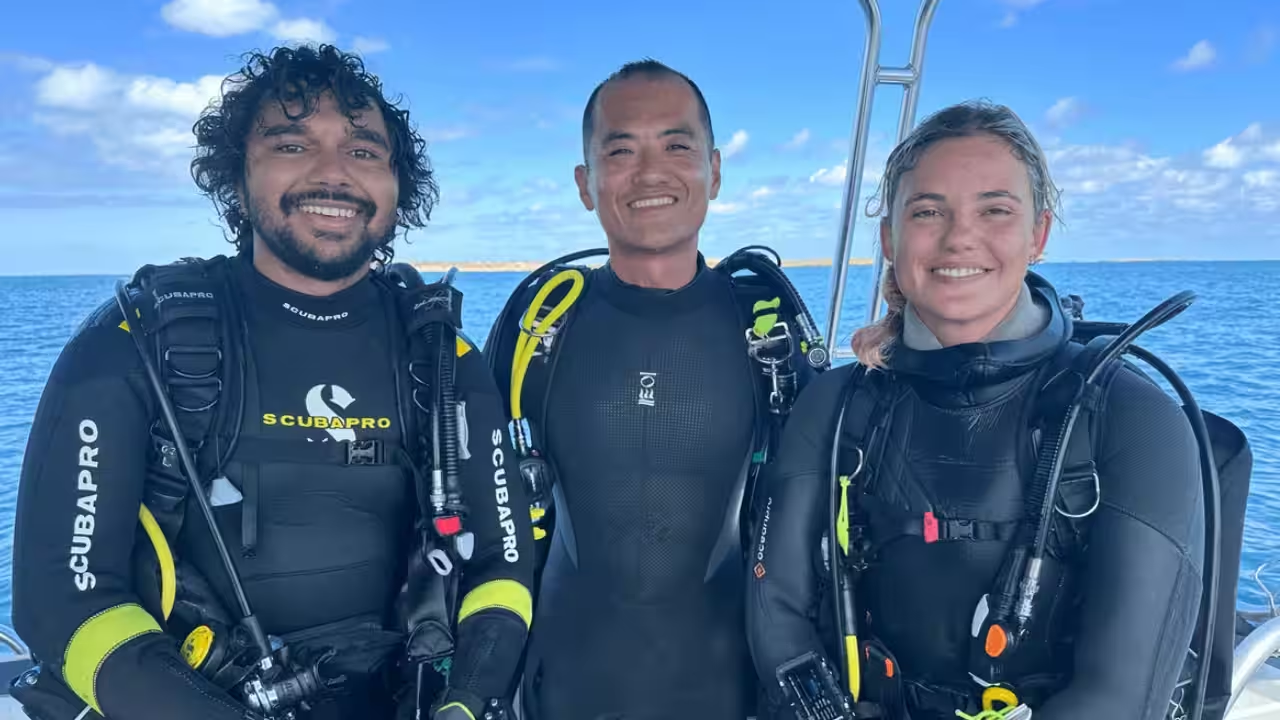
The research initiative involved collaboration between the Murujuga Aboriginal Corporation and various academic institutions, including Flinders University, the University of Western Australia, James Cook University, and the University of York in the United Kingdom. Indigenous rangers Malik Churnside and Richard Variakojis, who trained as scientific divers, participated in underwater surveys and played a key role in artefact discovery. Their involvement highlights the importance of Indigenous knowledge in documenting and interpreting the region’s cultural heritage.

For the Ngarda-Ngarli people, the Traditional Owners and Custodians of Murujuga, these findings reinforce the deep connection between land, sea, and cultural identity. The Murujuga Cultural Landscape, recognised on UNESCO’s World Heritage List, encompasses the Burrup Peninsula, the Dampier Archipelago, surrounding marine areas, and the submerged landscapes.

Long or Short, get news the way you like. No ads. No redirections. Download Newspin and Stay Alert, The CSR Journal Mobile app, for fast, crisp, clean updates!

App Store – https://apps.apple.com/in/app/newspin/id6746449540

Google Play Store – https://play.google.com/store/apps/details?id=com.inventifweb.newspin&pcampaignid=web_share

Latest News

Popular Videos
