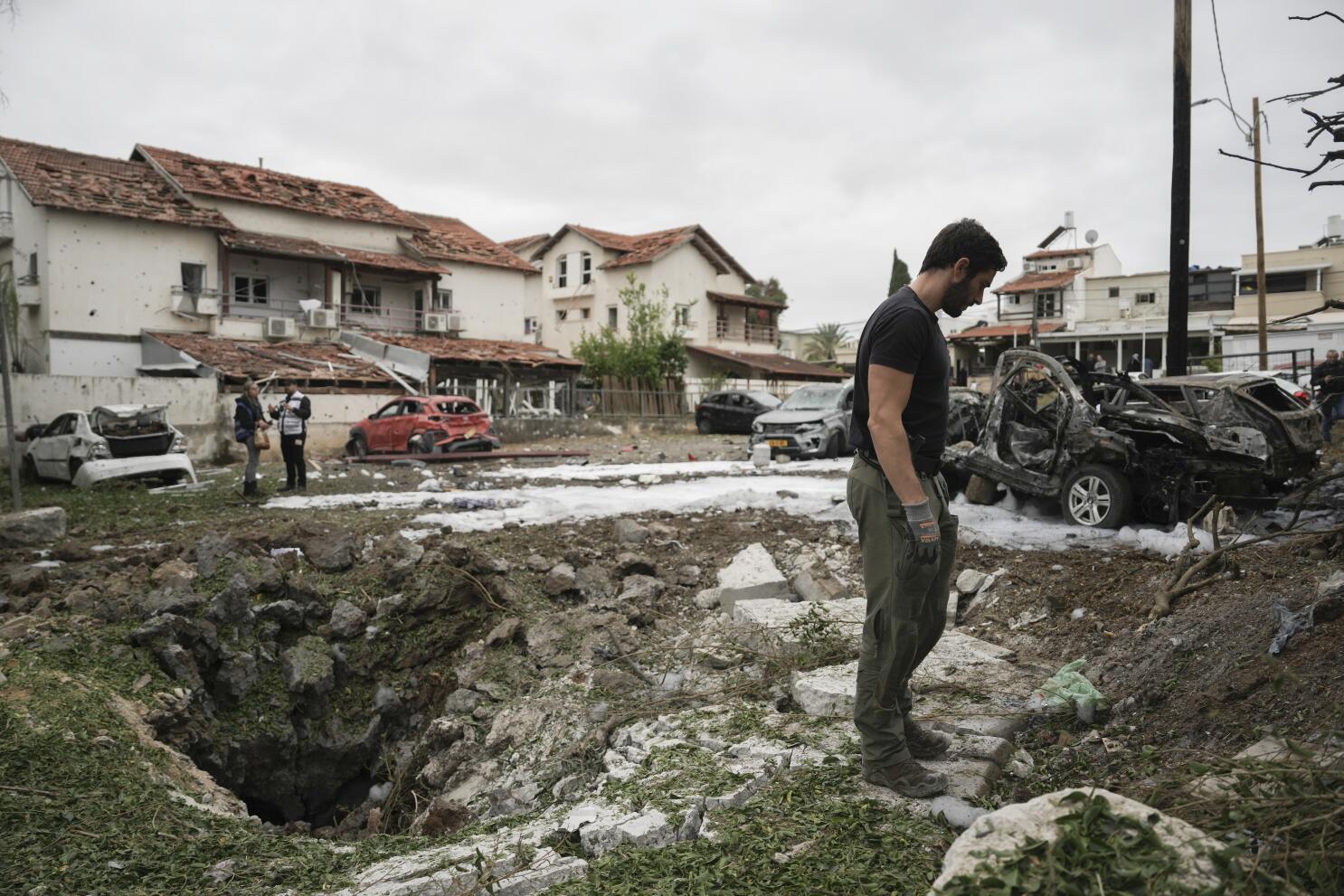
Israeli police bomb squad inspect the site after a missile fired from Lebanon hit the area in Petah Tikva, outskirts of Tel Aviv, Israel, Sunday Nov. 24, 2024. (AP Photo/Oded Balilty)
The recent tensions between Hezbollah and Israel have escalated markedly, with Hezbollah reportedly firing numerous rockets into Israeli territory. This escalation follows Hezbollah’s rejection of a proposed buffer zone aimed at de-escalating the situation. Observers note that these developments are part of an ongoing conflict that has sparked widespread concern in the region.
The rejection of the buffer zone plan indicates a firm stance by Hezbollah against any form of negotiation that could restrict its military capabilities. Previous attempts to broker peace or establish zones of de-escalation have often encountered roadblocks, highlighting the complexities involved in Israeli-Hezbollah relations.
In response to the rocket attacks, Israel has reiterated its commitment to defending its territory and citizens. The Israeli Defence Forces (IDF) have issued statements condemning the assaults and have indicated that they will take appropriate measures to ensure the safety of their population.
Response from the International Community
The international community has expressed concern over the escalating violence between Hezbollah and Israel. Various nations and organisations have called for both sides to exercise restraint and engage in dialogue to prevent further hostilities. The potential for a larger regional conflict raises alarms, as stability in the Middle East remains precarious.
Efforts by international mediators, including the United Nations, to foster peaceful resolutions have often been met with limited success. The geopolitical dynamics in the region are influenced by numerous factors, including relations with Iran and the involvement of various local factions.
Calls for dialogue underscore the urgent need for diplomatic solutions, though the path to such discussions remains fraught with challenges. Previous ceasefire agreements have proven fragile, leading to scepticism about the prospects for renewed negotiations in the current climate.
Recent Developments on the Ground
Following the rocket barrages, reports have emerged of possible civilian casualties and damage in northern Israel. The IDF has activated defence systems to intercept incoming threats and assess the extent of the damage caused by the attacks. Local authorities are reportedly on high alert, bracing for further escalations.
In addition to military responses, regional political leaders are closely monitoring the unfolding situation. Concerns over the humanitarian impact of escalating violence have also been raised, with many urging for uninterrupted aid to affected areas. Local populations face increasing risks as tensions mount.
Additionally, media coverage from the region is highlighting personal accounts from those directly affected by the rocket attacks. Citizens are expressing fear and uncertainty, as the ongoing violence disrupts daily life and raises concerns about broader regional stability.
As the situation remains dynamic, analysts are closely watching for any signs of change in the conflict or potential resolutions. The international community’s response and any attempts at mediation will be crucial in determining the future trajectory of the conflict between Hezbollah and Israel.
Long or Short, get news the way you like. No ads. No redirections. Download Newspin and Stay Alert, The CSR Journal Mobile app, for fast, crisp, clean updates!
Telephonic Conversation Between Donald Trump and Narendra Modi: मोदी और ट्रंप के बीच हुई अहम बातचीत
Telephonic Conversation Between Donald Trump and Narendra Modi: भारत के प्रधानमंत्री...
The impending implementation of the Nari Shakti Vandan Adhiniyam highlights the state of women in Indian politics. Although women’s involvement in education and the...
बॉयलर फटने से मचा हड़कंप
Chhattisgarh Vedanta Industrial Negligence Accident 9 Workers Dead: छत्तीसगढ़ के वेदांता पावर प्लांट में एक भयानक हादसा हुआ है, जहां...