


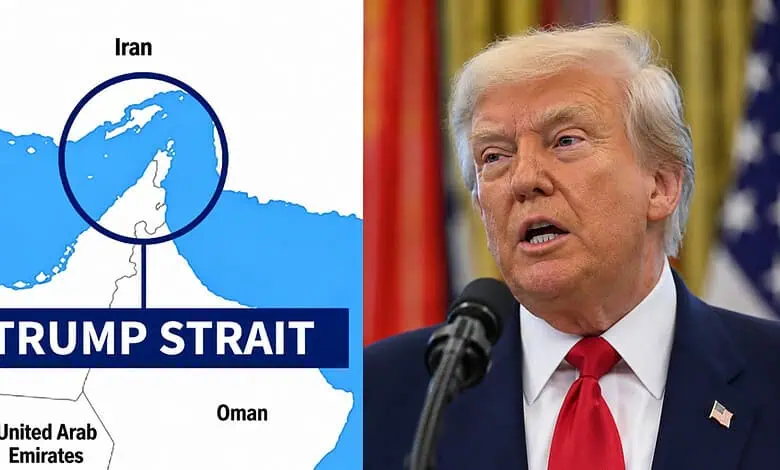
Trump Shares ‘Trump Strait’ Map Following Iran’s Hormuz Reopening Proposal
The CSR Journal Magazine

The US President, Donald Trump, shared an image labelled “Trump Strait” on Saturday, coinciding with a proposal from Iran to reopen the strategically significant Strait of Hormuz. This development comes as Iran stated it would resume navigation through the waterway if the United States fulfils specific conditions within one week. The offer is seen as a significant step in ongoing tensions in the region.

According to Iranian Foreign Minister Abbas Araghchi, the potential reopening is contingent upon the US lifting its naval blockade of Iranian ports and re-evaluating sanctions against Iranian oil exports. Moreover, Tehran demands an agreement for a ceasefire that would extend to Lebanon. These demands were outlined in a press conference on Friday evening.

Simultaneously, the White House has indicated that discussions between US officials and mediators concerning the Iranian conflict were described as “positive and constructive.” This statement comes after a series of indirect talks that transpired earlier in the week, signalling a willingness to engage in diplomatic conversations.

Iranian Leadership’s Response and Diplomatic Efforts

After attending the United Nations General Assembly, Iranian President Masoud Pezeshkian departed New York, reportedly returning to Tehran. Pezeshkian’s address at the UN included a rebuttal of President Trump’s threats against Iran, asserting that Tehran remains receptive to diplomatic avenues.

The ongoing discussions and proposals demonstrate a complex interplay of regional politics, with implications for the broader geopolitical landscape. Reports from Iranian media indicate a cautious optimism regarding the potential for negotiations, highlighting the fluctuating nature of international relations between the US and Iran.

Furthermore, diplomatic efforts not only focus on the Strait but also encompass Iran’s nuclear programme. Iran’s commitment to resume discussions regarding its nuclear activities is framed within the context of sanctions relief, revealing the intertwined issues of regional security and economic pressures that influence negotiations.

Regional Developments and Security Concerns

The situation in the region remains tense, particularly marked by military activities involving Yemen and Saudi Arabia. On Saturday, Saudi military spokesperson Maj Gen Turki al-Malki announced the interception of a ballistic missile, claimed to have been launched by Houthi rebels in Yemen towards the city of Khamis Mushait. Verification of this incident remains pending, as independent sources have not confirmed the reports.

This missile incident has drawn condemnation from the Gulf Cooperation Council, which has labelled the Houthi assaults as a severe escalation that jeopardises regional stability. A collective response from the international community has been urged to address these recurrent threats.

In Iraq, efforts are underway to seek exemptions from US sanctions for Iranian airline operations, aiming to facilitate humanitarian needs such as medical treatment and religious pilgrimages, particularly from pilgrimage sites in Karbala and Najaf. These discussions illustrate Iraq’s effort to navigate its relationship with both the US and Iran amidst ongoing sanctions.

Simultaneously, concerns over water access for Palestinians in the occupied West Bank have intensified, as Israeli settlers reportedly increased their control over vital water sources. Reports indicate that settlers have redirected water access from Palestinian communities, exacerbating existing tensions surrounding resource management in the region.

Long or Short, get news the way you like. No ads. No redirections. Download Newspin and Stay Alert, The CSR Journal Mobile app, for fast, crisp, clean updates!

App Store –  https://apps.apple.com/in/app/newspin/id6746449540 

Google Play Store – https://play.google.com/store/apps/details?id=com.inventifweb.newspin&pcampaignid=web_share

Latest News

Popular Videos
