


Srinagar’s Sheetalnath Temple Reopens After 36 Years, Welcomes Kashmiri Pandits
The CSR Journal Magazine

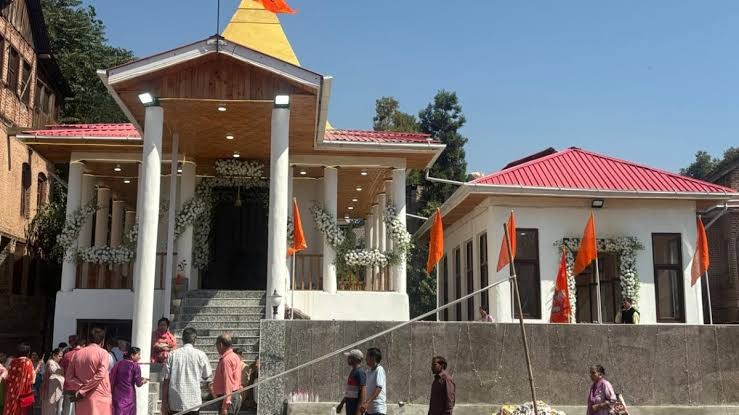
The historic Sheetalnath Temple in Srinagar’s Habba Kadal area has reopened its doors after a closure lasting 36 years. The temple witnessed a ceremonial revival marked by temple bells, Vedic chants, and havan rituals, celebrating its long-awaited return amidst a backdrop of cultural significance and shared traditions. This reopening attracted numerous Kashmiri Pandits, who journeyed from various parts of India to attend the event.

Local Kashmiri Muslims welcomed them, fostering a spirit of unity that underscores the Valley’s rich cultural heritage and the enduring essence of Kashmiriyat, a term encapsulating the region’s inclusive traditions. The restoration of the temple was executed by Srinagar Smart City Limited in collaboration with the Jammu and Kashmir Department of Culture, affirming their commitment to preserving the region’s historical and religious landmarks.

Temple Restored After Years of Damage

Authorities had severely neglected the Sheetalnath Temple complex, which suffered extensive damage following the mass exodus of Kashmiri Pandits in 1990. Various forms of degradation, including arson, had left the temple in a state of disrepair. Restoration efforts concentrated on rebuilding critical structures within the complex, notably the sanctum sanctorum and the havanshala.

Devotees are now able to return for prayers and religious ceremonies, bringing new life to this sacred site. Previous attempts to conduct prayers were thwarted, such as an occasion during Basant Panchami in 2021 when structural damage hindered access to the temple. The revival of the temple provides an essential spiritual connection, allowing displaced families to re-engage with their cultural roots and religious practices at this historically significant site.

Ancient Shrine of Kashmiri Shaivism

The Sheetalnath Temple holds a prominent place within the Kashmiri Shaivism tradition. The community considers it among the eight guardian deities, known as the Ashta Bhairavs, that symbolically protect Srinagar. The site is also linked to regional folklore surrounding sage Kashyapa and the mythic waters of Satisar.

It further enriches its cultural and historical significance. Beyond its spiritual role, the temple has contributed to the social fabric of Kashmiri society by serving as an educational hub. Before 1990, the complex accommodated primary and secondary schools where Hindu and Muslim children learned together, promoting inter-community relations.

Throughout the 20th century, the temple compound was a vital venue for socio-political gatherings, hosting addresses from prominent national figures such as Mahatma Gandhi, Jawaharlal Nehru, Indira Gandhi, and Atal Bihari Vajpayee.

Part of Wider Heritage Restoration

Officials have stated that the restoration of Sheetalnath Temple is part of an extensive initiative to conserve and restore historical places of worship across Jammu and Kashmir. This includes various temples, Sufi shrines, gurdwaras, and mosques that have experienced neglect or damage due to years of unrest.

The completion of the restoration affords displaced Kashmiri Pandit families the chance to reconnect with a place integral to their ancestral and cultural history, while simultaneously reviving a significant site emblematic of the Valley’s pluralistic traditions. As the temple reopens to devotees, it reinstates a crucial aspect of Kashmir’s diverse religious landscape and offers a glimpse into the historical bonds that have characterised the region for centuries.

Long or Short, get news the way you like. No ads. No redirections. Download Newspin and Stay Alert, The CSR Journal Mobile app, for fast, crisp, clean updates!

App Store –  https://apps.apple.com/in/app/newspin/id6746449540 

Google Play Store – https://play.google.com/store/apps/details?id=com.inventifweb.newspin&pcampaignid=web_share

Latest News

Popular Videos
