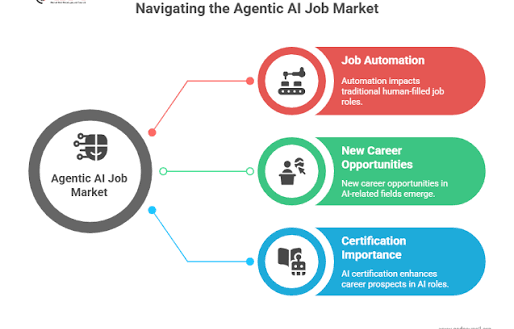
The rise of agentic artificial intelligence (AI) is significantly altering the job market landscape. Traditional interactions with AI have evolved from simple query-response exchanges to a dynamic model where AI can autonomously make decisions and complete tasks with minimal human assistance. This shift signifies the emergence of a new category of technology roles focused on developing and managing agentic AI systems. Employers now seek a range of specialised positions to harness the potential of this advanced technology.
New Roles in the Agentic AI Sector
A variety of emerging careers are now at the forefront of AI development. For instance, the role of an Agentic AI Engineer is critical, as these professionals are responsible for building systems capable of planning, reasoning, and executing tasks autonomously. These engineers typically employ frameworks such as LangChain and AutoGen and require a firm understanding of how large language models (LLMs) operate, beyond just coding skills.
Another important position is that of an AI Agent Developer. This role involves writing the underlying code for agents, determining the tools the agents will utilise, and defining their operational objectives. The AI Engineer role serves as a foundational point, where professionals create the machine learning infrastructures essential for agentic tools to function effectively, ensuring that the agents have the necessary support and platforms to operate.
In addition to these roles, AI Solutions Architects play a pivotal part by designing systems that integrate agents with existing company data and tools. They must consider factors such as scalability, security, and communication between various components to enable effective interactions within the organisation’s technological ecosystem.
Essential Skills and Preparatory Steps for Aspirants
While specific roles vary greatly in focus, a common skill set is required. Proficiency in Python programming and a sound understanding of machine learning concepts are fundamental for nearly all roles in this evolving field. Moreover, hands-on experience in developing agentic frameworks will provide significant insight and practical knowledge.
Individuals looking to enter this profession should prioritise real-world project development, as practical skills often exceed theoretical knowledge. Participating in structured courses, such as those offered by educational platforms, can provide critical training in agent design and orchestration. Starting with courses that cover the basics of AI, machine learning, and software development can ease the transition into specialised agentic AI roles.
Adapting to the rapid evolution of the AI sector is essential. This involves not only acquiring technical skills but also honing communication abilities, particularly for roles that straddle technical and managerial domains, such as AI Product Managers and AI Consultants. These positions require a balance of strategic insight and effective communication skills to facilitate collaboration across departments.
Conclusion on the Future of Agentic AI Careers
The job market is experiencing a significant transformation with the emergence of agentic AI roles, highlighting the need for diverse skill sets spanning technical and managerial functions. As the landscape continues to evolve, prospective candidates are encouraged to remain proactive in learning and skill development to effectively position themselves in this rapidly advancing field.
Future employment opportunities in agentic AI are vast, and those who are adaptable and willing to invest in their education are likely to find a wealth of career prospects. Ultimately, understanding the foundational elements of AI, coupled with practical experience, will prepare individuals for successful careers in this burgeoning technology sector.
Long or Short, get news the way you like. No ads. No redirections. Download Newspin and Stay Alert, The CSR Journal Mobile app, for fast, crisp, clean updates!