


France Provides Flexibility for India to Integrate Indigenous Weapons with Rafale
The CSR Journal Magazine

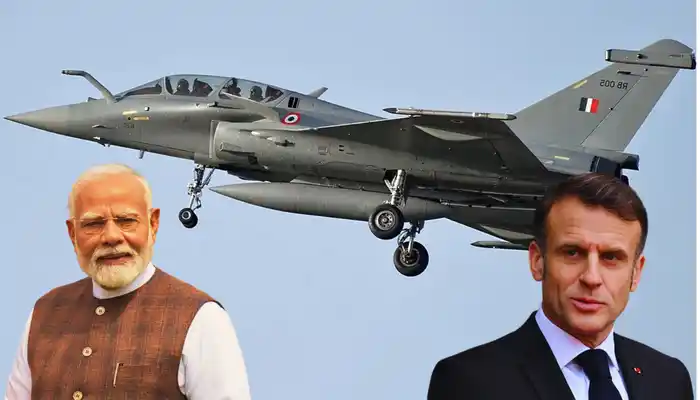
France has revealed its willingness to facilitate India in integrating indigenous weapons and systems with the Rafale fighter jet, amidst ongoing discussions regarding the acquisition of 114 additional aircraft. This willingness reflects a recognition of India’s increasing demand for autonomy in the operation and enhancement of its combat fleet.

Lieutenant General Dominique Tardif, Vice Chief of the French Air and Space Force, emphasised France’s understanding of India’s ambitions in defence production during his visit to India for Exercise Tarang Shakti. Tardif remarked on the significance of sovereignty in military operations, highlighting the importance of independent decision-making for both countries. This aligns with India’s goals of achieving greater self-reliance.

According to Tardif, key discussions are focused on devising a mechanism that allows the Indian Air Force to utilise a wider range of armaments beyond those originally integrated with the Rafale. He expressed confidence that fruitful discussions could be held among French defence companies, Indian industry stakeholders, and government representatives to achieve this end.

Access to Technical Information

The dialogue around integration capabilities comes at a crucial time, as negotiations for the new Rafale deal continue. Reports indicate that India is not necessarily seeking full access to the Rafale’s source code. It encompasses essential software instructions governing the aircraft’s various functions. Instead, India is aiming to obtain technical data enabling communication between the Rafale and its locally developed weapons.

One of the significant tools in this context is the Interface Control Document (ICD). It specifies the communication protocols between the aircraft’s systems and external devices. Indian defence experts believe that accessing interface-level information will enable effective integration of indigenous weapons without needing the complete source code.

Thus, it addresses India’s broader strategy of melding homegrown capabilities with foreign platforms. This approach is particularly pertinent considering India’s objective to foster a robust defence manufacturing ecosystem while enhancing operational flexibility across its military assets. The acquisition of technical documentation is seen as a pivotal next step in achieving these goals.

Implications for the Rafale Acquisition Drive

Currently, India operates 36 Rafales obtained through a previous government-to-government agreement. Moreover, France is now exploring the acquisition of an additional 114 aircraft. This new contract is anticipated to encompass a substantial “Make in India” initiative, which aims to bolster local manufacturing capabilities.

Discussions on the integration of indigenous weaponry are closely linked to broader demands for technology transfer and increased participation from Indian industries. The programme is viewed as a cornerstone for advancing domestic military production and enhancing strategic capabilities within the region. France is already progressing with upgraded versions of the Rafale, notably the F4 standard.

Meanwhile, the next-generation F5 model is under development, planned for completion around 2035. Enhancements in sensory technology, electronic warfare, and engine performance are anticipated in future iterations. Thus, allowing India to integrate its own technologies into the Rafale programme is crucial for enhancing India’s defence landscape and strengthening its self-reliance ambitions in military matters.

Long or Short, get news the way you like. No ads. No redirections. Download Newspin and Stay Alert, The CSR Journal Mobile app, for fast, crisp, clean updates!

App Store –  https://apps.apple.com/in/app/newspin/id6746449540 

Google Play Store – https://play.google.com/store/apps/details?id=com.inventifweb.newspin&pcampaignid=web_share

Latest News

Popular Videos
