


app-store-logo
play-store-logo
March 5, 2026

Will Gen Z Face Consequences for Their Direct Workplace Attitude?
The CSR Journal Magazine

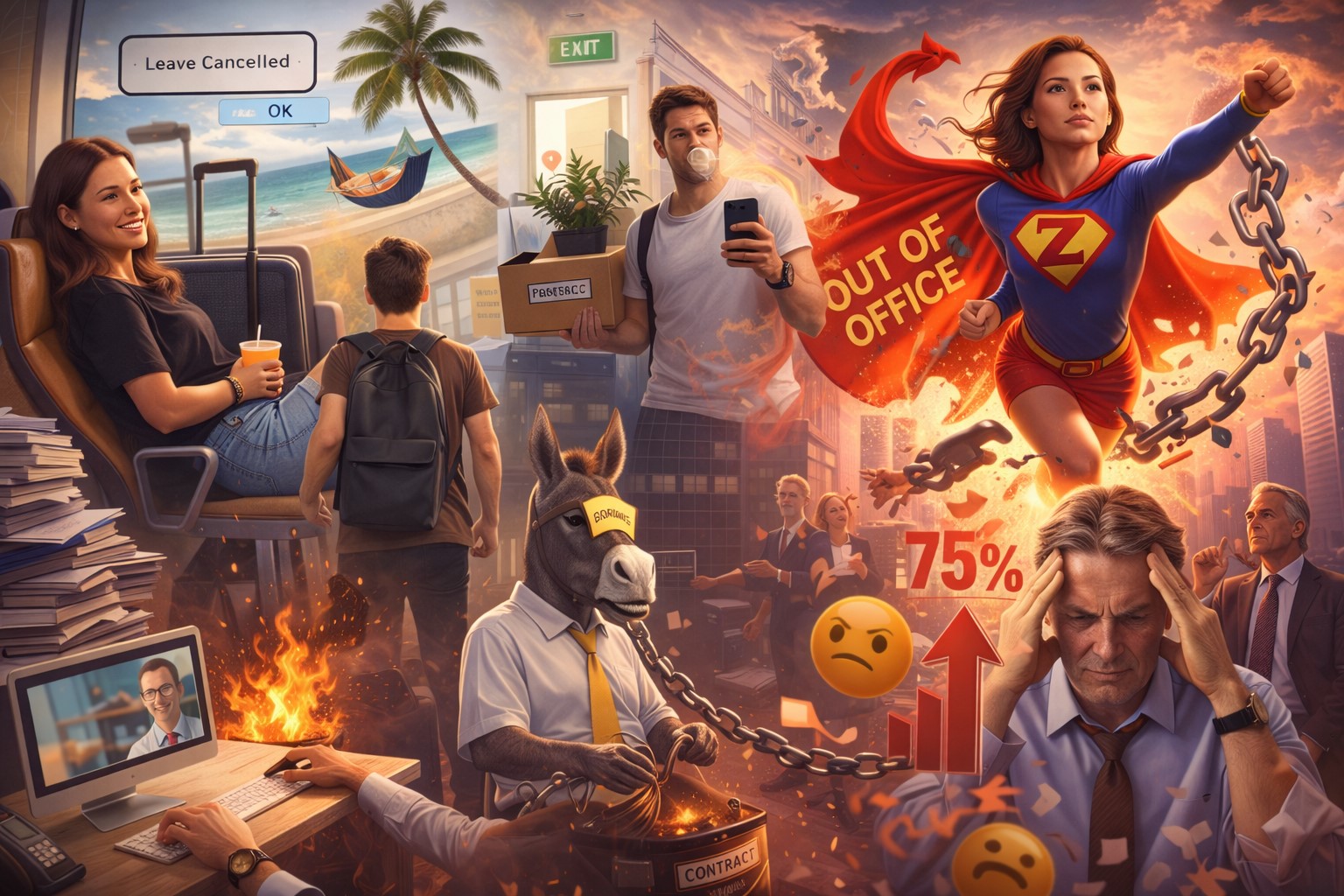
A recent incident involving a Gen Z employee went viral when she filmed a response after her boss canceled her leave while she was at the airport. Rather than apologizing or returning early, she declared, “I work so I can enjoy my life,” and stated she would address work matters after her holiday. This situation has ignited a widespread discussion regarding workplace norms and professionalism. It raises the question: is Gen Z’s candid communication style empowering or detrimental to their professional futures?

Incidents Reflecting Gen Z’s Bold Workplace Attitude

This episode at the airport is not unique. Several instances have surfaced recently that provoke discussion about Gen Z’s perspective on work. One notable case involved a young professional in Bengaluru, who quit his job over what he deemed a “boring” corporate routine. In another instance, a Gen Z intern announced a day off via email without formal approval, humorously stating, “Please don’t miss me.” These actions highlight a trend where younger employees openly voice their dissatisfaction and challenge traditional workplace expectations.

Changing Dynamics in Workplace Culture

Statistical insights reveal a growing strain between Gen Z workers and management. Approximately 75% of managers perceive Gen Z employees as more challenging to manage compared to previous generations. One survey even indicated that 18% of supervisors have contemplated leaving their positions due to the stress associated with leading younger workers. Furthermore, many Gen Z employees view their jobs as temporary engagements, with nearly half expecting to change roles within a year. This perspective appears to stem from factors such as economic insecurity, rising living expenses, and increased awareness regarding mental health issues.

Gen Z’s Perspective on Workplace Expectations

Young professionals contend that criticism aimed at them reflects a misunderstanding of their motivations. On platforms like LinkedIn, many argue they are rejecting outdated corporate norms in favor of transparency and improvement. Comments from users point out the drive for clarity, supportive feedback, and a balanced work-life structure, alongside a preference for meaningful work over hierarchical corporate settings. The struggle to adapt lies not only with Gen Z but also with leaders who may find it difficult to meet new expectations.

Diverse Opinions Conveyed on Online Forums

Discussions on platforms such as Reddit illustrate the polarizing nature of these workplace challenges. Some managers express frustration, suggesting that they feel the need to provide constant guidance. Conversely, others support younger employees, indicating that traditional expectations often overlook issues like burnout. This debate often revolves around whether Gen Z is confronting detrimental workplace cultures or simply resisting established professional norms.

Millennials’ View on the Generational Divide

Millennials, now in their thirties and early forties, find themselves navigating between two conflicting perspectives. While many support Gen Z’s advocacy for improved work-life balance, they express concerns about the directness with which these views are conveyed. Common sentiments echo the notion that the underlying message may be valid, but the manner of delivery could lead to negative repercussions. This generation itself faced similar criticism upon entering the workforce, indicating a cyclical pattern of generational challenges.

Gen X Managers’ Concerns Over Changing Norms

For many Gen X leaders, the shifts in workplace behavior are stark. The conventional corporate framework emphasized hierarchy and gradual progression, making public criticism of superiors almost unthinkable. As such, Gen Z’s straightforwardness is often perceived as unprofessional rather than a bold stand for change. This perceived divergence underscores a significant cultural transformation in work environments.

Redefining Professionalism in the Workplace

While generational tensions are not new, the visibility of Gen Z’s actions elevates these discussions. Social media ensures that workplace disputes engage a broader audience, prompting widespread dialogue. The younger generation’s demands for open communication and mental health support are influencing corporate policies significantly. This generational coexistence in the workplace compels organizations to bridge differences and adapt to evolving expectations, shaping the future of professional conduct.

Long or Short, get news the way you like. No ads. No redirections. Download Newspin and Stay Alert, The CSR Journal Mobile app, for fast, crisp, clean updates!

App Store –  https://apps.apple.com/in/app/newspin/id6746449540 

Google Play Store – https://play.google.com/store/apps/details?id=com.inventifweb.newspin&pcampaignid=web_share

Latest News

Popular Videos
