


1.5 Crore Vehicles: How Infrastructure Lag Is Paralyzing Bengaluru Traffic
The CSR Journal Magazine

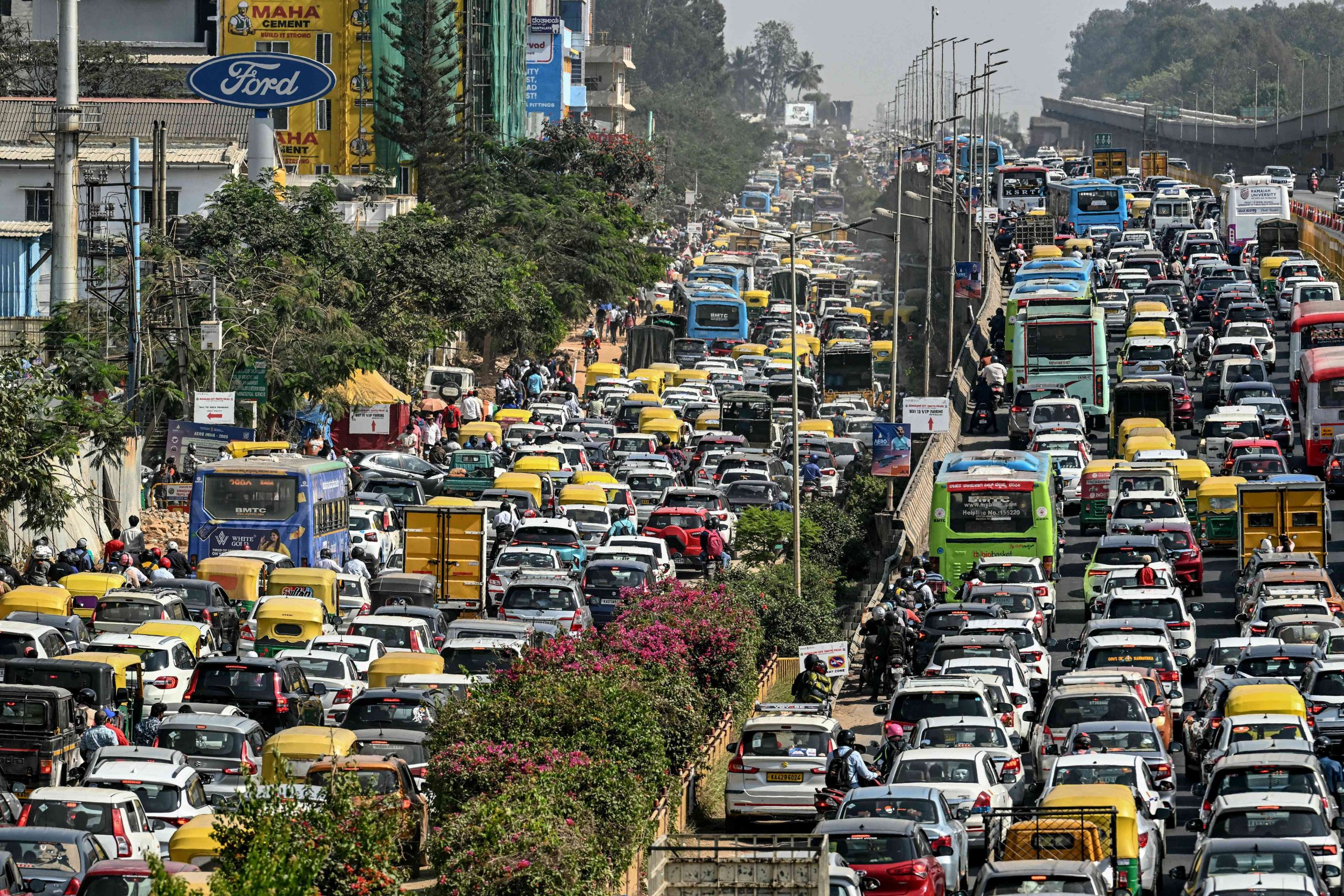
Bengaluru’s traffic congestion has evolved beyond the sheer number of vehicles on the roads during peak hours. The city’s population, urban sprawl, and vehicle registrations have expanded at a remarkable rate, leading to one of the most congested traffic conditions globally. Krishna Byre Gowda, the Minister for Greater Bengaluru Development recently highlighted the profound nature of this issue, indicating that substantial solutions are needed beyond mere infrastructure projects.

According to Gowda, Bengaluru now has approximately 1.5 crore vehicles, which equates to nearly one vehicle for every resident. He pointed out that while the road network has not kept pace with the population and vehicle growth, the main issue lies in the limited road capacity available to manage this influx. In his view, Bengaluru requires a diversified approach involving buses, metro expansion, suburban rail, elevated roads, and tunnels, with a proposed investment estimated at Rs 3 lakh crore.

Data presented by Gowda reveals that Bengaluru has experienced a continuous urban growth of around 260% over the past 25 years. The city’s annual population growth rate stands at approximately 3.2%, substantially exceeding that of major cities like Delhi and Mumbai. This rapid expansion contributes significantly to the traffic woes faced by its residents.

Disparities in Infrastructure and Vehicle Density

As Bengaluru grapples with its traffic dilemma, the minister noted the stark disparity between the city’s planned neighbourhoods and its newer areas. For instance, Jayanagar, an older area, has around 23% of its land designated for roads, while some newer regions in eastern Bengaluru allocate only about 8%. This imbalance has resulted in a concentration of traffic complaints, with eastern Bengaluru accounting for nearly 75% of complaints despite comprising only 20% of the city’s land area.

Gowda elaborated on the situation using vehicle density figures. In Bengaluru, road capacity is burdened much more heavily compared to other major cities, with 80,000 to 90,000 vehicles per square kilometre. In contrast, Delhi and Mumbai exhibit densities of 50,000-60,000 and 60,000-70,000 respectively. This stark comparison underscores the critical nature of Bengaluru’s congestion struggles.

Furthermore, issues such as unregulated urban expansion and unauthorized developments have impeded the city’s ability to develop infrastructure in tandem with growth. Gowda acknowledged that the challenge of ensuring adequate road capacity over the last 25 years is a collective lapse that transcends governmental tenures.

Impact of Economic Development on Traffic

The ongoing economic success of Bengaluru, often referred to as India’s technology hub, contributes to the traffic crisis. The city accounts for a notable 36% of the country’s office space usage, attracting a plethora of businesses and workers. This influx of economic activity not only bolsters the local economy but also exacerbates the existing traffic conditions as more offices and residential areas emerge.

In light of these issues, the minister highlighted the pressing need to enhance public transportation options. Currently, Bengaluru operates around 7,000 BMTC buses, the most extensive bus fleet in India, with plans to augment this by adding 4,500 more buses, primarily electric. Public transport remains critical to easing congestion, with buses transporting approximately 45 lakh passengers daily compared to the metro’s 10 lakh.

Moreover, the government aims to expand the metro network from about 96 km to a target of 170 km, with a long-term vision of reaching 250 km. This expansion, coupled with a planned suburban rail project, strives to offer higher capacity public transport alternatives and alleviate some of the existing traffic burden.

Long or Short, get news the way you like. No ads. No redirections. Download Newspin and Stay Alert, The CSR Journal Mobile app, for fast, crisp, clean updates!

App Store –  https://apps.apple.com/in/app/newspin/id6746449540 

Google Play Store – https://play.google.com/store/apps/details?id=com.inventifweb.newspin&pcampaignid=web_share

Latest News

Popular Videos
