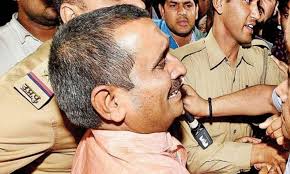
Nearly eight years after the Unnao rape case shook the country, the Supreme Court on Monday moved swiftly to prevent former BJP legislator Kuldeep Singh Sengar from walking out of prison. The court put on hold a recent Delhi High Court order that had suspended his life sentence and granted him bail, making it clear that Sengar will remain in custody.
The intervention came on a petition filed by the Central Bureau of Investigation, which challenged the High Court’s reasoning for granting bail. A three-judge bench headed by Chief Justice of India Surya Kant said the matter raises “substantial questions of law” that require closer examination.
“In the peculiar circumstances of the case, we stay the operation of impugned order dated December 23, 2025 passed by the High Court. Consequently, the respondent shall not be released from custody pursuant to the impugned order,” the bench said.
Why the Top Court Was Troubled
At the heart of the Supreme Court’s concern was the interpretation adopted by the Delhi High Court while suspending Sengar’s sentence. The High Court had ruled that Sengar could not be treated as a “public servant” for the offence, a view that the apex court found deeply problematic.
“We are only worried that a constable or a patwari, they will be public servant for the purpose of committing this offence, but a Member of Parliament or elected member of state Legislative Assembly or Legislative Council, if this interpretation is construed to be correct, they will be exempted,” the bench observed.
The judges indicated that accepting such logic could distort the way criminal law applies to elected representatives.
An Exception to the Usual Rule
The bench acknowledged that it normally avoids staying bail orders passed by High Courts without first hearing the accused. However, it said this case could not be treated as routine.
“Issue notice…We find that there are various substantial questions of law which arise for consideration in this SLP (Special Leave Petition). We are conscious of the fact that ordinarily, when a convict/undertrial has been released on bail pursuant to an order passed by the trial court or High Court, such order should not be stayed by this court without hearing such person,” the bench noted.
“However, there are peculiar facts and circumstances. The respondent is also separately convicted and sentenced in a case under section 304 Part 2 IPC (Indian Penal Code) and we are informed that he is in custody in that case…,” it added.
Sengar has been given four weeks to respond to the notice issued by the court.
Survivor’s Role and Rights
During the hearing, the rape survivor sought to intervene in the proceedings. The Supreme Court clarified that she does not need the court’s permission to challenge the bail order independently and has a statutory right to file her own appeal.
The bench also said legal aid would be provided through the Supreme Court Legal Services Committee if required, though the survivor is free to continue with her chosen counsel.
Ahead of the hearing, the survivor publicly expressed confidence in the apex court and appealed to Uttar Pradesh Chief Minister Yogi Adityanath to ensure the safety of her family.
A Case That Refuses to Fade
The Unnao case dates back to 2017, when the survivor, then a minor, accused Sengar of rape. The allegations initially met resistance at the local level, triggering public anger and accusations of intimidation. Matters escalated in 2018 when the survivor attempted self-immolation outside the Chief Minister’s residence, alleging official apathy.
The case was eventually handed over to the CBI, and the Supreme Court transferred the trial to Delhi, citing the need for a fair process.
In 2019, a Delhi court sentenced Sengar to life imprisonment for rape. He was also convicted in separate cases linked to the custodial death of the survivor’s father and attempts to influence witnesses. Several members of his family and associates were found guilty in connected cases.
Bail Order Sparks Public Outrage
The controversy reignited after the Delhi High Court suspended Sengar’s sentence and granted him conditional bail, citing the period already spent in custody and rejecting the application of the POCSO Act. The decision triggered widespread criticism, protests, and disturbing scenes involving the survivor’s family in Delhi.
Following Monday’s Supreme Court order, Sengar’s release has been halted, and the legality of the High Court’s reasoning will now be examined in detail.