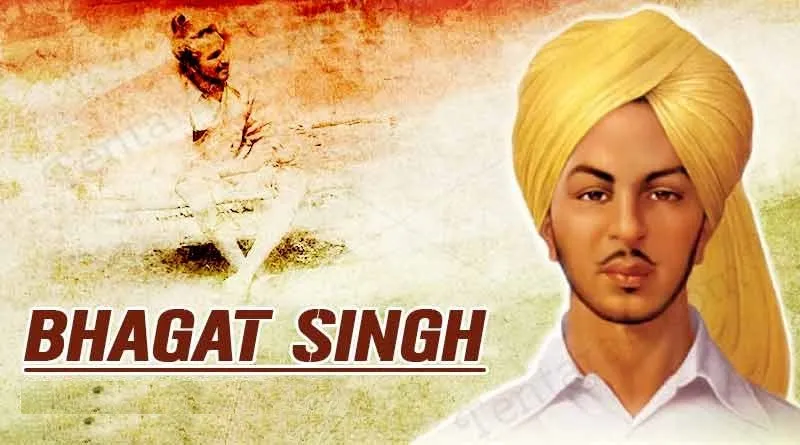
Every year on September 28, India remembers Shaheed Bhagat Singh on his birth anniversary. Born in 1907 in Banga, Punjab, Bhagat Singh became one of the most prominent young revolutionaries of India’s freedom struggle. His courage, political ideas, writings, and sacrifice at the age of 23 made him an enduring symbol of resistance to British colonial rule.
Bhagat Singh’s legacy extends beyond his revolutionary activities. His writings reveal a deeply thoughtful young man interested in history, politics, philosophy, socialism, religion, and social justice. Although he did not leave behind a conventional, complete autobiography, his essays, letters, prison notes, and other writings provide valuable insight into his life and evolving worldview.
Early Life and Family Influence
Bhagat Singh was born on September 28, 1907, into a politically active Sikh family. His father, Kishan Singh, and uncles Ajit Singh and Swaran Singh were associated with India’s nationalist movement. Growing up in such an environment exposed him to political discussions and the struggle against British rule from an early age.
The Jallianwala Bagh massacre of 1919 deeply affected the young Bhagat Singh. The killing of unarmed civilians by British troops became one of the events that shaped his understanding of colonial oppression. As he grew older, his concern for India’s freedom developed into an active commitment to the revolutionary movement.
Education and Intellectual Development
Bhagat Singh was not simply an activist; he was also an avid reader and thinker. He studied history, politics, economics, philosophy, and revolutionary movements in different parts of the world.
His intellectual journey gradually moved beyond conventional nationalism. He became increasingly interested in socialism, equality, and the causes of economic and social exploitation. He believed that political independence should ultimately be accompanied by broader social and economic transformation.
His writings show that he valued independent thought and encouraged people to question established ideas rather than accepting them without examination.
Joining the Revolutionary Movement
During the 1920s, Bhagat Singh became increasingly involved with revolutionary organisations and young activists who opposed British colonial rule. He eventually became associated with the Hindustan Socialist Republican Association (HSRA).
The organisation sought to challenge colonial rule while promoting broader ideas of social and economic equality. Bhagat Singh’s association with the HSRA reflected his developing belief that India’s struggle was connected not only with political independence but also with the creation of a more equitable society.
The Simon Commission and Lala Lajpat Rai
The arrival of the Simon Commission in India in 1928 led to widespread protests because the commission did not include Indian representatives. During a demonstration in Lahore, nationalist leader Lala Lajpat Rai was injured during a police action. He later died from his injuries.
Bhagat Singh and his associates decided to take revolutionary action in response. In December 1928, British police officer J.P. Saunders was killed in Lahore. Following the incident, Bhagat Singh went underground and altered his appearance to avoid identification and arrest.
The Saunders episode became one of the most significant events associated with his revolutionary career.
The Central Legislative Assembly Bombing
On April 8, 1929, Bhagat Singh and Batukeshwar Dutt threw bombs inside the Central Legislative Assembly in Delhi. The action was intended to protest colonial policies and draw attention to their political message.
After throwing the bombs, the two did not attempt to flee. Instead, they remained at the scene and allowed themselves to be arrested. Their decision turned the subsequent legal proceedings into an opportunity to communicate their political ideas to the public.
The Assembly incident brought Bhagat Singh widespread attention and established him as one of the most recognisable faces of India’s revolutionary movement.
Bhagat Singh as a Writer and Thinker
Bhagat Singh’s writings provide an important understanding of his personality and political philosophy. Among his best-known works is “Why I Am an Atheist,” written during his imprisonment.
In the essay, he discussed his rejection of religious belief and explained his emphasis on reason, self-examination, and independent thought. His prison writings also demonstrate his interest in socialism, political theory, equality, and human rights.
These writings are significant because they reveal a side of Bhagat Singh that is sometimes overshadowed by accounts of his revolutionary activities. He was not only prepared to act but also deeply interested in understanding the political and social conditions around him.
His Understanding of Revolution
For Bhagat Singh, the idea of revolution was broader than armed resistance. He associated revolution with fundamental political and social transformation.
He believed that independence should lead to a society free from exploitation and inequality. His increasingly socialist outlook shaped his understanding of freedom and justice.
His writings suggest that he saw political independence as an important step but not necessarily the final goal. Social and economic equality were also central to the future he envisioned.
Hunger Strike and Prison Struggle
Bhagat Singh’s time in prison further demonstrated his determination. Along with fellow revolutionaries, he protested against the treatment of Indian political prisoners and demanded better conditions and equal treatment.
The hunger strike attracted widespread public attention. Revolutionary Jatin Das died following a prolonged hunger strike, leading to public demonstrations and widespread sympathy for the prisoners.
Bhagat Singh’s conduct in prison further strengthened his image as a revolutionary willing to endure personal suffering for his political beliefs.
Trial and Martyrdom
Bhagat Singh, Rajguru, and Sukhdev were convicted in the Lahore Conspiracy Case. Despite appeals and widespread public concern, the three were executed on March 23, 1931, at Lahore Central Jail.
Bhagat Singh was only 23 years old.
His execution generated enormous public emotion across India. He became a lasting symbol of courage, sacrifice, and resistance to colonial rule. March 23 is commemorated as Shaheed Diwas in memory of Bhagat Singh, Rajguru, and Sukhdev.
Remembering Bhagat Singh’s Birth Anniversary
Bhagat Singh’s birth anniversary is more than a commemoration of a revolutionary’s birth. It is also an occasion to revisit his ideas and writings.
His life demonstrates how a young person can develop political awareness through education, observation, reading, and engagement with the major questions of society. His writings encourage readers to think critically about freedom, equality, religion, economic exploitation, and social justice.
Remembering him therefore involves not only recalling his sacrifice but also understanding the intellectual journey that shaped his political beliefs.
A Legacy That Continues
More than nine decades after his death, Bhagat Singh remains an important figure in India’s historical memory. His photographs, writings, slogans, and story continue to resonate with generations.
His enduring appeal comes from the combination of his youth, courage, intellectual curiosity, and willingness to sacrifice his life for the cause he believed in. His writings also ensure that his legacy is not limited to the image of a revolutionary martyr.
Bhagat Singh’s life invites readers to explore the relationship between political freedom and social justice and to understand the importance he placed on independent thought.
Conclusion
Shaheed Bhagat Singh’s life was short but extraordinarily influential. From his politically active childhood and intellectual development to his revolutionary activities, imprisonment, writings, and martyrdom, his journey reflects a significant chapter in India’s freedom struggle.
Although he did not write a conventional autobiography, his essays, letters, prison notes, and other documents offer an autobiographical window into his thoughts and experiences. They reveal a young man who constantly questioned, read, learned, and developed his political ideas.
On his birth anniversary, Bhagat Singh is remembered not only for the sacrifice he made at the age of 23 but also for the ideas he left behind. His commitment to freedom, equality, rational thinking, and social justice continues to make his life and writings an important part of India’s history.