


Mahabharata, Arthashastra, Rajatarangini Recognised by UNESCO
The CSR Journal Magazine

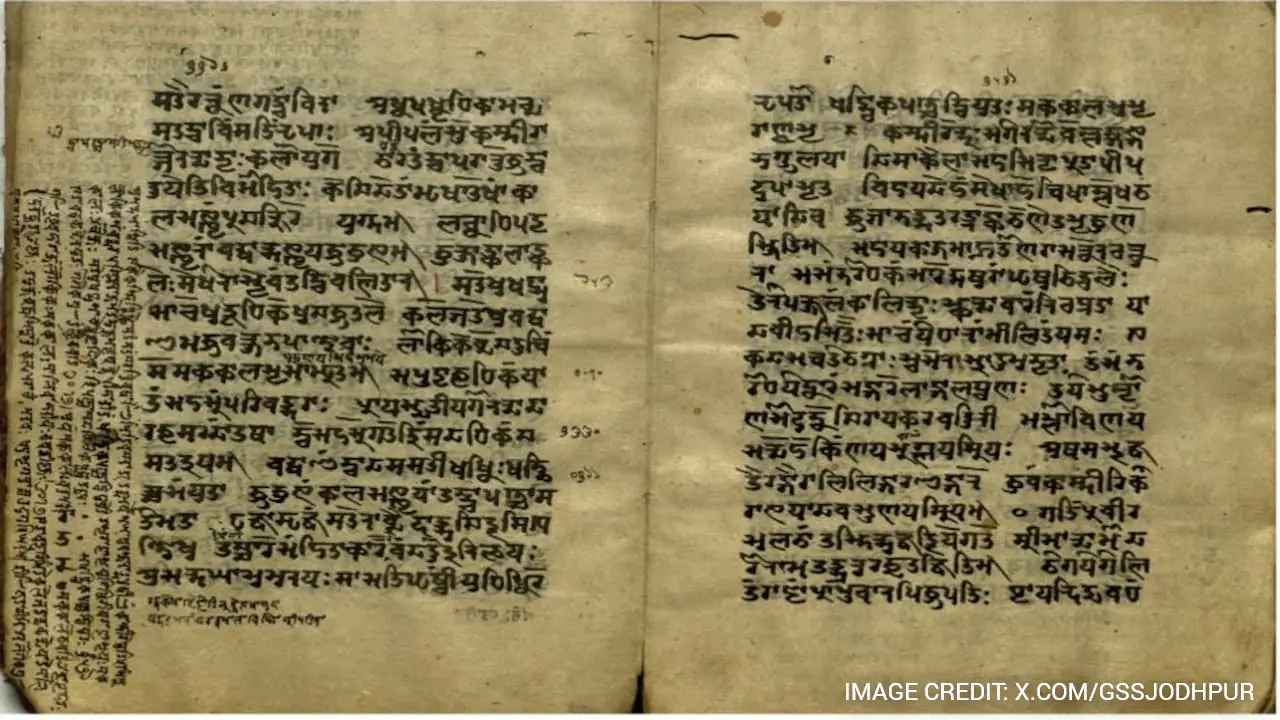
India’s documentary and intellectual heritage has achieved notable international recognition with the inscription of three pivotal historical and literary works—Mahabharata, Arthashastra, and Rajatarangini—on UNESCO’s Memory of the World Committee for Asia and the Pacific (MOWCAP) Regional Register. Union Minister for Culture and Tourism, Gajendra Singh Shekhawat, expressed pride in this announcement, characterising it as a landmark acknowledgment of India’s rich documentary and civilisational legacy. In a post on X, he highlighted that these works reflect India’s enduring traditions of historical inquiry, philosophical thought, and statecraft, asserting that their wisdom continues to inspire people globally.

Overview of the Inscribed Works

The three inscribed works provide unique yet interconnected insights into the intellectual evolution of the Indian subcontinent. The Rajatarangini, written by the 12th-century Kashmiri historian Kalhana, is esteemed as one of the most significant historical chronicles of medieval India. Composed in Sanskrit, it details the history of Kashmir, documenting various dynasties, rulers, political developments, and social transformations. Its importance lies in its methodical presentation of historical events through chronological narration and critical examination of sources, making it a vital resource for understanding Kashmir’s political and cultural heritage.

The Mahabharata, recognised as one of the longest epic narratives globally, holds a central place in South Asian literary, philosophical, and religious traditions. Beyond recounting the conflict between the Kauravas and Pandavas, the epic delves into themes of duty, justice, morality, power, kinship, and the responsibilities of individuals and rulers. Its philosophical elements, particularly the Bhagavad Gita, have influenced numerous thinkers and continue to shape discussions on ethics and human conduct across various cultures.

The Arthashastra, traditionally attributed to Kautilya, also known as Chanakya, serves as a foundational text on governance, administration, economics, diplomacy, and military strategy. This work offers an in-depth analysis of statecraft, taxation, law enforcement, intelligence networks, and public administration, providing valuable insights into the political organisation and functioning of ancient Indian states. The text remains a crucial reference for scholars studying the history of political and economic thought.

India’s Engagement with UNESCO’s Memory of the World Programme

The recent inscriptions highlight India’s increasing involvement with UNESCO’s Memory of the World Programme, initiated in 1992 to safeguard documentary heritage from loss and deterioration. This programme aims to ensure that historically and culturally significant documents remain preserved and accessible for future generations. It operates through international, regional, and national registers, with the Asia-Pacific Regional Register managed by MOWCAP.

India’s participation in this initiative is overseen by the Indira Gandhi National Centre for the Arts (IGNCA), designated as the country’s nodal institution in 2014. The IGNCA facilitates nominations, promotes archival awareness, supports manuscript conservation, and organises capacity-building programmes. Previous recognitions include notable documentary treasures such as the Rigveda, Saiva manuscripts, and Tamil medical texts. In 2023, India contributed additional works to the Asia-Pacific Regional Register, including the illustrated Ramacaritamanasa and a rare 15th-century Panchatantra manuscript.

The latest recognition builds upon these efforts, reinforcing India’s commitment to preserving its documentary heritage. In 2025, the IGNCA hosted an international symposium focusing on regional cooperation and the need to address South Asia’s underrepresentation in global heritage registers. The inclusion of these three works is significant not only as a cultural achievement for India but also as an acknowledgment of their broader relevance to humanity.

Preserving India’s Intellectual Traditions

Together, the Mahabharata, Arthashastra, and Rajatarangini exemplify how historical writing, epic literature, and political philosophy have influenced civilisations and facilitated the transmission of knowledge across generations. In an era where preserving historical records and ensuring access to cultural knowledge is increasingly vital, this recognition underscores the enduring value of India’s intellectual traditions and their integral role in the shared documentary heritage of the Asia-Pacific region.

Long or Short, get news the way you like. No ads. No redirections. Download Newspin and Stay Alert, The CSR Journal Mobile app, for fast, crisp, clean updates!

App Store – https://apps.apple.com/in/app/newspin/id6746449540

Google Play Store – https://play.google.com/store/apps/details?id=com.inventifweb.newspin&pcampaignid=web_share

Latest News

Popular Videos
