


Scientists Explain the Phenomenon of Contagious Yawning
The CSR Journal Magazine

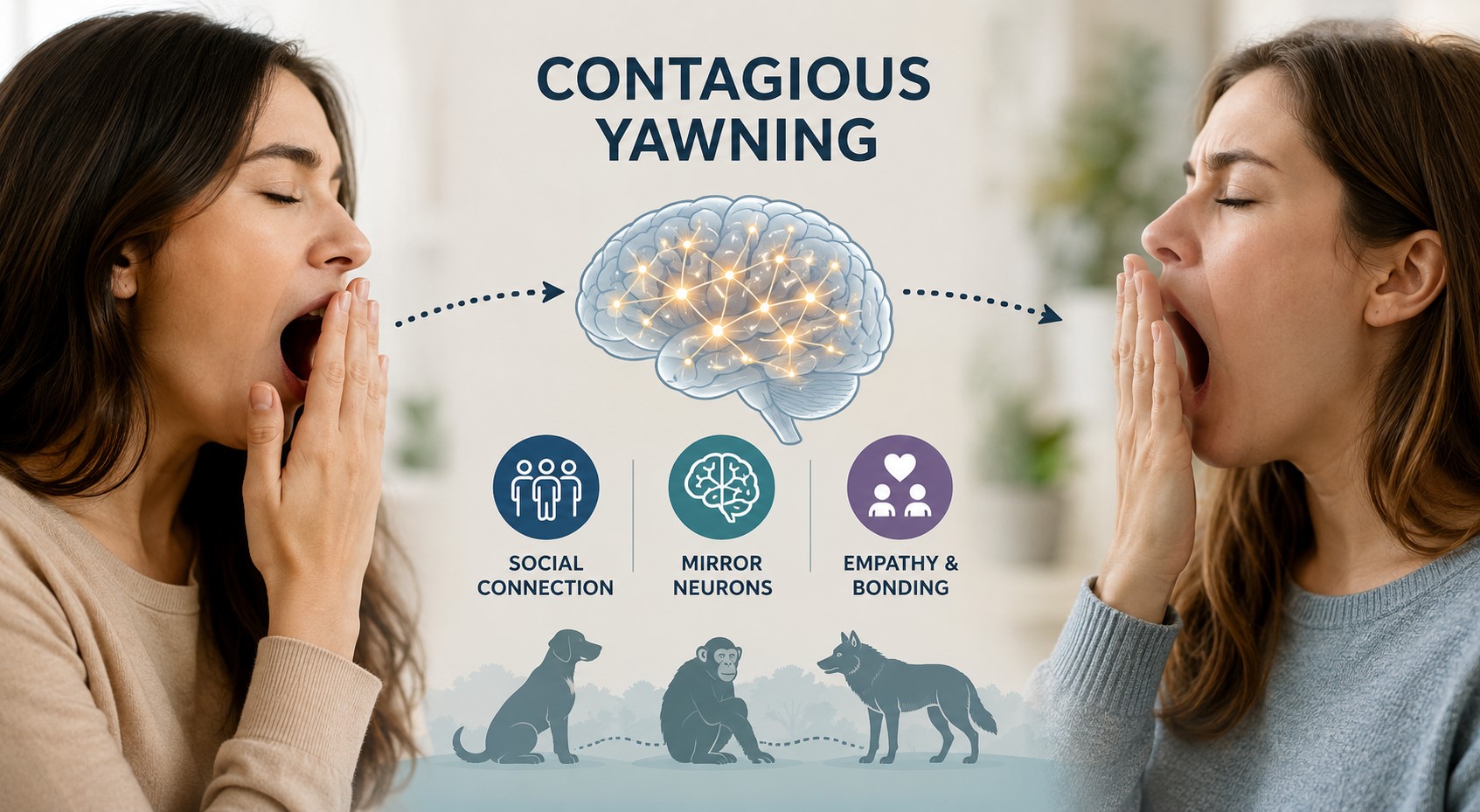
Contagious yawning occurs when an individual yawns in response to seeing or hearing another person yawn. This reaction is distinct from ordinary yawning, which typically happens due to fatigue, boredom, or the need to enhance alertness. Research indicates that the phenomenon is closely linked to social interaction and psychological processes.

Observed yawning triggers brain functions associated with mimicry and social engagement. Specifically, regions of the brain become active when one witnesses another yawn, indicating a response that extends beyond mere reflex actions. This connection demonstrates the intricate relationship between brain activity and social behaviours.

Mirror neurons are thought to play a pivotal role in this phenomenon. These specialised cells activate both during the execution of an action and when one observes the same action in others, suggesting that this mirroring mechanism underlies the likelihood of contagious yawning.

The Role of Social Connections

Social connections significantly affect the propensity to engage in contagious yawning. Studies suggest that individuals are more prone to yawn when they observe friends, family, or individuals with whom they share an emotional bond. The implications of this finding suggest that empathy may underpin this behaviour, indicating a shared emotional or psychological state among closely connected individuals.

Although the relationship between empathy and contagious yawning continues to be explored, many scientists posit that this connection highlights the degree to which humans are attuned to each other. Recent studies indicated that activity in the right inferior frontal gyrus is associated with the mirror neuron system, corroborating the link between social bonding and the propensity to yawn after observing someone else do so.

This research underscores how contagious yawning might serve as a social signal, fostering a collective experience and promoting synchrony within groups. As individuals respond to one another’s yawns, they may simultaneously align their states of alertness or share emotional experiences.

Yawning Beyond Humans

Contagious yawning is not limited to humans and has been observed in various social animals, including chimpanzees, wolves, and dogs. This behaviour among animals suggests a similar blend of neurological and social factors influencing their interactions. It raises questions about the role of yawning in fostering group cohesion and alertness amidst social animals.

Research into the chemical components associated with yawning indicates that neurotransmitters such as dopamine, serotonin, and oxytocin play key roles in mood regulation, attention, and social bonding. This complexity reinforces the notion that yawning, particularly in the contagious sense, is more than just a mere biological reflex.

In conclusion, the phenomenon of contagious yawning reflects a sophisticated interplay of neurological responses and social psychology. The next time an individual feels the impetus to yawn after witnessing another do so, it serves as a reminder of the intricate ways in which humans and social animals are connected through their behaviours and interactions.

Long or Short, get news the way you like. No ads. No redirections. Download Newspin and Stay Alert, The CSR Journal Mobile app, for fast, crisp, clean updates!

App Store –  https://apps.apple.com/in/app/newspin/id6746449540 

Google Play Store – https://play.google.com/store/apps/details?id=com.inventifweb.newspin&pcampaignid=web_share

Latest News

Popular Videos
