


170-Year-Old Moth in Museum Drawer Aids Scientists in Identifying 11 New Species
The CSR Journal Magazine

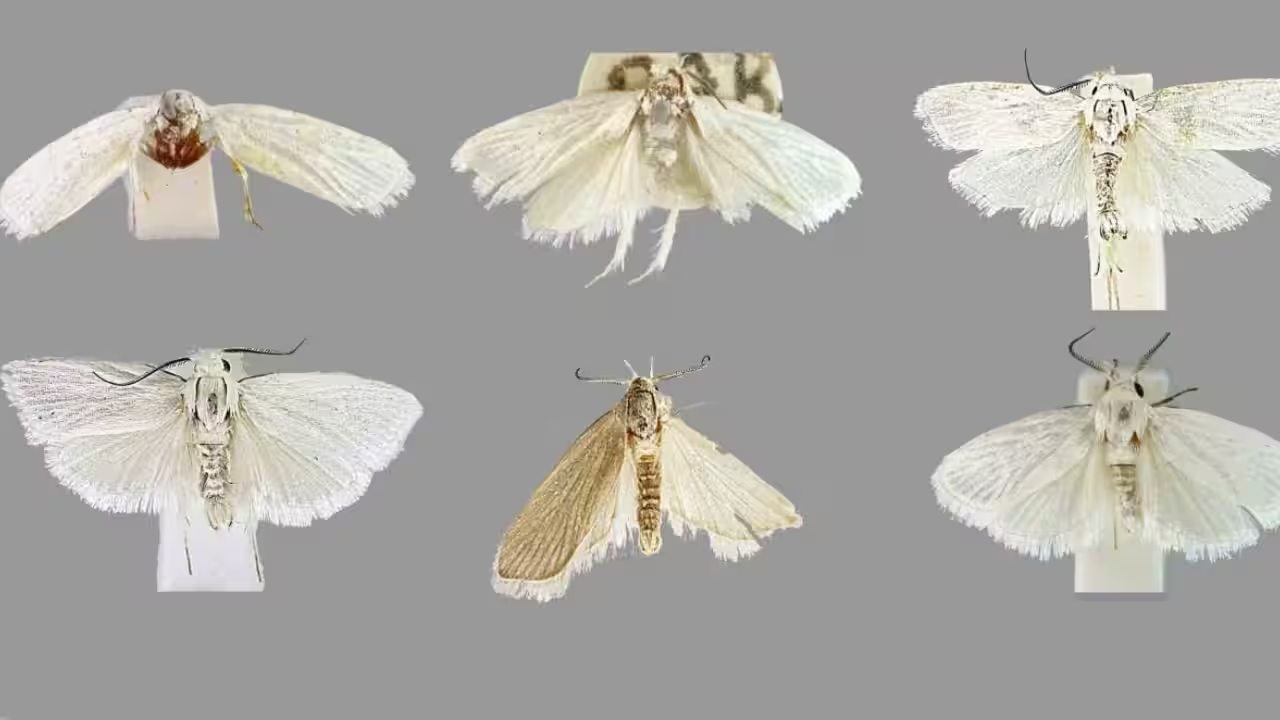
The discovery of a moth that had been overlooked for decades in the Natural History Museum has led to the identification of 11 previously unknown species. Collected by British naturalist Alfred Russel Wallace in Sarawak, Borneo, around 1855-1856, this specimen had remained largely unrecognised for generations. It comprises only a thorax and a pair of wings, and was once deemed unworthy of further study by an earlier expert. However, recent advancements in DNA sequencing have allowed scientists to uncover its true significance.

Research and Discovery Process

The breakthrough occurred when Mark Sterling, a scientific associate at the Natural History Museum, and senior curator Dr David Lees examined a collection of small, white moths from Southeast Asia. While reviewing various specimens that seemed to represent new species, they stumbled upon the damaged moth that became pivotal to their research. Originally described in 1863, the specimen’s deteriorated state had previously hindered its identification, leading to its recommendation for neglect by moth expert Edward Meyrick in 1927.

Upon closer inspection, Sterling and Lees found clues on the specimen’s original labels that hinted at a more significant past. One label bore the abbreviation ‘SAR’, which indicated Sarawak, the region where Wallace had collected the moth during his explorations in Southeast Asia. By cross-referencing this label with historical records and Wallace’s own writings, the researchers were able to confirm that the specimen had indeed been collected by Wallace nearly 170 years ago.

Wallace’s writings detail his collection activities from a bungalow near Kuching, Sarawak, between December 1855 and January 1856. This historical context provided crucial evidence that linked the moth to Wallace’s expedition, reinforcing its importance in the study of biodiversity.

Revival of the Topiris Genus

Utilising a new DNA sequencing technique being tested at the museum, the researchers examined the specimen despite its damaged condition. They successfully extracted a small piece of its leg, which yielded genetic information. The analysis revealed that this moth belonged to the same species as more recently collected specimens from nearby Brunei. Further investigations confirmed that other specimens under review also belonged to the genus Topiris.

This discovery enabled the researchers to revive the Topiris genus, which had fallen out of scientific use due to the earlier dismissal of the original specimen. The findings were published in the journal ZooKeys, marking a significant contribution to entomological research.

As a result of this study, the Topiris genus expanded to include 14 species, 11 of which were newly described. Among the newly identified moths were species named after fictional characters such as Snow White and Cinderella, as well as one named in honour of environmental activist Greta Thunberg. This research illustrates the potential of historical museum collections to contribute to contemporary scientific understanding, even when individual specimens appear too damaged to be useful.

Implications for Biodiversity Research

The rediscovery of Wallace’s moth underscores the value of overlooked material stored in museum collections. The butterfly and moth collection at the Natural History Museum contains approximately 13.5 million specimens, representing over 100,000 species. This case exemplifies how even seemingly insignificant specimens can provide vital insights into biodiversity and evolution.

As researchers continue to explore historical collections, the potential for new discoveries remains significant. The findings from this moth not only enhance the understanding of the Topiris genus but also highlight the importance of preserving and studying museum specimens for future scientific inquiries.

The work of Sterling and Lees serves as a reminder of the untapped potential that lies within museum drawers, waiting to be uncovered by dedicated researchers committed to advancing knowledge in the field of entomology.

Long or Short, get news the way you like. No ads. No redirections. Download Newspin and Stay Alert, The CSR Journal Mobile app, for fast, crisp, clean updates!

App Store – https://apps.apple.com/in/app/newspin/id6746449540

Google Play Store – https://play.google.com/store/apps/details?id=com.inventifweb.newspin&pcampaignid=web_share

Latest News

Popular Videos
