


Pope Leo XIV Compares AI Risks to Tower of Babel Warning
The CSR Journal Magazine

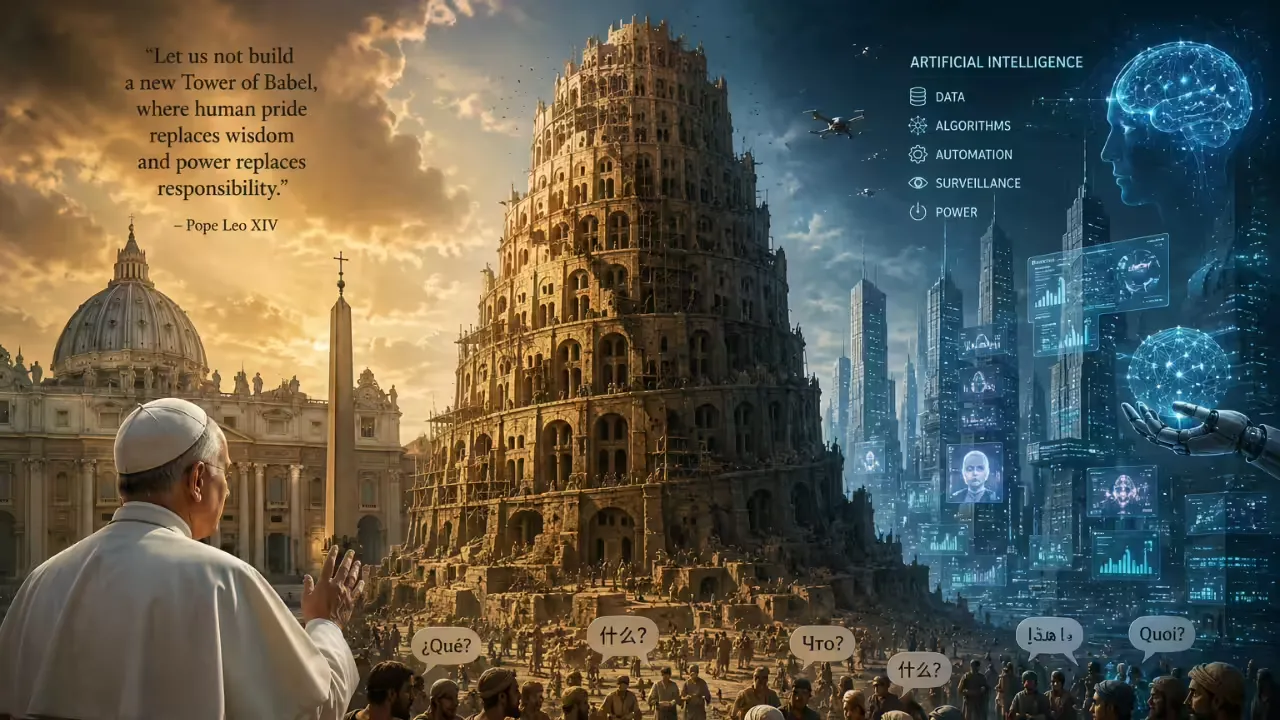
The Tower of Babel, as described in the Bible, serves as a metaphor for ambition and miscommunication among humanity. This ancient story illustrates how people sought to build a tower that reached the heavens, driven by a desire for power and unity. However, their efforts were thwarted when God intervened, causing them to speak different languages. This resulted in confusion and disconnection, leading to the abandonment of the project. The narrative has often been interpreted as a cautionary tale about hubris and overreaching. It has relevance across various contexts, including technological advancements and their societal implications.

AI Technology and Its Challenges

Pope Leo XIV has recently drawn parallels between the story of the Tower of Babel and contemporary challenges presented by artificial intelligence. He highlighted that just as the builders of Babel faced consequences due to their unchecked ambition, society today risks similar repercussions with the rapid development of AI technologies. These advancements have the potential to bring about significant benefits, yet they also pose challenges that require careful management. The Pope emphasised the necessity for ethical guidelines and robust frameworks to govern the evolution of AI.

The rapid pace of AI development has sparked debates surrounding its implications on jobs, privacy, and social structures. Experts argue that without appropriate oversight, AI systems could exacerbate existing inequalities or lead to unforeseen complications that might be difficult to control. The call for ethical standards in AI design is not just a recommendation, but a crucial need to ensure that technology serves humanity positively and equitably.

Pope Leo XIV’s remarks underline a growing concern among global leaders regarding the need to regulate the use of artificial intelligence. The challenge of balancing innovation with ethical considerations is particularly pressing, as nations and organisations race to harness the power of AI for varied applications. Policies must be established to protect against potential misuse, ensuring that technologies contribute to the common good rather than creating division.

Implications for Society

The implications of unchecked AI technology could mimic the dispersal and misunderstanding depicted in the Tower of Babel story. If society fails to establish a consensus on ethical practices for AI, the result may be a fragmented landscape in which advancements benefit only a select few while alienating others. This scenario could lead to societal unrest and a breakdown of trust in technological systems.

Pope Leo XIV’s observations resonate with ongoing discussions among technologists, ethicists, and policymakers. There is an urgent need for a collective approach to influence the direction of AI research and implementation. By engaging in dialogue that includes diverse stakeholders, the potential for encountering pitfalls similar to those of the ancient tower can be mitigated.

In this climate of rapid technological advancement, the necessity for education and public awareness regarding AI is imperative. Individuals need to understand not only the benefits of AI but also the potential risks involved. As society navigates this new terrain, fostering a culture that prizes accountability and transparency will be essential in shaping a sustainable future.

Long or Short, get news the way you like. No ads. No redirections. Download Newspin and Stay Alert, The CSR Journal Mobile app, for fast, crisp, clean updates!

App Store –  https://apps.apple.com/in/app/newspin/id6746449540 

Google Play Store – https://play.google.com/store/apps/details?id=com.inventifweb.newspin&pcampaignid=web_share

Latest News

Popular Videos
