


PM Modi Urges Farmers to Diversify Crop Production
The CSR Journal Magazine

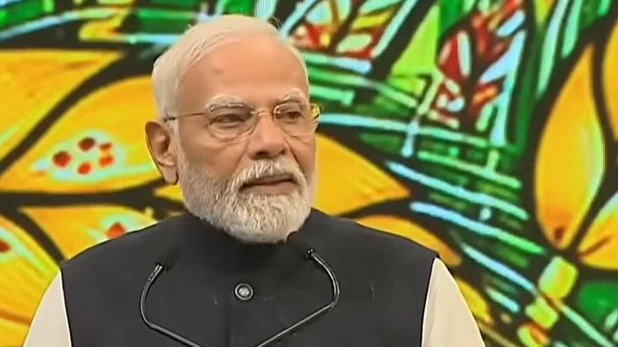
Prime Minister Narendra Modi has called on farmers to move away from reliance on traditional crops such as wheat, rice, and sugarcane. During his address at the Kisan Tak Bharat Agriculture Conference 2026, held at Bharat Mandapam in New Delhi, he emphasised the importance of diversification and allied agricultural activities. Modi stated that such measures are crucial for enhancing farmers’ incomes and generating new opportunities within the agricultural sector.

The Prime Minister pointed out that agricultural policies and farming practices must adapt to evolving market dynamics, consumer preferences, climatic conditions, and advancements in technology. He remarked that previous administrations had concentrated on bolstering the nation’s foodgrain reserves but had overlooked the broader goal of improving farmers’ overall prosperity beyond mere food production.

Modi asserted, “Filling foodgrain warehouses is not enough,” stressing the necessity for farmers to be equipped to navigate the changing landscape of agriculture and market demands. He highlighted that over the past decade, India has made significant strides to align with these changes.

India’s Agricultural Achievements

During his speech, PM Modi noted that India now exports agricultural products valued at over Rs 4 lakh crore annually, which has contributed to the enhancement of farmers’ incomes. He underscored India’s prominent status in global agricultural production, declaring the country as the leading producer of milk, pulses, and jute. Additionally, he mentioned that India has achieved the status of the world’s largest producer of rice and millets.

Furthermore, he indicated that India ranks second in global wheat production, as well as in the production of cotton, fruits, vegetables, and fish. Modi remarked that these statistics reflect the vast potential of Indian farmers, stating, “These are not just figures. They show the immense potential of India’s farmers.”

The Prime Minister also elaborated on various agricultural revolutions that have bolstered India’s production capabilities and opened new income avenues for farmers. He referred to the Green Revolution, which has led the country towards self-sufficiency in foodgrain production, and the White Revolution, which established India as the largest milk producer globally.

Impact of Agricultural Revolutions

Modi provided statistics indicating that milk production in India has surged by nearly 70 per cent over the past decade, while egg production has increased by approximately 90 per cent. He also mentioned the Blue Revolution, which has seen fish production more than double within the same timeframe. Furthermore, he discussed the Sweet Revolution, which has created new opportunities in beekeeping, noting that honey production has risen from around 80,000 tonnes to 1.5 lakh tonnes.

In addition, the Prime Minister highlighted that India’s horticulture production has expanded from 280 million tonnes to over 350 million tonnes. He stated that these advancements across various agricultural sectors are generating multiple income sources for farmers. Modi emphasised that connecting these revolutions with a broader vision is essential for ensuring a sustainable future for agriculture in the country.

The two-day Kisan Tak Bharat Agriculture Conference 2026, organised by the India Today Group under the theme “Smart Kisan, Viksit Bharat,” brought together more than 2,000 farmers, policymakers, industry representatives, and global experts to deliberate on the future of Indian agriculture.

Long or Short, get news the way you like. No ads. No redirections. Download Newspin and Stay Alert, The CSR Journal Mobile app, for fast, crisp, clean updates!

App Store – https://apps.apple.com/in/app/newspin/id6746449540

Google Play Store – https://play.google.com/store/apps/details?id=com.inventifweb.newspin&pcampaignid=web_share

Latest News

Popular Videos
