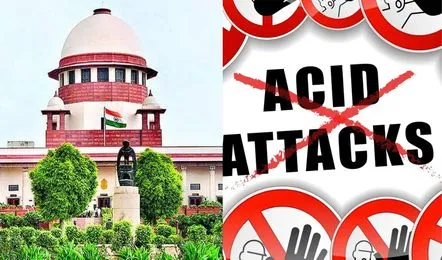
In a deeply emotional hearing on Thursday, the Supreme Court confronted the shocking reality that the trial of a woman attacked with acid in 2009 is still unfinished. The revelation came directly from survivor Shaheen Malik, who stood before the Bench of Chief Justice of India Surya Kant and Justice Joymalya Bagchi to describe how her fight for justice has dragged on for 16 years.
Survivor Says Her Case Barely Moved for Years
Malik explained that she spent years watching her file gather dust. “Mere saath 2009 mein attack hua tha, abhi tak trial chal raha hai,” she told the judges, noting that between 2009 and 2013 there was virtually no progress. She said the trial, now at the stage of final arguments in a Rohini court, only picked up again when a judicial officer, Dr. Parminder Kaur, revived the matter.
Her counsel added that others who suffered similar attacks face devastating consequences: “There are others who are made to drink acid and they suffer equally. They are made to eat food by food pipe.”
Court Expresses Outrage Over Delay
The Chief Justice reacted strongly to the disclosure, questioning how a case of such brutality could be left unresolved for so long especially in the nation’s capital. “The offence is of 2009 and the trial is not completed! If the National Capital cannot respond to these challenges, then who will deal with it? It is a shame on the system!” he said.
Calling the situation “a mockery of the system,” the CJI asked Malik to file an application so the Supreme Court could directly push for the case to be concluded.
SC Orders Nationwide Data Collection on Acid Attack Trials
Shocked by the length of Malik’s wait, the Court expanded its focus beyond her case. It directed all High Courts to compile and submit information on every pending acid attack trial across their jurisdictions. The Bench issued notice and asked the Registrar Generals of all High Courts to furnish the data before the next hearing.
Solicitor General Supports Strong Action
Solicitor General Tushar Mehta, who was present in court, agreed that the system had failed survivors. He said perpetrators deserved no leniency: “The perpetrator should meet with the same ruthlessness as done here. No agency can oppose this.”
He also backed the idea of treating severe acid attack cases particularly incidents involving forced ingestion as disabilities under the Rights of Persons with Disabilities Act, 2016. “I don’t think any respondent can oppose this. It should be treated as disability. They should be considered in the Act,” he said.
CJI Calls for Government Intervention
The Chief Justice urged the Centre to step in decisively: “Mr. Solicitor General, do something… The definition of ‘disabled’ can include them as well. There can be an ordinance. This (the delay in criminal trial) is a mockery of the system.”
He also remarked that such offences may require dedicated courts: “There should be no sympathy for such persons (accused).”
PIL Points to Legal Gaps Affecting Acid Ingestion Survivors
The petition filed through AoR Anuj Kapoor highlights a loophole in the disability law, which restricts recognition to survivors whose bodies were disfigured by acid being thrown. Those forced to drink acid who may live with lifelong internal injuries, need feeding pipes, and lose mobility do not qualify for disability certificates, cutting them off from essential rehabilitation and financial support.
These concerns, raised before the Bench, reinforced the need for reforms that Malik’s PIL seeks, including amendments to the RPwD Act.
Case to Be Taken Up Again Next Week
The Court will revisit the matter next week as it waits for data on acid attack trials nationwide and considers measures to accelerate pending cases and strengthen protections for survivors.