


Microsoft’s Exit Offer for 60,000 Employees and Nadella’s AI Vision
The CSR Journal Magazine

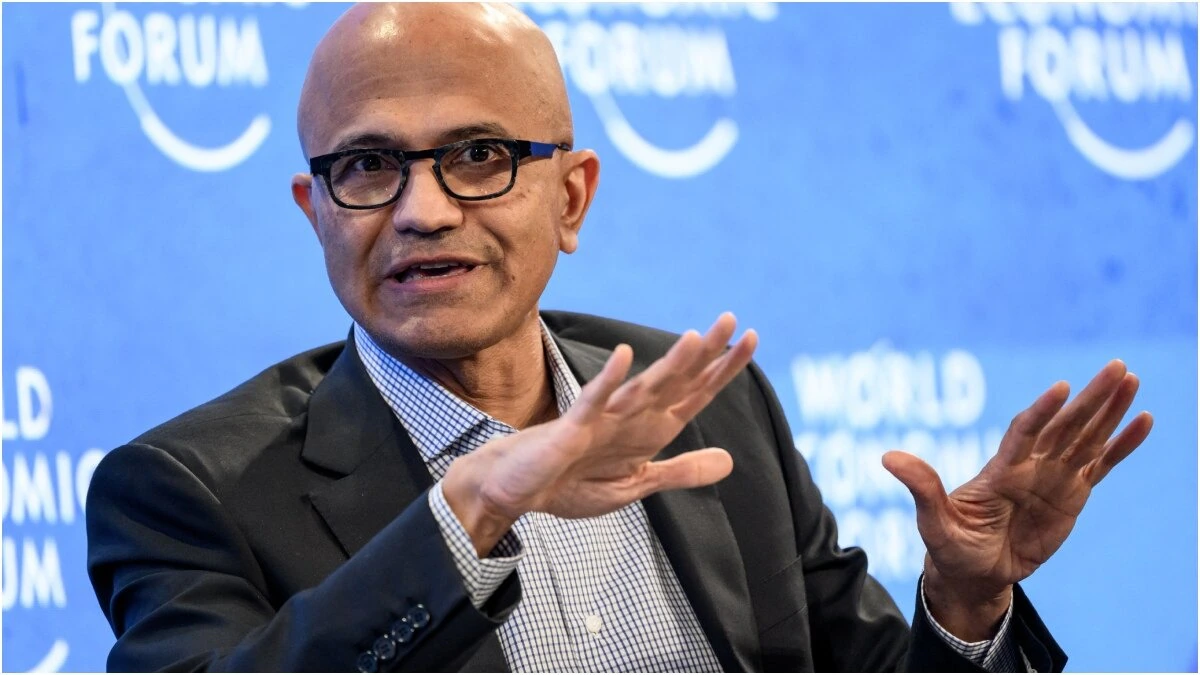
Microsoft’s CEO Satya Nadella’s vision of a future workplace, enhanced by millions of artificial intelligence agents, has gained traction on social media. This renewed interest follows the company’s recent announcement of voluntary exit offers extended to approximately 60,000 employees. The timing of these developments has sparked discussions about the implications for the workforce.

A video from June 2026 featuring Nadella in a dialogue with Reid Hoffman, co-founder of LinkedIn, has resurfaced on X. During this conversation, Nadella envisioned a scenario where 200,000 human employees could collaborate with anywhere from 2 million to 20 million AI agents. This perspective has raised questions about the potential impact of AI on employment, especially as technology firms assert that AI will enhance employee productivity.

The voluntary exit programme affects over a quarter of Microsoft’s global workforce, including eligible employees in India, the US, the UK, and Canada. This context makes Nadella’s remarks particularly significant as the company navigates its evolving workforce strategy.

AI Agents Collaborating with Humans

In the interview conducted on June 5, Hoffman queried Nadella about the future of work and the possibility of companies relying on AI agents as specialised employees. Nadella likened this transformation to the advent of computers in offices, recalling how the notion of billions typing daily would have seemed far-fetched in the early 1980s.

He noted that the introduction of computers created a new category of knowledge work, fundamentally altering office dynamics. Nadella elaborated on a potential model where 200,000 employees work alongside millions of AI agents, suggesting a collaborative rather than a replacement scenario. He indicated that coding serves as an early example of this shift, with AI evolving from completing minor coding tasks to managing larger projects through autonomous agents.

This vision of human-agent collaboration has not been framed as a definitive plan but rather as a glimpse into a possible future for Microsoft’s workforce. Nadella’s comments highlight the need for companies to adapt to this changing landscape without necessarily reducing their human workforce.

Implications of AI on Employment

The recent announcement of the voluntary exit programme on October 26 has drawn attention due to its timing alongside Microsoft’s significant investments in AI and cloud computing. The programme targets eligible employees at level 70 and below, providing financial support and career-planning resources for those who opt to leave. Microsoft anticipates that fewer than 5 per cent of eligible employees will accept this offer, equating to under 3,000 departures.

While the company has not explicitly linked the exit programme to AI-driven workforce changes, its chief people officer, Amy Coleman, described it as a response to evolving business needs. This has led to speculation about the relationship between the exit offers and the company’s ongoing AI initiatives. Nadella’s vision of a workforce augmented by AI agents raises critical questions about the future of human jobs.

He has stressed the importance of establishing systems that provide AI agents with identities, permissions, and accountability. Moreover, he has urged the industry to clarify how new roles will emerge in the AI landscape and the skills required for these positions. For employees, the challenge extends beyond merely adapting to AI as a productivity tool. It involves comprehending how autonomous systems could redefine existing roles, career prospects, and compensation structures in the evolving job market.

Long or Short, get news the way you like. No ads. No redirections. Download Newspin and Stay Alert, The CSR Journal Mobile app, for fast, crisp, clean updates!

App Store – https://apps.apple.com/in/app/newspin/id6746449540

Google Play Store – https://play.google.com/store/apps/details?id=com.inventifweb.newspin&pcampaignid=web_share

Latest News

Popular Videos
