


CJP Announces Jail Bharo Protest at Shivaji Park on October 2
The CSR Journal Magazine

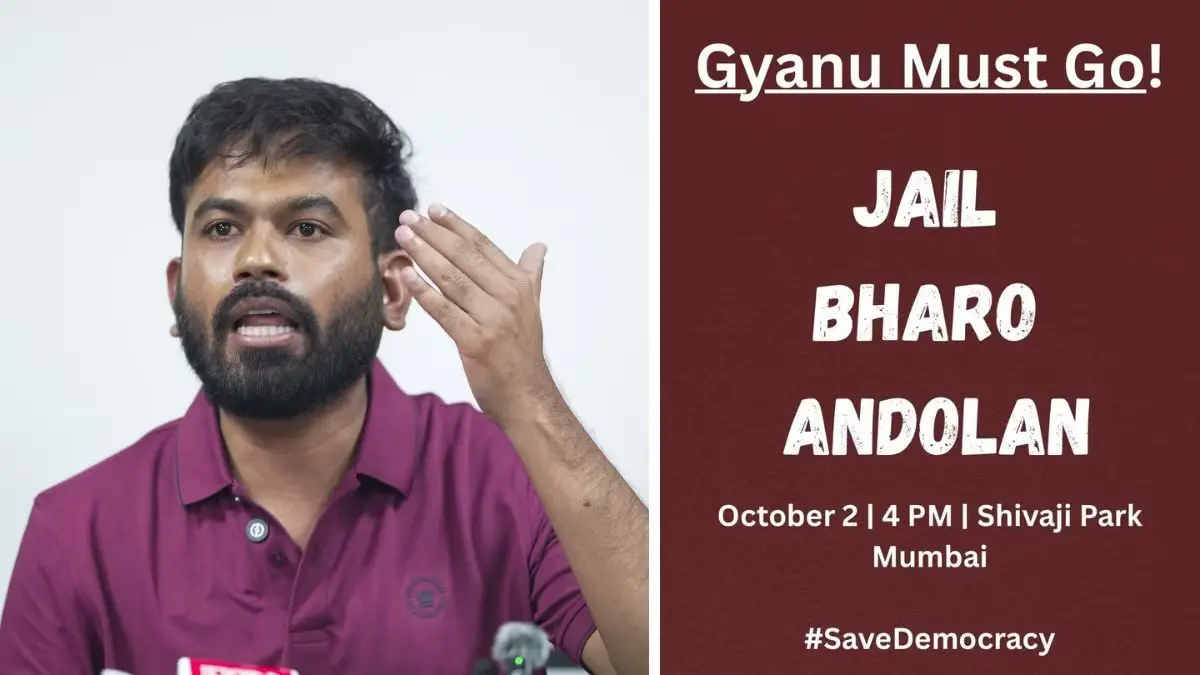
The Cockroach Janta Party (CJP) is organising a ‘Jail Bharo’ protest on October 2, following a refusal from the Mumbai Police to grant permission for a peaceful demonstration at Shivaji Park. CJP founder Abhijeet Dipke stated that if their right to protest is constrained, they will proceed with the “Jail Bharo Andolan” on Gandhi Jayanti. The protest aims to highlight their discontent with the Election Commission of India (ECI) and demand the resignation of the Chief Election Commissioner (CEC), Gyanesh Kumar.

The CJP’s agitation focuses on the Special Intensive Revision (SIR) of electoral rolls, which they claim has resulted in mass deletions of voters and favours the ruling party. They issued an ultimatum for the CEC to resign by September 26 or face protests. According to reports from the Indian Express, the party has raised concerns about the integrity of the electoral process, alleging that alterations to voter lists were made without proper justification. This has raised suspicions of institutional bias within the ECI.

Abhijeet Dipke, alongside co-convenors such as Saurav Das, has labelled Gyanesh Kumar as a potential threat to democracy. They have demanded not only his resignation but also a halt to the revision process and an independent judicial inquiry into the matter. Meanwhile, the ECI has defended its operations, asserting that internal disagreements are customary and all decisions concerning electoral rolls received unanimous support from the commissioners.

Conditions for the Denial of Permission by Mumbai Police

The Mumbai Police have provided specific reasons for denying the CJP permission to hold their protest at Shivaji Park. Official statements reveal that the restriction is primarily regulatory. One key issue is the legal limitations concerning the venue. A 2013 ruling by the Bombay High Court, followed by a 2016 directive from the Maharashtra government, restricts political gatherings at Shivaji Park.

Furthermore, the CJP failed to secure the necessary civic clearance from the Brihanmumbai Municipal Corporation (BMC), which is legally required for such events. This absence of clearance has further complicated their situation and contributed to the police’s decision to reject the request.

The police also highlighted public disturbance concerns, pointing out that Shivaji Park is classified as a silence zone. They cited significant worries regarding noise pollution and potential traffic disruptions that could arise from the gathering. As a result, the Mumbai Police have advised CJP organisers to explore alternative locations in the city for their planned demonstration.

CJP’s Reaction to Police Decision

The leadership of the CJP has vehemently opposed the police’s decision, characterising it as an attempt to silence the voices of citizens exercising their democratic rights. They argue that their protest is a crucial part of the democratic process and that suppressing such expressions is unacceptable.

Despite the police’s objections, CJP officials have indicated their commitment to carrying out the protest as planned, though they acknowledge the need to comply with legal stipulations. The situation has sparked discussions about the balance between maintaining public order and protecting the right to protest in democratic societies.

As the date of the protest approaches, the ongoing conflict between the CJP and the authorities over the right to assemble peacefully continues to evolve, drawing attention to broader issues of electoral integrity and civil liberties in India.

Long or Short, get news the way you like. No ads. No redirections. Download Newspin and Stay Alert, The CSR Journal Mobile app, for fast, crisp, clean updates!

App Store –  https://apps.apple.com/in/app/newspin/id6746449540 

Google Play Store – https://play.google.com/store/apps/details?id=com.inventifweb.newspin&pcampaignid=web_share

Latest News

Popular Videos
