


Ahead of India Debut, Deepinder Goyal Reveals Research Validating Temple’s Brain-Tracking Tech
The CSR Journal Magazine

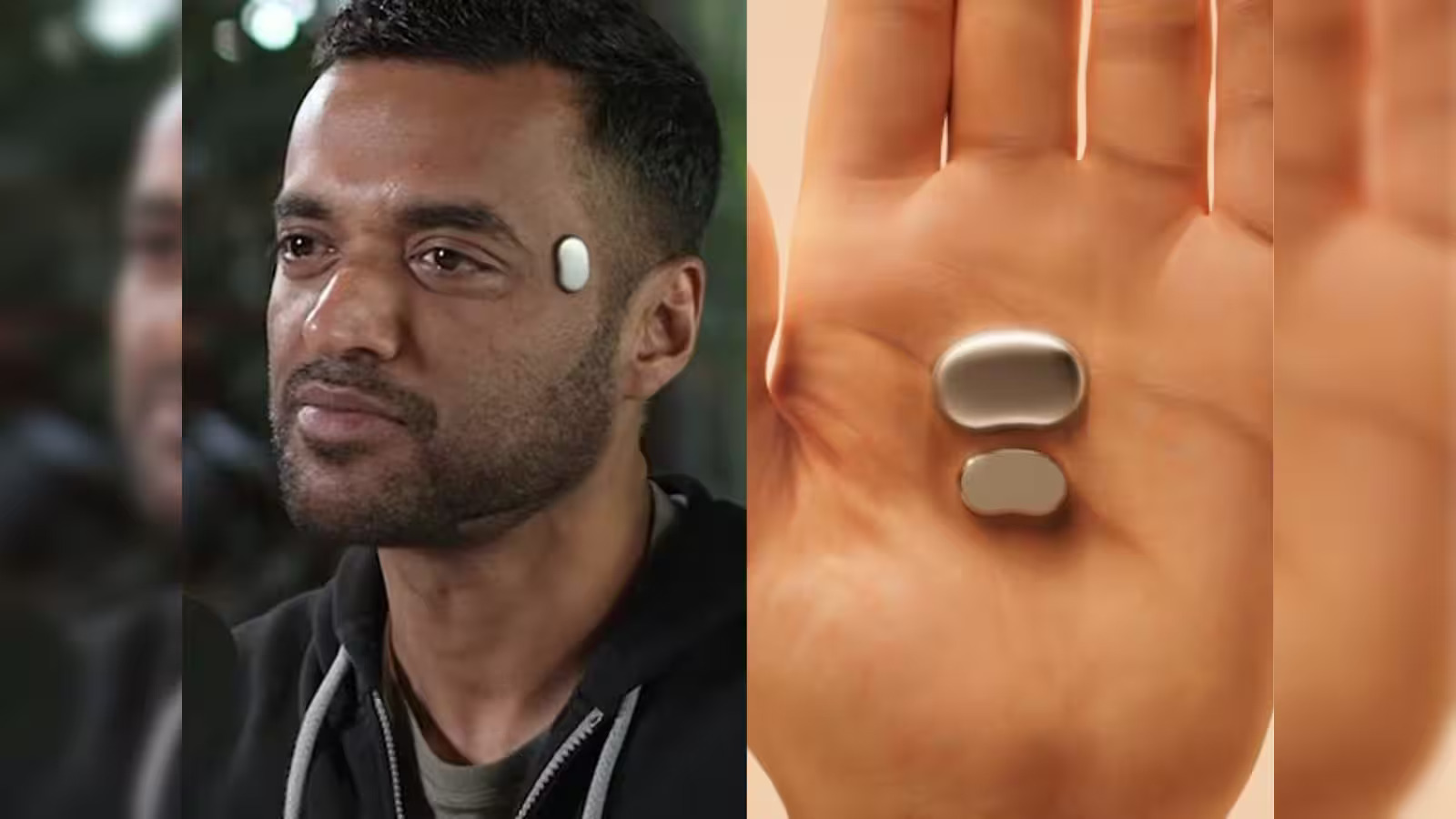
Deepinder Goyal recently presented new findings related to Temple, a wearable device engineered to monitor blood flow changes around the brain. This announcement aligns with the company’s plans for a more comprehensive launch in India, indicating progress in their research and development efforts.

The key outcomes from the latest study suggest that the Temple BrainFlow exhibited a more robust correlation with alterations in brain blood volume than with changes in scalp blood volume. This research marks a significant step in understanding the device’s functionality, as it seeks to provide continuous monitoring of cerebral blood flow.

Conducted as a validation study, the research leveraged time-domain near-infrared spectroscopy (TD-NIRS), an advanced technique adept at differentiating signals from deeper brain tissues against those from the scalp. This methodological choice underscores the device’s potential relevance in clinical and research settings.

Details of the Validation Study

The validation study involved 60 sessions with 44 healthy young male participants, who were subjected to three controlled physiological challenges. These included a 30-degree head-down tilt, movement from a standing to a squatting position, and transitioning from standing to a supine position. This design allowed researchers to assess the performance of the Temple device effectively.

Goyal reported that during the three tests, the median correlation between Temple BrainFlow and the derived brain signals was impressively high, with values of 0.912 for the head-down tilt test, 0.843 for the stand-to-squat transition, and 0.839 for the stand-to-supine movement. In contrast, the correlations for the scalp signals reflected lower values at 0.494, 0.700, and 0.767, respectively.

The study findings underscore that Temple’s monitoring capabilities are significantly more aligned with the brain’s activity compared to those of the scalp. Particularly notable was the result for the head-down tilt test, which produced a correlation value of 0.91 compared to 0.49 for the scalp. These differences proved statistically significant for the head-down tilt and the stand-to-squat tests.

Implications for Future Research and Launch

According to Goyal, the monitoring of cerebral blood flow may provide critical insights into how the human body reacts to various factors such as exercise, sleep, dehydration, and prolonged periods of sitting. The design of Temple aims to enable this ongoing monitoring, contrasting with traditional methods that typically capture data only during clinical evaluations.

The research directive was led by David Boas, the director of Boston University’s Neurophotonics Centre, who serves as a scientific adviser to Temple. Despite the promising results, it’s important to note that the research is currently available as a preprint and has yet to undergo the peer-review process.

The research was funded and conducted by Temple Private Limited, and several authors involved in the study have affiliations with the company. It has been suggested that additional studies employing flow-sensitive references could further validate the cerebral specificity of the findings.

With regard to the anticipated launch of Temple in India, no explicit public launch date has yet been confirmed. Goyal has mentioned previously that the limited release edition is expected to commence shipping before the end of 2026. He has indicated that a date for pre-orders may be announced soon, as the company awaits clarification on several outstanding items.

Long or Short, get news the way you like. No ads. No redirections. Download Newspin and Stay Alert, The CSR Journal Mobile app, for fast, crisp, clean updates!

App Store –  https://apps.apple.com/in/app/newspin/id6746449540 

Google Play Store – https://play.google.com/store/apps/details?id=com.inventifweb.newspin&pcampaignid=web_share

Latest News

Popular Videos
