


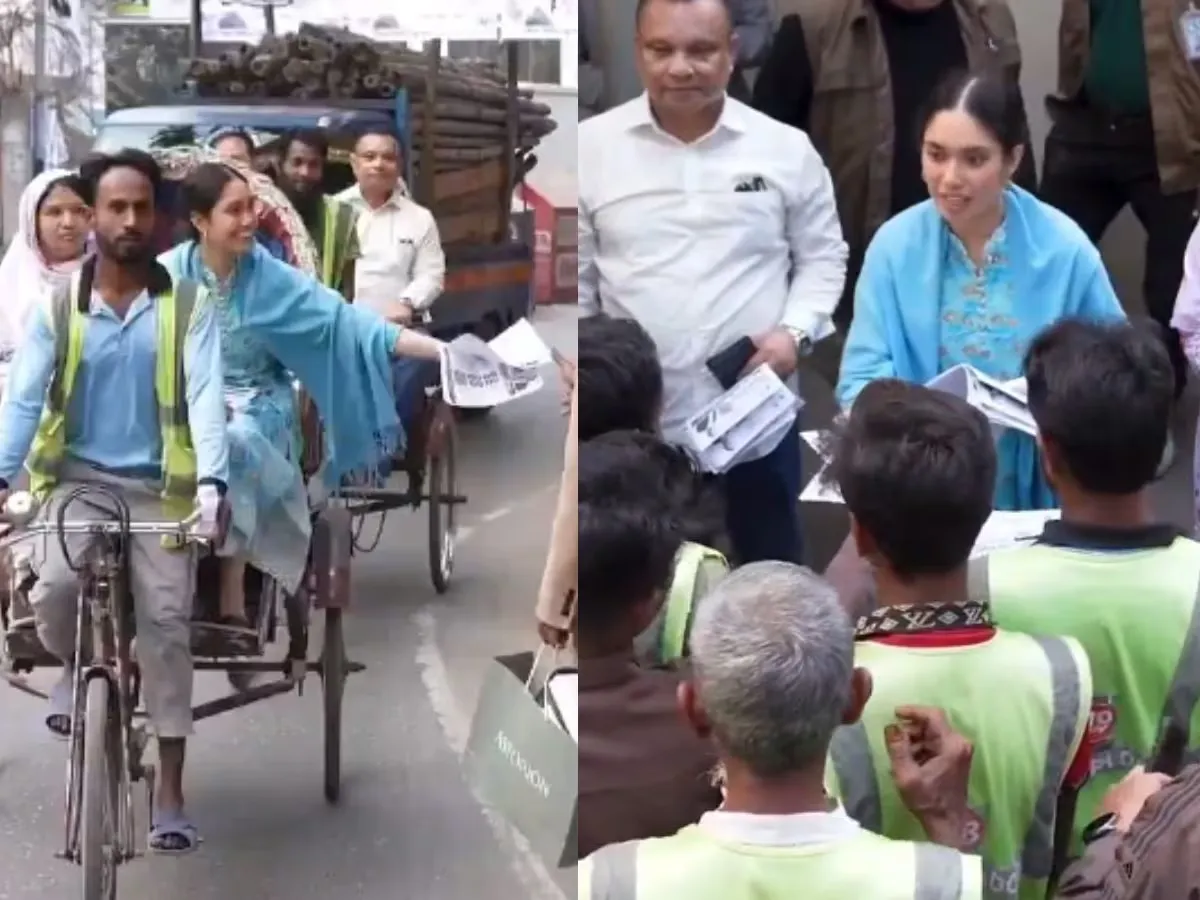

Zaima Rahman, the daughter of Bangladesh Nationalist Party (BNP) leader Tarique Rahman, has embarked on a grassroots campaign in Dhaka’s bustling areas ahead of the upcoming general elections scheduled for February 12. Videos of her riding a rickshaw alongside Fatema Khatun, a caregiver to former Prime Minister Khaleda Zia, have circulated widely online. During this campaign, she distributed pamphlets and interacted directly with potential voters in various neighborhoods.
Campaign activities across Dhaka
Starting her outreach from Gulshan Police Plaza, Zaima traveled through busy streets, shops, and cafes, actively engaging with pedestrians, rickshaw pullers, vendors, and office workers. She was seen urging voters to support her father, who is contesting in the Dhaka-17 constituency, saying, “My father, Tarique Rahman, is the ‘Sheaf of Paddy’ candidate in Dhaka-17. I am asking for your votes in his favor.”
Tarique Rahman’s political context
Tarique Rahman, aged 60, is considered a key contender in what will be Bangladesh’s first general election since the removal of long-time Prime Minister Sheikh Hasina in 2024. He faces significant competition in Dhaka-17 from Dr. SM Khalekuzzaman, the candidate from Jamaat-e-Islami. Rahman recently declined an invitation from Jamaat-e-Islami for a unity government, emphasizing his trust in the BNP’s electoral prospects.
Return to Bangladesh after years of exile
Rahman returned to Bangladesh in December after nearly two decades of exile, coinciding with the declining health of his mother, Khaleda Zia, who passed away on December 30, 2025. Zia was notable for being Bangladesh’s first female Prime Minister, and her death marked a significant moment in the country’s political landscape.
Details of the upcoming elections
The general elections on February 12, 2026, will determine the 300 members of the Jatiya Sangsad (National Parliament). Alongside the elections, there will be a constitutional referendum. Approximately 127 million voters are eligible to participate, marking one of the largest democratic exercises in the country. A total of 1,981 candidates are vying for election.
Political environment and contesting parties
The elections are being conducted under an interim government led by Muhammad Yunus, established after Sheikh Hasina’s ousting following a significant student-led movement in 2024. Hasina, currently in exile in India, has been sentenced to death in absentia after being convicted by a Bangladeshi tribunal for actions taken during periods of unrest.
The Awami League, previously dominant under Hasina, is not contesting in this election, creating a political environment primarily focused on the BNP and the 11-Party Alliance, which includes Jamaat-e-Islami and the National Citizen Party (NCP). The BNP has nominated candidates for 288 seats, while the 11-Party Alliance is contesting 298 seats, among other parties involved in the elections.