



Football in India is at a crossroads. Indian domestic football is going through a severe crisis. The Indian Super League (ISL) 2025-26 season, originally scheduled in September 2025, has been delayed due to unresolved commercial rights issues between the All India Football Federation (AIFF) and Football Sports Development Limited (FSDL). The 15-year Master Rights Agreement (MRA) between AIFF and FSDL expired in December 2025, and a new agreement is yet to be finalised.
The root cause of the crisis is the major contractual breakdown between the AIFF and its commercial partner FSDL, leading to the Indian Super League (ISL) being stalled, with no new commercial partner found after a tender failed, creating financial uncertainty. This has affected players’ salaries and put league operations to a halt, which has been aggravated by long-standing issues like short-term focus, weak infrastructure, and governance struggles, despite high spending on global stars.
As a result of this, Indian football clubs are facing financial difficulties, with some suspending first-team operations and delaying player payments. Footballers are unsure about their future and many have even started looking for opportunities abroad. The ISL remains suspended, affecting lower-tier leagues and national tournaments. City Football Group (CFG) has pulled out of Mumbai City FC, citing uncertainty surrounding the tournament’s future.
The current situation is a combination of administrative paralysis, unsustainable financial models, and a lack of focus on long-term development. The core issues stem from governance problems and a financial crisis following the expiration of the Master Rights Agreement (MRA) between the All India Football Federation (AIFF) and its commercial partner, Football Sports Development Limited (FSDL).
How has the situation impacted Indian football?
The national governing body, the All India Football Federation (AIFF), is struggling to find a new commercial partner after its 15-year deal with the previous one expired. The impasse has left up to 5,000 players, coaches, match officials and support staff in oblivion. This has left clubs without a revenue stream, forcing them to self-fund the league, which has led to player salary cuts and uncertainty among staff. Almost all ISL clubs reportedly run at a loss due to high operational costs and inflated player salaries that often exceed their market value. The average wage-to-turnover ratio often exceeds the globally recommended 60%, making it difficult for clubs to be profitable.

The ongoing power struggles and administrative instability within the All India Football Federation (AIFF) has landed Indian football in crisis. The lack of a coherent, long-term vision and a structured football pyramid is affecting the growth of football in India. The AIFF’s governing structure has been criticised for not providing enough operational autonomy to commercial partners and clubs, which is affecting the overall development of football in India.
The significant lack of investment in grassroots football, youth academies, and proper coaching infrastructure is another major issue. With only 10 out of 94 AIFF-accredited academies consistently participating across age groups, the pipeline of young talent is severely limited. This results in a limited pool of quality domestic players, driving up the cost of existing talent.
The recent collapse of the Master Rights Agreement (MRA) between AIFF and Football Sports Development Limited (FSDL) has further exacerbated the situation, leaving clubs without funding and forcing salary suspensions and operational shutdowns. The AIFF’s delayed and ineffective response has only added to the uncertainty.
Recently Indian football stars Sunil Chhetri, Gurpreet Singh Sandhu and Sandesh Jhingan released a video urging the International Federation of Association Football (FIFA) to intervene to ensure that the delayed Indian Super League was held, the All India Football Federation (AIFF) on Saturday declared the 2025–26 ISL season. In the now-viral video, Sunil Chhetri says, “Players, staff, owners, and the fans deserve clarity, protection, and, more importantly, a future.” Other players point out how Indian football governing bodies no longer fulfil their responsibilities, warning that how football in India is in a state of “permanent paralysis”.
Govt of India intervenes to handle the situation
Finally, the government of India has intervened, and a tentative start date of February 14, 2026, has been proposed. However, the situation remains uncertain. The 2025-26 season, which was supposed to kick off in September, is expected to kick off in February, but in a shortened format. Sports Minister Mansukh Mandaviya on Tuesday night, said that the ISL, featuring all 14 clubs, will start on 14 February. Also stuck till now, the I-League will be held “around the same time”, with all 11 clubs participating, the minister informed.
Union Sports Minister Mansukh Mandaviya held a joint meeting with the AIFF and all 14 ISL clubs, including those that initially opposed the financial model, to break the six-month-long deadlock caused by the absence of a commercial partner. The primary objective of the government’s intervention was to ensure the season begins to prevent further damage to Indian football and the careers of players, with the Minister stating “Indian sport does not suffer”.
While the Sports Ministry has explicitly stated it will not be using central funds to run the league, the AIFF has created a Rs 25 crore central pool to cover operational costs in the interim, with an assurance that the government would “step in to assist” if the need arises. The AIFF is temporarily covering the share that would typically come from a commercial partner. A new Governing Council Board is to be established to manage both the ISL and I-League and will be empowered to make commercial decisions, aiming for greater autonomy and financial sustainability in the future.
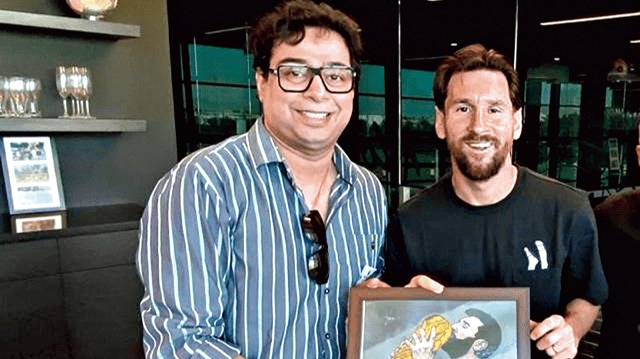
Rs 100 crore spent on Messi’s ‘GOAT India Tour 2025’ as domestic football struggles
Indian football’s in a tough spot. The AIFF’s 15-year deal with FSDL, which handled ISL’s funding and ops, has collapsed. This, plus the ongoing power struggle between ISL and I-League has made things worse. AIFF is struggling to finalise new commercial tenders and revamp its constitution under the supervision of the Supreme Court supervision, which has left Indian football caught in a storm. Decisions are stuck, leagues are disrupted, and football’s growth in India is slowing down.
The allocation of funds for Lionel Messi’s ‘GOAT India Tour 2025’ and domestic football highlights a significant imbalance in investment priorities, with Rs 100 crore total expenditure for the tour versus a struggling domestic league system. The total cost for the three-day, four-city tour was reportedly Rs 100 crore, of which Rs 89 crore was paid directly to Messi as appearance fees, with Rs 11 crore in taxes paid to the Indian government.
The funds were primarily sourced from corporate sponsors and ticket sales, with roughly 30% from each. Major sponsors included brands like Adani, HSBC, and JSW Group, who invested a huge amount of money for brand visibility. The tour was a series of fan events, exhibition matches, and interactions, with no competitive play due to insurance constraints.
The event sparked debate among Indian football figures and fans, who questioned why such massive funds were spent on a short-term spectacle while the domestic game struggled.