Artificial intelligence is set to disrupt global workplaces, but technology leaders at the World Economic Forum in Davos say its first major impact may not be on software engineers or developers. Instead, they warn that middle management and generalist roles focused on coordination rather than creation are increasingly vulnerable as AI systems take over tasks once handled by human supervisors.
Executives speaking on the sidelines of Davos pointed to early signs that corporate hierarchies are flattening, hiring patterns are shifting, and the value of traditional managerial experience is eroding. While some leaders see this as a necessary correction driven by efficiency, others caution against writing off broad-based education and human judgement too quickly.
Humanities And Generalists Face A Tougher Market
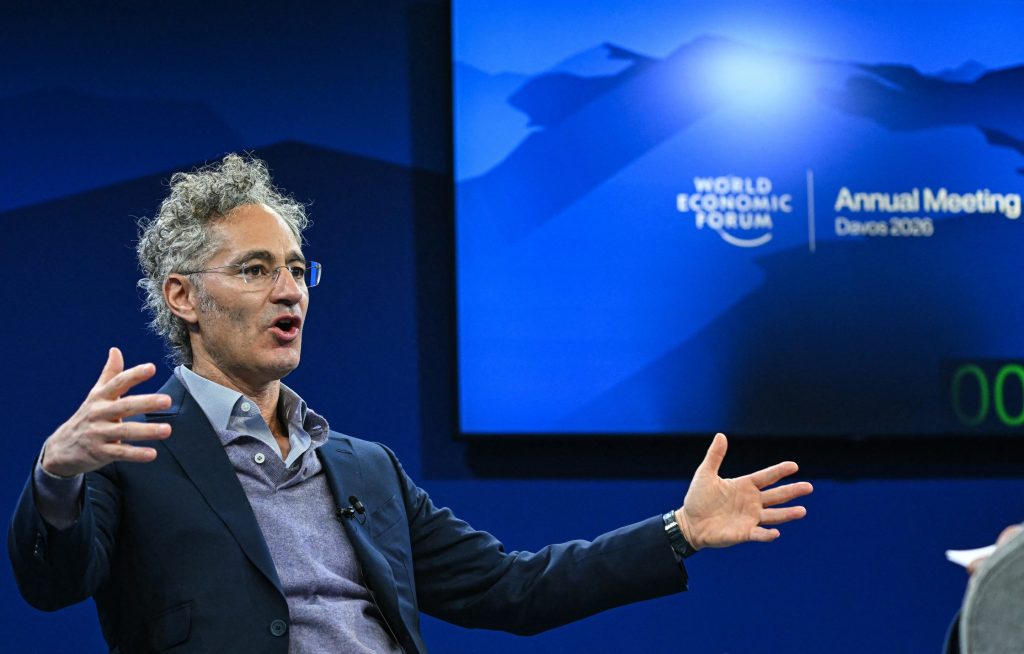
One of the starkest warnings came from Palantir chief executive Alex Karp, who said artificial intelligence would “destroy humanities jobs” during a discussion with BlackRock CEO Larry Fink. Karp argued that generalised knowledge, particularly from elite universities, is becoming harder to sell in an economy increasingly driven by automation and data.
According to Karp, workers with vocational training, engineering expertise or hands-on technical skills are better positioned to benefit from the AI transition. By contrast, roles built largely on abstract knowledge or broad academic training may struggle unless paired with practical capabilities.
Similar concerns have been voiced closer home. Anupam Mittal, founder of People Group and a judge on Shark Tank India, warned in a LinkedIn post that AI is “coming for middle management” before it threatens coders. Mittal said the traditional advantage enjoyed by managers, such as understanding workflows and knowing whom to contact, has rapidly diminished as AI tools now perform these functions instantly.
Mittal pointed to companies he has backed that generate between Rs 300 crore and Rs 1,000 crore in annual revenue with teams of roughly 50 employees, largely enabled by AI-driven systems. In such setups, he argued, the need for multiple layers of supervision is disappearing.
Companies Flatten Structures And Cut Management Layers
The warnings from Davos mirror changes already under way at major global companies. Amazon CEO Andy Jassy has pushed to reduce management layers, saying middle managers often slow execution by over-involving themselves in decisions. Amazon has announced plans to raise the ratio of individual contributors to managers by 15 percent.
Google has taken similar steps, cutting 35 percent of managers overseeing small teams and removing an entire layer of “managers of managers” in its US advertising sales division. The company has said the goal is to simplify reporting lines and speed up decision-making.
Industry research suggests this trend is likely to accelerate. A report by Gartner predicts that by 2026, 20 percent of organisations will use AI to flatten their structures, potentially eliminating more than half of existing middle management roles. As AI increasingly handles reporting, scheduling and performance tracking, companies are reassessing the cost and utility of large managerial hierarchies.
The Rise Of Individual Contributors in The AI Era
At Davos, AI leaders also acknowledged that hiring patterns are beginning to shift. Demis Hassabis, CEO of Google DeepMind, said companies are seeing early signs of AI affecting junior-level recruitment, with fewer entry-level and internship roles being offered. He said routine tasks once handled by junior employees are now increasingly automated.
Dario Amodei echoed this view, noting that software and coding roles at Anthropic have declined at both junior and mid-level positions.
Mittal described the emergence of what he called the “Individual Contributor Plus”, professionals who can build, code, sell or create while using AI to replicate the output of entire teams. He warned that roles centred mainly on coordination, without measurable output, risk being classified as overhead.
Not all business leaders agree with the more pessimistic outlook. Robert Goldstein, chief operating officer of BlackRock, has said the firm continues to recruit graduates from non-technical backgrounds. Similarly, McKinsey & Companyglobal managing partner Bob Sternfels has said the consultancy is increasingly open to liberal arts graduates as sources of creativity and critical thinking.
Even so, the dominant message from Davos was that AI is accelerating a shift towards flatter organisations and output-driven roles. For middle managers across industries, the warnings from global tech leaders suggest the future of work may demand reinvention rather than tenure alone.