


app-store-logo
play-store-logo
January 31, 2026

Which promises remain unfulfilled from the Union Budget 2025-26?
The CSR Journal Magazine

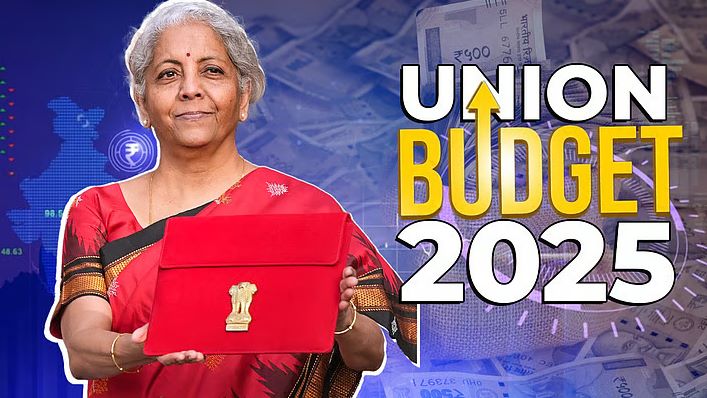
Union budget allocates major share to key sectors like healthcare, education, agriculture, Defence and others. With Union Budget all set to be announced on February 1, stakeholders and industry insiders are waiting for the government to fulfil some of the unfulfilled promises from last year’s budget.

While the government of India did fulfil a lot of promises made by Finance Minister Nirmala Sitharaman in the Union Budget 2025-26, some are still waiting to be implemented. Some sectors have been awaiting progress on the promises made on February 1 last year.

According to critics, the Union Government’s performance regarding the Union Budget 2025-26 has been marked by significant gaps in disinvestment, capital expenditure (Capex) execution, and private investment stimulus. While the government maintained fiscal discipline, several key promises await implementation.

Farmers welfare and agriculture

While presenting the Union Budget 2025-26, Finance Minister Nirmala Sitharaman had promised enhanced credit under Kisan Credit Cards and the National Mission on High-Yielding Seeds.

FM Sitharaman had termed agriculture as the “first engine” of the economy and announced several new initiatives for the sector while presenting the budget. Some of these are yet to be implemented—like raising the loan limit under the Modified Interest Subvention Scheme from Rs 3 lakh to Rs 5 lakh for loans taken through the Kisan Credit Card (KCC), launching a Mission for Cotton Productivity, and setting up a National Mission on High-Yielding Seeds.

Announcing the enhanced credit through the KCC scheme during the budget presentation, Sitharaman said, “Kisan Credit Cards enable short-term loans for 7.7 crore farmers, fishermen, and dairy farmers. The loan limit under the Modified Interest Subvention Scheme will be increased from Rs 3 lakh to Rs 5 lakh for loans taken through the KCC.”

However, this is yet to be approved by the Union Cabinet. The agriculture ministry is expected to soon send a proposal in this regard. Critics allege that the Kisan Credit Card scheme has in some cases turned into a debt trap for farmers, marred by misuse, high bureaucratic hurdles, and structural flaws.

Sitharaman also announced a 5-year-mission for Cotton Productivity expected to facilitate significant improvements in productivity and sustainability of cotton farming, and promote extra-long staple cotton varieties. This is expected to increase the incomes of farmers, and ensure a steady supply of quality cotton for rejuvenating India’s traditional textile sector. However, this mission too is yet to be implemented on the ground.

Announcements regarding a National Mission on High-Yielding Seeds and the second gene bank for crop germplasm have also not been implemented till date. Plans to launch a “comprehensive programme to promote production, efficient supplies, processing, and remunerative prices for farmers” as announced in the budget have also not been met.

Healthcare

While the Union Budget 2025-26 increased the overall healthcare allocation to Rs 99,858.56 crores, which marked an 11% increase over the previous year’s revised estimates—experts and industry voices have pointed out several unmet promises and gaps, calling the budget a mixed bag or eyewash.

In the Union Budget 2025-26, the Indian government announced a full exemption of Basic Customs Duty (BCD) on 360 specialized life-saving drugs and medicines, primarily targeting cancer, rare diseases, and severe chronic conditions. This move aims to lower the cost of expensive treatments and improve patient access. However, this move was criticised as an “eyewash,” as it may not significantly lower the exorbitant prices of patented drugs or improve access for the poor.

The Budget 2025-26 prioritised insurance-based, high-end care (like Ayushman Bharat PM-JAY) over the strengthening of primary, preventative public health infrastructure. Critics also argue that the Ayushman Bharat scheme remains underfunded, with hospital bed availability (0.75 per thousand) falling far short of the recommended standard of two per thousand.

While the government has made significant progress in expanding the Ayushman Bharat (AB-PMJAY) scheme, covering over 42 crore people and 86.51 lakh senior citizens over 70 with Ayushman Vay Vandana Cards, the 2025 budget allocation of Rs 9,406 crore is considered by critics as insufficient to meet the rising demand, with reports of limited financial relief for some beneficiaries.

Despite the post-COVID focus on health, the budget for health research remained relatively low, failing to meet expectations for a massive boost in R&D.

Manufacturing and Employment

The National Manufacturing Mission, intended to increase industrial GDP share, is still in the ongoing phase with minimal actual output. Critics allege that there is a lack of a clear roadmap for job creation, with the manufacturing sector failing to absorb the unemployed or self-employed effectively. The “Made in India” initiative and Employment Linked Incentives saw budget slashes or stagnant growth.

Announced as a pillar for Make in India, the National Manufacturing Mission remains underway with blueprints still being finalised.

Energy

The Budget 2025-26 announced a Rs 20,000 crore allocation for Nuclear Energy Mission to encourage R&D for Small Modular Reactors (SMRs), with an aim of deploying five indigenous SMRs by 2033. The mission is currently in progress.

While laws were amended to allow private participation in the government’s Nuclear Energy Mission, the actual deployment of indigenous Small Modular Reactors (SMRs) is still in the research phase.

AI Education

The Centre of Excellence (CoE) in Artificial Intelligence was allocated Rs 500 crore to enhance and increase the use of AI tools for personalised learning, skill enhancement, adaptive curriculum, and assessments under the NEP 2020. Though in advanced planning stage, it has not yet fully become operational.

Aviation – UDAN Scheme

In the Union Budget 2025-26, Finance Minister Nirmala Sitharaman announced a modified UDAN scheme to boost regional connectivity, adding 120 new destinations and aiming to serve 4 crore additional passengers over the next 10 years. However, the promise to add 120 new regional destinations by 2027 has seen little progress, with no new major routes finalised yet.

Meanwhile, 15 airports across the country, including strategically important regional hubs such as Pathankot in Punjab, Ludhiana in the industrial belt and the hill airport of Shimla in Himachal Pradesh, have fallen temporarily silent under the Centre’s flagship UDAN connectivity scheme.

Minister of State Murlidhar Mohol recently stated that the 15 non-operational airports — Pathankot, Pakyong, Kushinagar, Aligarh, Azamgarh, Chitrakoot, Shravasti, Moradabad, Bhavnagar, Ambikapur, Rourkela, Ludhiana, Datia, Kalaburagi and Shimla — have suspended flights because of several interconnected factors.

In December 2025, the Ministry of Civil Aviation informed the Rajya Sabha that these airports revived over the past few years, currently have no flight operations due to a mix of commercial, operational and infrastructure-related challenges.

This comes amid government highlighting the wider progress of the UDAN scheme, under which 651 routes and 93 unserved and underserved airports have been brought into the national aviation network, supported by 15 heliports and two water aerodromes.

Urban Challenge Fund (UCF)

In her budget speech for the 2025-26 fiscal made in February last year, Union finance minister Nirmala Sitharaman announced that the government would set up an ‘Urban Challenge Fund’ worth Rs 1 lakh crore to help develop “cities as growth hubs”, redevelop brownfield sites in cities and promote water supply and sanitation projects in 100 cities, which were objectives she had laid out in her July 2024 address.

There has been no sign of the Rs 1 lakh crore fund intended for city redevelopment and water sanitation till date. The Urban Challenge Fund (UCF), announced in the 2025-26 budget by FM Nirmala Sitharaman to transform Indian cities, has largely remained a non-starter nearly a year after its announcement. The initiative has not been operationalised yet and awaits necessary cabinet approval, hindering the implementation of intended urban redevelopment, water, and sanitation projects.

As per reports, although the housing and urban affairs ministry has ‘prepared the project pipeline’, the cabinet is yet to approve the government’s fund guidelines that the newspaper noted were finalised in October.

When asked in parliament for details of the urban challenge fund’s implementation, including the status of projects proposed to the government, minister of state Tokhan Sahu last month said that “schemes for UCF are under consideration” and that “after approval of the schemes, the eligibility norms and participation criteria will be finalised and proposals will be invited”.

Long or Short, get news the way you like. No ads. No redirections. Download Newspin and Stay Alert, The CSR Journal Mobile app, for fast, crisp, clean updates!

App Store –  https://apps.apple.com/in/app/newspin/id6746449540 

Google Play Store – https://play.google.com/store/apps/details?id=com.inventifweb.newspin&pcampaignid=web_share

Latest News

Popular Videos
