Cardiopulmonary Resuscitation, commonly known as CPR, plays a critical role in emergencies involving cardiac arrest. When a person collapses and stops breathing, swift intervention is essential. Every minute that passes without CPR diminishes the chances of survival significantly. Health professionals emphasise that initiating CPR can greatly enhance the likelihood of a person surviving such an episode.
According to health professionals, the first few minutes after a cardiac arrest are vital. The cessation of blood flow leads to a rapid decline in oxygen supply to the brain and other crucial organs. This lack of oxygen can result in irreversible brain damage within mere minutes, underscoring the importance of immediate action.
Health professionals highlights that in India, varied emergency response times can affect outcomes, making immediate CPR from bystanders even more crucial. The ability of individuals to perform CPR can significantly improve survival rates while awaiting professional medical assistance.
How CPR Is Administered
CPR is a life-saving technique employed when a person’s respiratory or cardiac functions have ceased. The primary component of CPR involves delivering chest compressions to ensure blood circulation throughout the body. Health experts recommend a technique known as hands-only CPR, which is both accessible and easy for the general public to master.
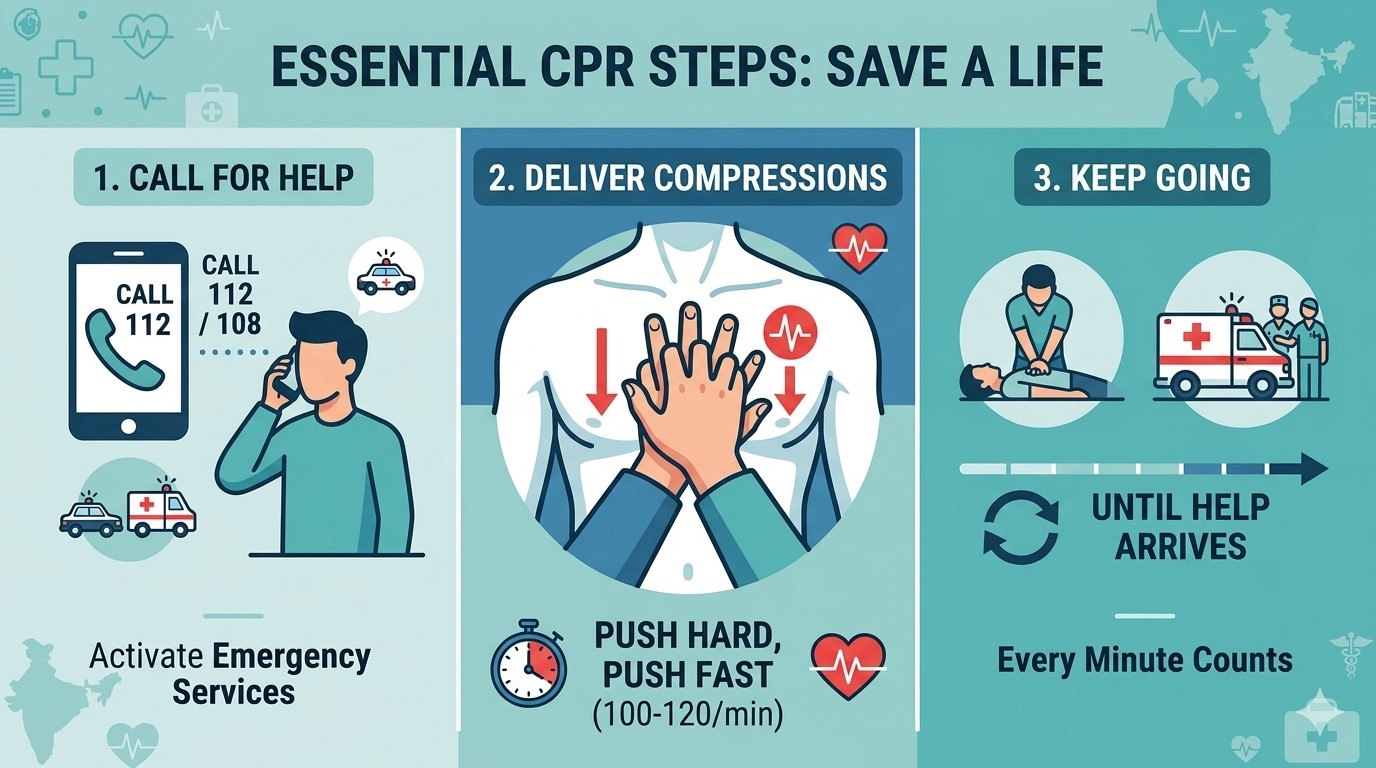
In hands-only CPR, the rescuer should position both hands in the centre of the chest and push hard and fast, ensuring a steady rhythm until trained medical personnel arrive. This technique is designed to maintain blood flow rich in oxygen to vital organs like the heart and brain, with even a few minutes of CPR capable of significantly improving survival chances.
It is a common misconception that only healthcare professionals can perform CPR. Experts indicate that the skill is not exclusive to medical personnel; anyone, regardless of background, can learn this crucial technique. According to health professionals, almost all cardiac arrests occur outside hospital settings, which renders bystanders the first responders in such emergencies.
Increasing CPR Awareness in India
In recent years, India has witnessed a rising incidence of heart diseases attributed to various factors including lifestyle changes, high levels of stress, diabetes, and obesity. These developments make the awareness of CPR even more essential, as many cardiac arrests occur at home. Family members, if trained in CPR, can act swiftly to assist loved ones while waiting for an ambulance.
Medical experts stress that the likelihood of survival diminishes with every passing minute following a cardiac arrest. Rapid CPR can potentially double or even triple a person’s chances of survival in certain scenarios. While public awareness campaigns and training initiatives are increasing in India, experts argue for more extensive efforts to ensure that CPR knowledge is widespread among the populace.
Training sessions in schools, workplaces, and community institutions are encouraged to equip individuals with necessary skills for emergencies. Doctors advocate that even simple CPR training can empower individuals to act confidently and deliver immediate help when it is most needed.
Essential Steps for Hands-Only CPR
Experts recommend the following crucial steps during an emergency requiring CPR: assess if the individual is responsive, immediately call emergency medical services, position both hands on the centre of the chest, and perform chest compressions with adequate pressure and speed. It is vital to maintain these compressions until professional help arrives.
Moreover, experts advise individuals to remain calm in high-pressure situations. Even basic CPR techniques can significantly contribute to maintaining blood circulation and improving the patient’s chances of survival. Learning and internalising this important skill can make a considerable difference during emergencies.
Ultimately, CPR is not merely a healthcare skill; it is an invaluable life skill. It empowers individuals to act decisively in emergencies involving friends, family, or even strangers. As awareness about heart health and cardiac emergencies grows, the emphasis on timely CPR remains crucial—potentially making the difference between life and death in urgent medical situations.
Long or Short, get news the way you like. No ads. No redirections. Download Newspin and Stay Alert, The CSR Journal Mobile app, for fast, crisp, clean updates!