


app-store-logo
play-store-logo
February 11, 2026

US Removes Trade Post Showing PoK And Aksai Chin As Part Of India, Sparking Diplomatic Interest
The CSR Journal Magazine

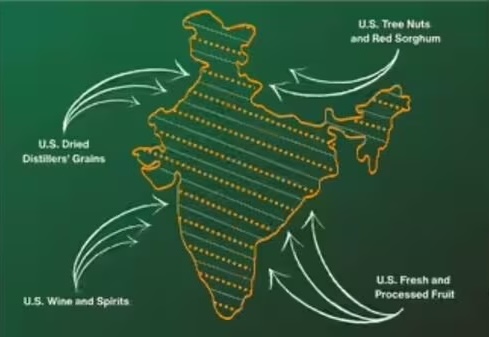
Last week, the Office of the United States Trade Representative shared a social media post that included a map showing Pakistan-administered Kashmir (PoK) and Aksai Chin as parts of India’s territory, drawing significant attention given the sensitive and longstanding territorial disputes in the region. The map was published on the platform Xalongside details of a new India-US interim trade agreement framework, but was removed several days later without an official explanation, prompting questions about its implications for diplomatic messaging and geopolitical signalling.

The graphic, which accompanied an announcement on trade cooperation and tariff adjustments, presented an undivided map of India that incorporated both PoK and Aksai Chin – regions claimed by India but currently under the control of Pakistan and China respectively. This portrayal aligned with India’s long-standing position that these regions are integral parts of its territory, despite competing claims and international sensitivities.

Swift Deletion Raises Questions

Within days of its publication, the map post was deleted from the USTR’s official X account without any public clarification from the agency or the United States Department of State. Observers noted that while maps have previously appeared on US government platforms reflecting territorial disputes with dotted lines or disclaimers, the recent portrayal drew immediate attention because it omitted such distinctions and showed the disputed regions as unequivocally part of India.

The removal has led to speculation among analysts and commentators on social media about the intended message and timing of the post. Some interpreted it as a symbolic nod to Indian claims amid strengthening bilateral trade ties, while others suggested the deletion may reflect internal disagreements over the use of official maps in public communications.

Reactions And Geopolitical Context

In India, the map was widely shared and discussed on social platforms, with many seeing it as a positive sign of tacit support for India’s territorial claims. However, the absence of an official explanation from US authorities has meant that governments and diplomatic observers have avoided drawing firm conclusions about a shift in policy.

The depiction comes against a backdrop of complex territorial disputes involving India, Pakistan and China. PoK remains administered by Pakistan but claimed by India as part of Jammu and Kashmir, while Aksai Chin is controlled by China yet claimed by India as part of Ladakh. These disputes have been central issues in South Asian geopolitics for decades and feature prominently in diplomatic dialogues as well as in international cartographic conventions.

What The Removal Could Mean

Experts say that the map controversy highlights the sensitivity of territorial representations even in non-political contexts such as economic cooperation announcements. Official maps produced by governments are typically reviewed for diplomatic implications, and unilateral changes or depictions without clear context can trigger reactions from other countries involved in territorial disputes.

India has consistently maintained that the entire region of Jammu and Kashmir, including areas under foreign control, is an integral part of the republic, while the United States has generally treated the Kashmir dispute as a bilateral issue between India and Pakistan. The deletion of the post may reflect the US government’s effort to balance strategic messaging on trade with its broader diplomatic posture.

As discussions around the interim trade agreement continue, the map episode underscores how even seemingly minor elements of public communications can carry symbolic weight in international relationships. The full implications of the removed post and whether similar representations might reappear in official materials remain to be seen.

Long or Short, get news the way you like. No ads. No redirections. Download Newspin and Stay Alert, The CSR Journal Mobile app, for fast, crisp, clean updates!

App Store –  https://apps.apple.com/in/app/newspin/id6746449540 

Google Play Store – https://play.google.com/store/apps/details?id=com.inventifweb.newspin&pcampaignid=web_share

Latest News

Popular Videos
