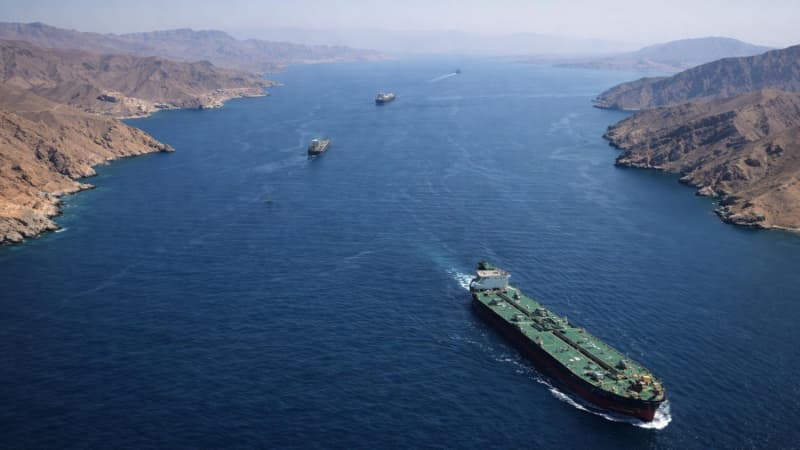
The Strait of Hormuz, named after the ancient Persian god, Ahura Mazda, is a pivotal maritime route situated between the Gulf of Oman and the Persian Gulf. Stretching approximately 167 kilometers (104 miles) long and 39 kilometers (24 miles) wide at its narrowest point, this strategically important waterway facilitates the transit of an estimated 30,000 vessels annually. This strait is not only crucial for oil transport but also plays a vital role in the global supply chain, carrying significant quantities of liquefied natural gas and other essential commodities.
Economic Importance
Approximately 20 percent of the world’s liquefied natural gas and seaborne oil passes through the Strait of Hormuz. Beyond these hydrocarbons, vital resources such as urea for fertilizers, aluminum for construction, helium for semiconductors, and petrochemicals for pharmaceuticals also traverse this corridor. The strait functions effectively as the aortic valve of globalized production; its interruption could trigger complex chain reactions in various sectors, affecting agriculture, construction, and technology.
Historical Trade Dynamics
<h4Historically, the Strait of Hormuz has been an epicenter of commerce since the establishment of the Kingdom of Hormuz in the 11th century by Muhammad Diramku. This early emirate symbolized the control of trade routes, enabling significant economic exchange among diverse civilizations. By the 15th century, it developed into a notable emporium attracting merchants from all corners of the world, including Egypt, China, and Yemen. The regional significance escalated when Portuguese Admiral Afonso de Albuquerque seized control of the strait in 1507, emphasizing its value to maritime powers.
Modern Threats and Challenges
The strategic importance of this maritime passage rapidly resurfaced during the Iran-Iraq war from 1980 to 1988, when numerous commercial vessels were attacked, illustrating the strait’s vulnerability to geopolitical tensions. Following similar patterns, contemporary conflicts have raised concerns about security and uninterrupted trade flow. For instance, the commencement of military actions on February 28 has caused industry experts to reevaluate the stability of global supply chains.
Implications of a Closure
If the Strait of Hormuz were to close, the repercussions would be severe. Beyond the immediate impact on oil and gas supplies, the agriculture sector would experience significant hurdles due to reliance on nitrogen fertilizers, with synthetic fertilizers directly affecting food production for nearly half of the global population. Moreover, industries like aluminum and plastics would face disruptions, highlighting the strait’s broader role in global infrastructure and supply chains.
Financial Realities and Market Response
The unfolding crisis has repercussions beyond physical disruptions. Within 48 hours of conflict initiation, major marine insurance providers withdrew war risk extensions for operations in the Gulf, creating a phantom blockade whereby financial constraints barred vessel movement, sending shockwaves through commodity markets. This reaction has proven detrimental, as financial and legal barriers can sometimes supersede physical impediments, leading to broader economic paralysis.
Looking Ahead: The Global Response
The current situation around the Strait of Hormuz is paradigm-shifting, highlighting the risks associated with reliance on a singular route for essential goods. The international community faces a call to action, urging a reevaluation of how critical maritime infrastructures are perceived and protected. Multilateral agreements focusing on the broader spectrum of global commodities would provide a stronger framework for safeguarding these vital trade passages in the future.
Long or Short, get news the way you like. No ads. No redirections. Download Newspin and Stay Alert, The CSR Journal Mobile app, for fast, crisp, clean updates!