


app-store-logo
play-store-logo
March 3, 2026

Supreme Court Warns Against AI-Generated Judgments, Says It May Amount to Misconduct
The CSR Journal Magazine

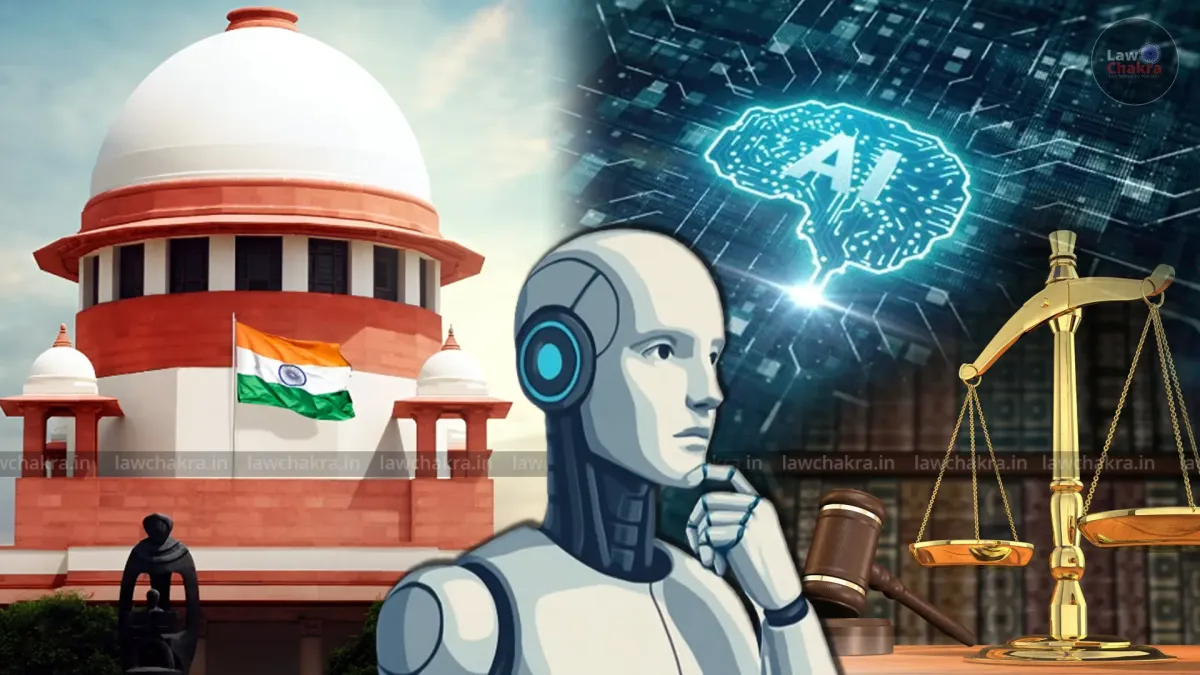
The Supreme Court has raised alarms regarding the implications of utilizing artificial intelligence to generate judgments in legal contexts. During a session on Monday, a bench consisting of Justices PS Narasimha and Alok Aradhe emphasized that judicial decisions based on AI-generated, fictitious judgments could be classified as misconduct rather than a mere error in judgment. The court has decided to delve deeper into the ramifications of this practice and has issued notices to Attorney General R. Venkataramani, Solicitor General Tushar Mehta, and the Bar Council of India. Senior Advocate Shyam Divan has been appointed to assist the court in this inquiry.

Legal Consequences of AI Misapplication

The bench stated that it acknowledges the deployment of AI-generated, non-existent judgments in trial courts and intends to investigate the resultant consequences and accountability, highlighting its impact on the integrity of the judicial process. In its order from February 27, the Supreme Court noted, “We recognize that a decision based on such non-existent and fake alleged judgments is not a simple error in decision-making. It would be misconduct, and legal ramifications will ensue. It is essential we explore this matter in greater detail.”

Case Background and Judicial Process

The concern surrounding AI in legal judgments emerged during the review of a petition challenging a January ruling by the Andhra Pradesh High Court. This case involved a suit seeking an injunction, where the apex court observed that a trial court’s dismissal of objections to an advocate-commissioner’s report relied on certain citations that were later found to be AI-generated and fictitious. The petitioners pointed out that the judgments referenced by the trial court did not exist.

Judicial Response and Future Hearings

Despite the high court acknowledging the inauthentic nature of the cited judgments, it moved ahead to resolve the matter on its merits, ultimately dismissing the civil revision petition. Following this, the petitioners escalated the matter to the Supreme Court. Upon issuing a notice, the apex court instructed that the trial court must refrain from proceeding based on the advocate-commissioner’s report until the special leave petition is duly processed. The matter has been scheduled for further hearings on March 10.

AI in Legal Practices Under Scrutiny

In a separate session held on February 17, Chief Justice Surya Kant also voiced concerns regarding lawyers who were submitting petitions generated with AI tools that included references to non-existent cases, such as one titled “Mercy vs Mankind.” This highlights the increasing scrutiny on the use of artificial intelligence in legal documentation and the potential risks it may pose to the legal system. As discussions continue, the judiciary grapples with the technical and ethical dilemmas of incorporating AI into its processes while striving to maintain the integrity and credibility of judicial adjudication.

Long or Short, get news the way you like. No ads. No redirections. Download Newspin and Stay Alert, The CSR Journal Mobile app, for fast, crisp, clean updates!

App Store –  https://apps.apple.com/in/app/newspin/id6746449540 

Google Play Store – https://play.google.com/store/apps/details?id=com.inventifweb.newspin&pcampaignid=web_share

Latest News

Popular Videos
