


app-store-logo
play-store-logo
February 21, 2026

Supreme Court Strikes Down Trump’s Tariffs in Landmark Ruling
The CSR Journal Magazine

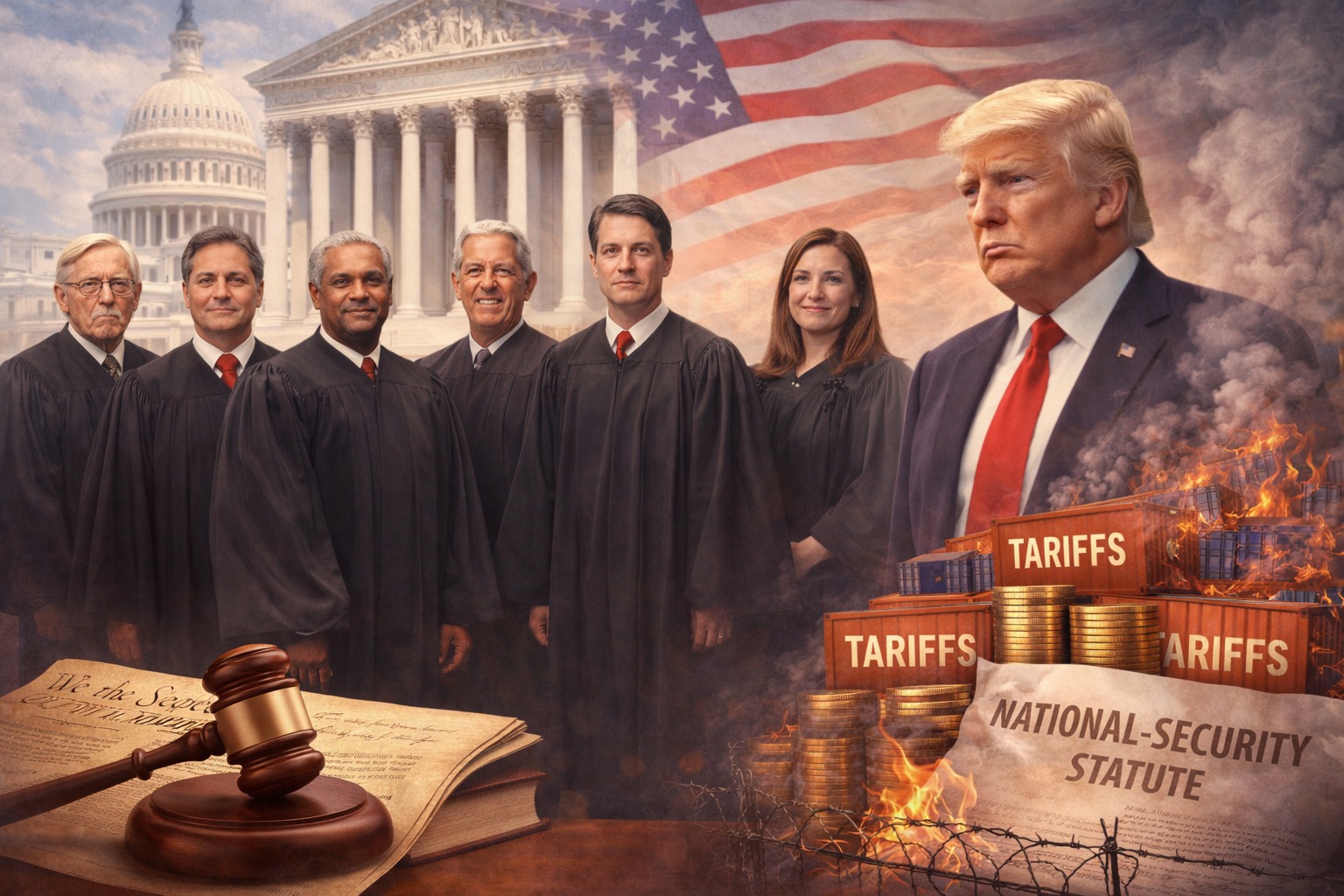
On February 20, 2026, the Supreme Court issued a significant ruling that changed the landscape of presidential authority in the United States by invalidating Donald Trump’s extensive global tariffs. The decision, rendered in a 6-3 vote, was remarkable not only for overturning one of Trump’s most assertive economic policies but also for involving two justices he had appointed. This case has emerged as a crucial moment in the debate over the extent of presidential economic power without congressional consent.

Overview of the Ruling

The central issue in the case revolved around Trump’s ability to implement broad tariffs through emergency powers based on a national-security statute. The Court determined that this statute did not permit such extensive action. It concluded that tariffs are fundamentally a form of taxation, a power that, according to the Constitution, resides within Congress. Chief Justice John Roberts, writing for the majority, articulated that allowing presidential imposition of tariffs without explicit legislative approval could lead to an unconstrained executive authority over economic matters.

The Justices Who Defied Trump

Notably, two of Trump’s appointed justices, Neil Gorsuch and Amy Coney Barrett, sided with the majority, delivering a significant institutional critique of his policies. Gorsuch, appointed in 2017, has consistently advocated for strict constitutional limits on executive power, emphasizing that substantial economic actions require clear authorization from Congress. Barrett, tapped for the Supreme Court in 2020, also concurred that congressional delegation of authority is necessary for the president to make decisions with extensive economic implications. Her agreement held additional importance as she is viewed as one of the more conservative members of the Court.

Conservative Division Within the Court

The decision highlighted a stark divide within the conservative block of the Court. Chief Justice Roberts, despite being a Republican appointee, joined Gorsuch and Barrett in rejecting the tariffs, forming a three-member conservative majority against Trump’s stance. Meanwhile, dissenting justices Clarence Thomas, Samuel Alito, and Brett Kavanaugh contended that Congress had historically granted presidents broad authority to regulate foreign commerce, asserting that Trump’s actions were in line with this established precedent. Their dissent reflected a judicial philosophy that favors strong executive powers, particularly regarding national security and foreign policy. Notably, all three liberal justices supported the majority ruling, showcasing an unusual coalition grounded in constitutional principles rather than party lines.

Reactions to the Verdict

The ruling provoked a strong backlash from Trump, who openly criticized the justices who ruled against him, including the ones he nominated. Shortly after the decision, he indicated plans to pursue alternative avenues for implementing new tariffs, emphasizing that the conflict over trade powers is ongoing. This reaction underscores the contentious nature of the political landscape concerning presidential economic authority.

Significance of the Ruling

The verdict is considered one of the most pivotal restrictions on presidential power in recent years, solidifying the constitutional tenet that taxation powers belong to Congress, even during times of national emergency. Additionally, it highlights ongoing philosophical debates within the conservative legal framework about the limitations of executive power.

Implications of the Supreme Court’s Ruling

The Supreme Court’s decision regarding tariffs represents more than just a legal challenge for Donald Trump. It serves as a crucial constitutional juncture that underscores congressional power over taxation and illustrates that even appointees of a president may prioritize institutional principles over political allegiance.

Long or Short, get news the way you like. No ads. No redirections. Download Newspin and Stay Alert, The CSR Journal Mobile app, for fast, crisp, clean updates!

App Store –  https://apps.apple.com/in/app/newspin/id6746449540 

Google Play Store – https://play.google.com/store/apps/details?id=com.inventifweb.newspin&pcampaignid=web_share

Latest News

Popular Videos
