


Supreme Court Justice Raises Concerns Over Gender Disparity in Judiciary
The CSR Journal Magazine

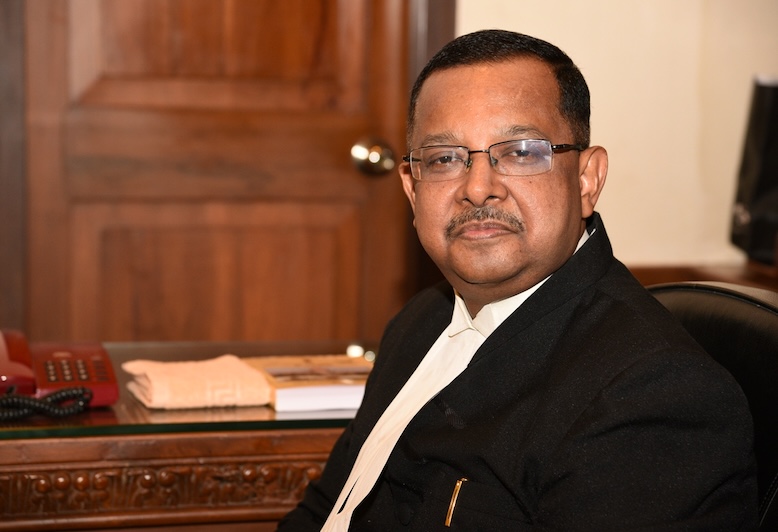
Justice Ujjal Bhuyan of the Supreme Court remarked that while over 50% of judicial officer positions are held by women across various states in merit-based selections, the scenario significantly shifts in the collegium’s subjective assessments. Speaking at the Supreme Court Bar Association’s inaugural national conference in Bengaluru, he highlighted the underrepresentation of women in high court and Supreme Court judgeships. Justice Bhuyan pointed out that out of the 287 Supreme Court judges appointed since 1950, only 11 have been women, which constitutes around 2%. He questioned why this disparity exists when the recruitment process is not solely objective.

Judicial Representation of Women Remains Low

Justice Bhuyan indicated that women form just 14% of High Court judges, with only two women serving as chief justices in 25 High Courts—those of Gujarat and Meghalaya. He noted that one more woman is expected to assume the chief justice role within a month, marking an insufficient representation. He emphasized that his research indicates a higher intake of women in judicial roles when the selection criteria are objective. As India aspires to become a developed nation by 2047, he called for more equitable gender representation in the judiciary to reflect the nation’s diversity.

Former CJI Discusses Collegium System and Criticisms of the Judiciary

Former Chief Justice B R Gavai addressed several Supreme Court rulings regarding the collegium system, stating that recommendations for judgeships returned for reconsideration by the government must be appointed if reiterated by the collegium. Despite this, he highlighted that there are numerous cases where such reiterated recommendations fail to lead to appointments. Gavai acknowledged that while the collegium system is imperfect, it remains the most fitting model for the country for the time being. He noted ongoing criticisms of the judiciary regarding its management of case backlogs, delays in court processes, transparency in judicial appointments, and lack of diversity.

Historical Context and the Judiciary’s Role in Democracy

Reflecting on significant judicial decisions, Gavai pointed out instances where the Supreme Court made errors, including landmark rulings related to the right to life and decisions made during the Emergency period. He articulated the importance of criticism for sustaining accountability within any institution, including the judiciary. Gavai recalled comments from the first Chief Justice, Harilal Jekisondas Kania, emphasizing the need for the Supreme Court to function independently from the legislature and executive while interpreting the Constitution.

Call for Trust and Transparency in the Judicial System

Justice Bhuyan asserted that the Supreme Court must earn the public’s respect through accountability, integrity, and transparency rather than demanding it. He stressed that judicial power depends largely on public trust, which is foundational to the judiciary’s strength. Furthermore, he remarked that in a developed society, judicial institutions should enjoy functional autonomy, enabling investigative agencies and media to operate free from political influence. He concluded by advocating for development policies that do not exclude historically marginalized groups from the benefits of progress.

Long or Short, get news the way you like. No ads. No redirections. Download Newspin and Stay Alert, The CSR Journal Mobile app, for fast, crisp, clean updates!

App Store –  https://apps.apple.com/in/app/newspin/id6746449540 

Google Play Store – https://play.google.com/store/apps/details?id=com.inventifweb.newspin&pcampaignid=web_share

Latest News

Popular Videos
