


A Stunning Discovery in Saudi Arabia: Ancient Footprints Unveiled
The CSR Journal Magazine

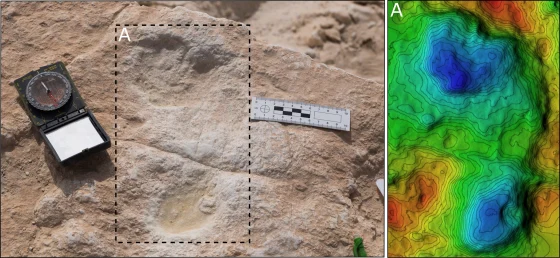
Researchers have uncovered what is believed to be fossilized footprints, estimated to be 120,000 years old, in the northwestern region of Saudi Arabia. This significant archaeological discovery provides crucial insights into early human activity in the area. The footprints were found near Al-Ula, a site already known for its ancient rock art and archaeological importance. The age of the footprints suggests they belong to some of the earliest human inhabitants who traversed this region, showcasing their migration patterns and interaction with the environment during the period.

Details of the Discovery

The footprints were located in an area close to the recently identified remains of a prehistoric lake, which researchers believe supported a diverse ecosystem at the time. The footprints represent various human sizes and footprints from large animals, indicating that multiple species coexisted in the vicinity. This find not only highlights human activity but also the presence of large fauna, contributing to a more comprehensive understanding of the ecological landscape during the prehistoric era.

Research Methodologies

The discovery was made as part of a project involving specialists in archaeology and geology. The researchers utilized advanced dating techniques to establish the age of the footprints accurately. Additionally, they employed methods such as satellite imagery and field surveys to locate this significant site. The footprints were meticulously documented, with measurements taken to understand the stride and speed of the individuals who left them. Analysis of the surrounding sediment also provided context about the environment in which these early humans lived.

Implications for Understanding Human History

This find is poised to contribute valued knowledge regarding the evolution of early humans and their geographical migrations. It provides evidence that suggests that early humans were more widely spread across the Arabian Peninsula than previously thought. The analysis of such ancient footprints aids in piecing together the narrative of human development and adaptation to diverse habitats in prehistoric times. It potentially changes the perception of human history in the region, emphasizing Saudi Arabia as a key location in early human migration.

Future Research Directions

Following this discovery, researchers plan to conduct further studies in the region. Additional archaeological attempts will focus on uncovering more footprints and remnants to provide deeper insights into life during prehistoric times. Collaboration with local and international universities and research institutions is anticipated, enhancing the scope of the findings. This ongoing research aims to address questions relating to ancient human behavior, population dynamics, and how these early groups adapted to their changing environments.

Cultural and Historical Context

The footprints’ discovery is not just an archaeological milestone but also a reflection of Saudi Arabia’s rich historical context. The region has a long-standing heritage that includes ancient civilizations and vital trade routes. Understanding human activity in this part of the world connects past societies to contemporary human life, aiding in cultural preservation efforts. The site also holds the potential to attract interest from scholars and tourists, fostering appreciation for humanity’s historical journey.

Long or Short, get news the way you like. No ads. No redirections. Download Newspin and Stay Alert, The CSR Journal Mobile app, for fast, crisp, clean updates!

App Store –  https://apps.apple.com/in/app/newspin/id6746449540 

Google Play Store – https://play.google.com/store/apps/details?id=com.inventifweb.newspin&pcampaignid=web_share

Latest News

Popular Videos
