


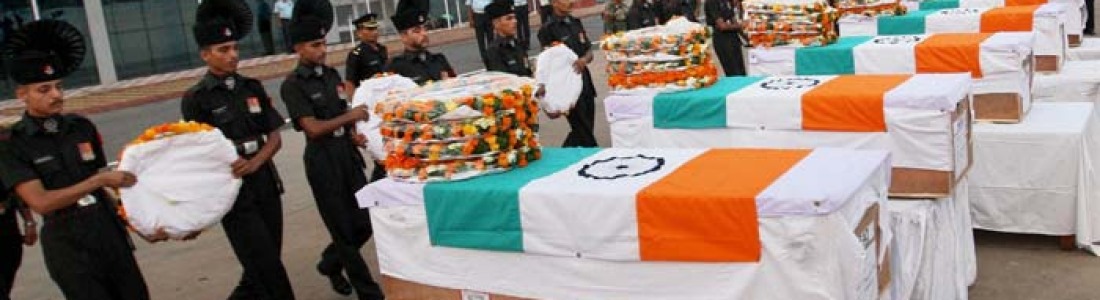

The Government of India has made various provisions to support families of martyrs in education, health and other facilities. This is an attempt to honour the supreme sacrifice of armed forces personnel, ensure their dignity, and provide for livelihood, education, and healthcare of their families and dependents. This is not just a gesture of showing gratitude to their sacrifice for the nation but also a way of ensuring social security to their dependents.
Families of martyrs (Next of Kin) in India receive comprehensive government benefits, including central ex-gratia payments of Rs 25–45 lakhs, liberalised family pension (100% of last drawn pay), Army Group Insurance (AGI) maturity, and death-cum-retirement gratuity (DCRG). Additional support includes child education allowances, ECHS cashless medical facilities, employment for dependents (Group C&D), and housing/business subsidies.
Key benefits for martyrs’ families in India
Families of Indian Military personnel martyred in battle are supported by the government of India in several ways. These include Central Ex-gratia (Rs 25–45 lakhs based on circumstances), Army Group Insurance (varies by rank/contribution), and special family pension.
Kins of martyrs are entitled to Liberalised Family Pension (equal to 100% of the last basic pay along with Military Service Pay). Martyrs’ families are given priority in employment for Next of Kin (Group C&D) and special quotas for petrol pumps, LPG agencies, and oil product agencies.
Apart from this, there is a complete exemption from tuition fees and various allowances for children’s education. There are free medical facilities for widows/dependents via ECHS (Ex-Servicemen Contributory Health Scheme).
The Government of India provides Rs 1 lakh grant for the marriage of daughters or re-marriage of widows. Also, there is a 50% interest subsidy on home loans from banks for war-bereaved personnel, managed by the Kendriya Sainik Board (KSB).
There are other resettlement schemes also run by the Directorate General of Resettlement (DGR) like allotment of petrol pumps etc. to ensure proper resettlement of war widows/ dependents. The financial assistance is provided to family/ dependents of martyred soldiers.
Healthcare: Ex-Servicemen Contributory Health Scheme (ECHS)
The Ex-Servicemen Contributory Health Scheme (ECHS) is a flagship medical scheme launched by the Government of India on April 1, 2003, to provide cashless, allopathic, and AYUSH healthcare to ex-servicemen pensioners and their dependents through a network of 427+ polyclinics, service hospitals, and empanelled private facilities. It operates similarly to the CGHS to offer comprehensive, pan-India coverage.
ECHS covers all ESM pensioners, including those with disability or family pensions from the Armed Forces (Army, Navy, Air Force). Under this scheme, outpatient treatment is provided at polyclinics and inpatient care (hospitalisation) at empanelled hospitals, with no monetary ceiling on treatment costs.
This is managed by the Ministry of Defence through 28 Regional Centres and over 427 polyclinics. It is a contributory scheme, with a one-time subscription fee paid by members based on their grade pay. Benefits include cashless treatment, coverage for spouses and eligible dependents, and reimbursement for emergency care at non-empanelled hospitals.
Educational support
The Government has made various provision to support the education of children of martyrs. Educational concession is being given to families of officers/Personnel Below Officer Rank missing/disabled/killed in action.
These include full reimbursement of tuition fee (Except Capitation fee and caution money) levied by the educational institutions concerned (including charges levied for the school bus maintained by the school or actual fares paid for railway pass for students or bus fare certified by the Head of Institutes).
Full reimbursement of hostel charges is provided for those studying in boarding schools and colleges. The government bears the cost of books and stationary up to Rs 2000 per year or the amount claimed by the student (whichever is less). The government also bears the cost of school/college uniform costing up to Rs 2000 or the amount claimed by the student (whichever is less).
Apart from the above, the government provides Rs 700 every year for clothes to every student or the amount claimed by the student (whichever is less) for children of martyrs.
For families of Indian Navy martyred personnel
Pensionary benefits such as LFP, SFP, OFP, Ex-Gratia and DCRG/Gratuity (as per entitlement) are paid to Next of Kin of the Naval Personnel. Financial assistance in terms of benefits like ex-gratia is provided under various categories to widows and dependents of deceased soldiers as per the Government of India’s pension regulation.
Family pension and gratuity to families and dependents is based on the last pay drawn and last rank held by the deceased soldiers at the time of his death while Ex-gratia amount is given to the Next of Kin of a sailor/ Nausainik killed in action or in course of duty irrespective of rank and qualifying service, based on circumstances of death. Ex-Gratia compensation are given in the range of Rs 25-45 lakhs.
For families of Indian Air Force (IAF) martyred personnel
The following Pensionary benefits are being provided to the Next of Kin of the Air Warriors killed in action as per the government’s policy. Liberalized Family Pension (LPF) is being granted to Next of Kin of the Air Warriors killed in Action. It is granted in case of death of an Armed Forces Personnel due to acts of Violence/attack by terrorist, anti-social elements, enemy action in international war, action during deployment with a peace keeping mission abroad, border skirmishes etc. It continues even after re-marriage of the widow.
Death cum Retirement Gratuity (DCRG) is payable to the widow, next of kin or nominated family member of the deceased officer or airman who die on duty depending upon the period of service rendered by an officer or airman that is officially recognised for calculating pension, gratuity, and other retirement benefits.
Under the government’s Modified Scooter Grant, Rs one lakh is provided to those Ex-Servicemen, who are disabled after service with a disability of 50% or more and who are not covered under the scheme of Adjutant General’s (AG) Branch at Integrated Headquarters of the Ministry of Defence.
The government also provides subsidy on home loan. The Kendriya Sainik Board (government welfare) reimburses 50% of interest by way of subsidy on home loan from Bank or public sector institutions for construction of house to war bereaved, war disabled and attributable peace time casualties up to Rs 1 Lakh.
Under the Prime Minister’s Scholarship Scheme, a total of 5500 scholarships are provided to eligible wards based on merit for the entire duration of the courses. While boys get Rs 2500 per month, the amount is Rs 3000 for girls.
Apart from the above, there is reservation of seats in Medical Colleges for wards of Defence Personnel as Govt of India Nominee. A total of 42 MBBS seats and 3 seats in BDS courses are allotted by Ministry of Health & Family Welfare to Kendriya Sainik Board for wards of defence personnel as a Govt of India nominee. Priority I is given to families of those killed in action.
The Kendriya Sainik Board Secretariat also issues rail travel concession identity cards to war widows.
How various state governments in India support families of Martyrs?
Apart from the central government’s support, India’s state governments provide additional ex-gratia compensation and benefits (e.g., land allotment, jobs) which vary by state, with some, like Maharashtra, providing up to Rs 1 crore in aid. Additionally, they provide compassionate employment to dependents, house repair grants and recognition to honour their supreme sacrifice.
Families of Central Armed Police Forces (CAPF) personnel (like CRPF, BSF) receive Rs 25-35 lakhs central ex-gratia, along with other benefits like Gratuity and Pensionary awards.
Indian states provide government jobs to the next of kin and free education/scholarships for the children of martyrs. State governments allocate land (residential or agricultural) or cash-in-lieu, along with house tax exemptions or repair grants. States provide marriage grants for daughters, monthly allowances for war widows, and healthcare support via dedicated schemes.
Apart from the above, state governments name schools, roads, or institutions after martyrs to honour their legacy and inspire upcoming generations.